

Fincher Backs AI in Tarantino's Cliff Booth: 'Well, It Exists. Should We Not Use It?'
The three-time Oscar nominee just gave Hollywood's AI debate its bluntest defense yet, turning a nostalgia-soaked Tarantino sequel into the industry's live test of who decides what is allowed on screen.
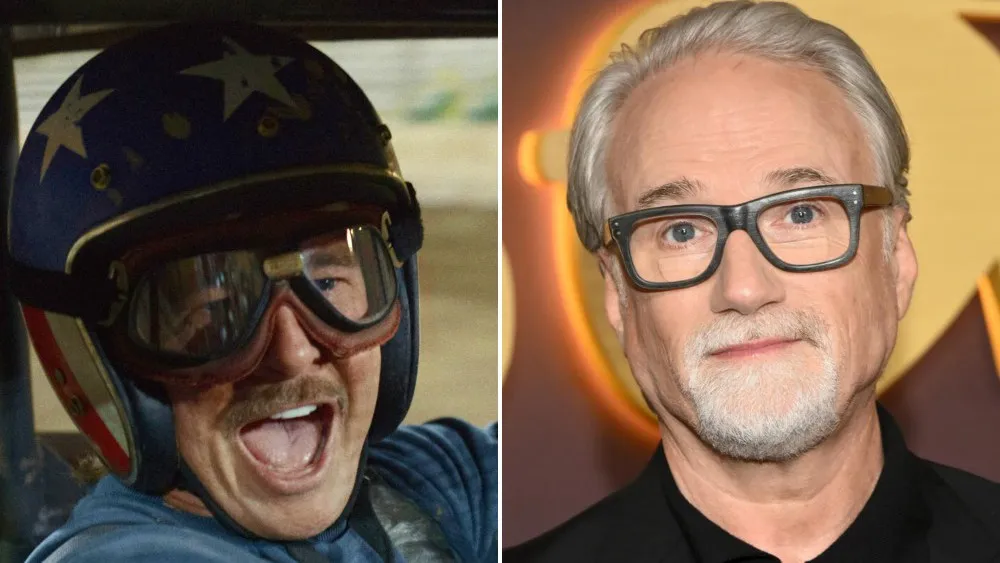
Director David Fincher, a three-time Oscar nominee, has publicly defended the use of generative AI in The Further Mis-Adventures of Cliff Booth, the Quentin Tarantino-penned sequel to Once Upon a Time in Hollywood that drew criticism for its apparent on-screen AI use. His 'it exists, should we not use it' posture forces studios, guilds and boards to settle disclosure, credit and consent rules now rather than after the next viral frame.
David Fincher is not apologizing. The three-time Oscar-nominated director has publicly defended the use of generative AI in The Further Mis-Adventures of Cliff Booth, the Quentin Tarantino-penned sequel to Once Upon a Time in Hollywood (2019), after many critics flagged the apparent on-screen use of the technology. His argument, in his own words: "Well, It Exists. Should We Not Use It?" That is the entire defense, and it lands as a direct challenge to an industry that has spent years trying to write rules around generative tools.
The criticism aimed at Cliff Booth is not really about pixels. It is about a film steeped in nostalgia for Hollywood's past that, its detractors argue, was made in part with the tools of Hollywood's future. The apparent on-screen use of generative AI turned a Tarantino sequel into a referendum on a single question: when nostalgia is the product, does the method of making it matter? Fincher's answer is that it matters less than whether the result works, and he is willing to say so out loud while much of the industry stays quiet.
The question has been live since 2023, when the Writers Guild of America and SAG-AFTRA both struck with AI protections among their core demands. Those contracts, historically, did not ban the technology. They set terms around consent, disclosure and compensation, typically requiring producers to tell talent when a digital replica is used. That framework was built for performers' likenesses, not for set extensions, crowd replication or background work, which is where generative tools are often adopted first because the cost savings are largest and the visible credit is smallest. Cliff Booth sits squarely in that gap.
The economics explain the temptation. Postproduction and visual effects are line items studios have spent a decade trying to compress, and generative tools promise iteration speed that used to require large teams and long render times. For a period piece the appeal is specific: de-aging, period-accurate environments, and cleanup work that would otherwise eat a VFX budget. Fincher's framing is a cost argument dressed as a philosophical one, and anyone who has stared at a postproduction ledger already knows the math.
No regulator polices this the way regulators police, say, political advertising in some jurisdictions. There is no standard disclosure requirement for AI in film. Enforcement so far is reputational, and it arrives from three directions at once: guild grievance processes, awards bodies that write their own eligibility rules, and audiences who can spot artifacts and post about them within hours of a release. That last group is the fastest and the least forgiving. A single viral frame can define a film's entire press cycle, and the backlash around Cliff Booth showed how quickly that happens.
Fincher is a useful spokesperson for the other side because his career is a case study in technology adoption. His generation of directors absorbed digital cameras, motion capture and fully CG environments, and the arguments against each of those, historically, sounded a lot like the arguments against generative AI: it will devalue craft, displace workers, flatten the look of movies. Some of that came true; much of it did not. The industry did not stop, and the tooling became the baseline. Whether generative AI follows that arc or breaks it will be decided less by directors' opinions than by contracts and box office.
Watch three things. First, disclosure: whether productions adopt a norm of telling audiences when generative tools touched a shot, and whether the guilds push that norm into the next round of bargaining. Second, credits and pay: if AI compresses VFX crews, the savings accrue to the production, and labor will want a share of the value rather than a notice. Third, the sequel itself. The Further Mis-Adventures of Cliff Booth is a high-profile, nostalgia-driven title from a major writer, which makes it the reference case every other production will cite when the argument comes up again.
For executives, the shift is that AI in production has moved from an ethics slide in a board deck to an operating decision with a public scoreboard. The technology is available, the cost pressure is real, and the reputational risk is now measurable in press cycles, talent relations and guild leverage. Fincher's line will be quoted in a lot of greenlight meetings. The harder question for anyone funding a production is not whether the tool exists. It is whether the audience, the guilds and the workers whose jobs it touches will accept the answer.
This story's Key Insights and Take-aways are locked.
Create a free account to unlock Executive Actions for one credit.
Register to UnlockAlways free for Executives Club members. Join the Club
More in Entertainment

GTA 6 banks $3.8bn in one day, torching every launch record
One game just out-earned every video game launch and every single-day film box office haul in history, and the fallout lands on every media CEO's forecast.

GTA VI Racked Up $3.79 Billion in a Single Day, Topping Every Film Ever
A 13-year wait produced a $3.79 billion day, more than any movie has made in its entire run, and it resets the launch math for every studio, streamer, and brand chasing the same attention.

GTA 6 sells 32.5M pre-sales and $3.79B day one, torches 13-year record
Rockstar's sequel didn't just beat Grand Theft Auto V's 13-year-old benchmark; it reset what a launch can be, with 32.5 million pre-sale copies and $3.79 billion in a single day.