
Four network shapes decide whether a dead link becomes an outage
Computer scientists have pinned down exactly which network topologies survive any single link failure without routing traffic in circles, and the answer is a startlingly short list of four.
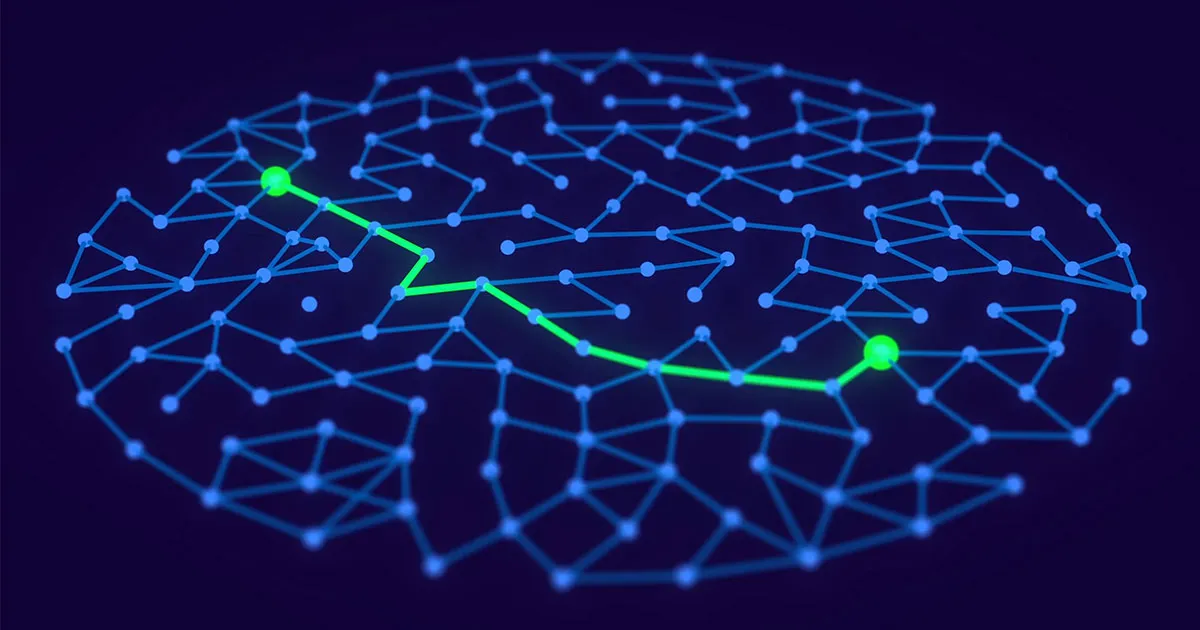
Computer scientists have nailed down the theory of "perfect resilience," identifying four simple network structures that determine whether traffic reroutes cleanly or spirals into a loop after a link fails. For operators of cloud, telecom, and satellite networks, that short list converts resilience from a hope into a design-time check with direct consequences for uptime, SLAs, and capital spend.
Four. That is the size of the answer network researchers have just nailed down to a question that has quietly tormented the field since the internet's first message: which communication networks can lose a link and still deliver everything, without sending traffic in circles? Quanta Magazine reports that computer scientists now know the theory of "perfect resilience," and the punchline is that the networks which truly qualify are built from four simple structures. Everything else, no matter how much redundancy you bolt on, can be pushed into a routing loop when a single link goes down.
The loop is the whole problem, and it is worth being precise about why. Routers are local creatures. Each one generally knows its own neighbors, not the entire map, so when a cable is cut or a switch dies, the machines nearest the damage have to rediscover a path and tell everyone else. During that window, two routers can each believe the other has a working route. Packets get handed back and forth, hop after hop, until their time-to-live counter hits zero and they are discarded. Multiply that by every session on the network and you get the signature symptom of a bad outage: links that are up, hardware that is fine, and traffic that simply never arrives.
The internet has been failing in interesting ways since birth. One evening in the fall of 1969, a team of researchers sent a historic message from a computer in Los Angeles to one in Menlo Park, California: the first transmission over the first link in Arpanet, the prototype for the modern internet. They typed "LOGIN." Two characters, the "L" and the "O," made it before the network crashed. The lesson from that evening has aged well: connectivity is not a property you buy once, it is a property you have to keep proving under failure. What has changed is the price of getting it wrong.
The reason a clean theory took so long is that resilience is a global property emerging from purely local decisions. Ask whether a network survives any single link failure and you are really asking a combinatorial question about every pair of endpoints and every possible cut. Perfect resilience raises the bar again: not just whether traffic gets through, but whether it gets through without looping, for every failure and every destination. The new result collapses that sprawling question into something an engineer can actually hold. The four structures are simple and recognizable, which means a topology can be checked against a short list instead of stress-tested into exhaustion.
That is a practical shift, not just a pretty theorem. Network architects at cloud providers, internet service providers, and the companies that build data center fabrics have long lived with a gap between design and proof. They add redundant links, tune routing protocols, and find out whether any of it worked when something breaks at 3 a.m. A characterization of exactly which topologies are perfectly resilient turns a postmortem exercise into a design-time check. If your fabric matches one of the four, you have a guarantee. If it does not, you now know to expect loops under specific failure patterns, and you can plan for them rather than be ambushed by them.
The stakes show up fast in the ledger. For a hyperscaler, a routing fault is not an inconvenience; it is a region going dark, service credits, and a very public status page. For a telecom operator, it is churn and regulatory attention. For the satellite companies now building mesh constellations in low Earth orbit, where links appear and vanish as spacecraft move, resilience is not an engineering nicety, it is the product itself. Anything that shortens the distance between "we think this design holds" and "we can show this design holds" lands as lower capital intensity and fewer bad nights.
Boards should hear this as a question about dependency and disclosure, not just engineering. Regulators in the United States and Europe have spent years tightening rules around outage reporting and resilience testing for critical communications and cloud infrastructure. Every company running on someone else's network is exposed to a design choice it never sees. The useful move is to ask vendors and internal teams a sharper question: not how much redundancy you have, but which failures produce loops, and how you know. That question is finally answerable in principle, which means it is now fair to demand an answer in practice.
None of this makes the internet fragile in a new way; it makes an old fragility legible. The 1969 crash after two letters was a warning that connectivity is a negotiated, provisional thing. More than half a century later, the field has a cleaner map of which networks keep their promises when a link dies, and which only look like they do. For anyone whose revenue depends on packets arriving, that map is worth reading before the next outage writes its own version.
This story's Key Insights and Take-aways are locked.
Create a free account to unlock Executive Actions for one credit.
Register to UnlockAlways free for Executives Club members. Join the Club
More in Science

AI that nails brain-activity tests may be solving them the wrong way
A new discovery suggests strong neural-prediction scores do not prove a model works like the brain, a warning for labs, neurotech investors, and anyone selling brain-like AI.

Scientists Want to Test Whether a Clock Can Run on Two Flows of Time
An atomic-clock experiment has been proposed to catch a never-observed quantum effect, a result that would redraw the boundary between time and gravity.
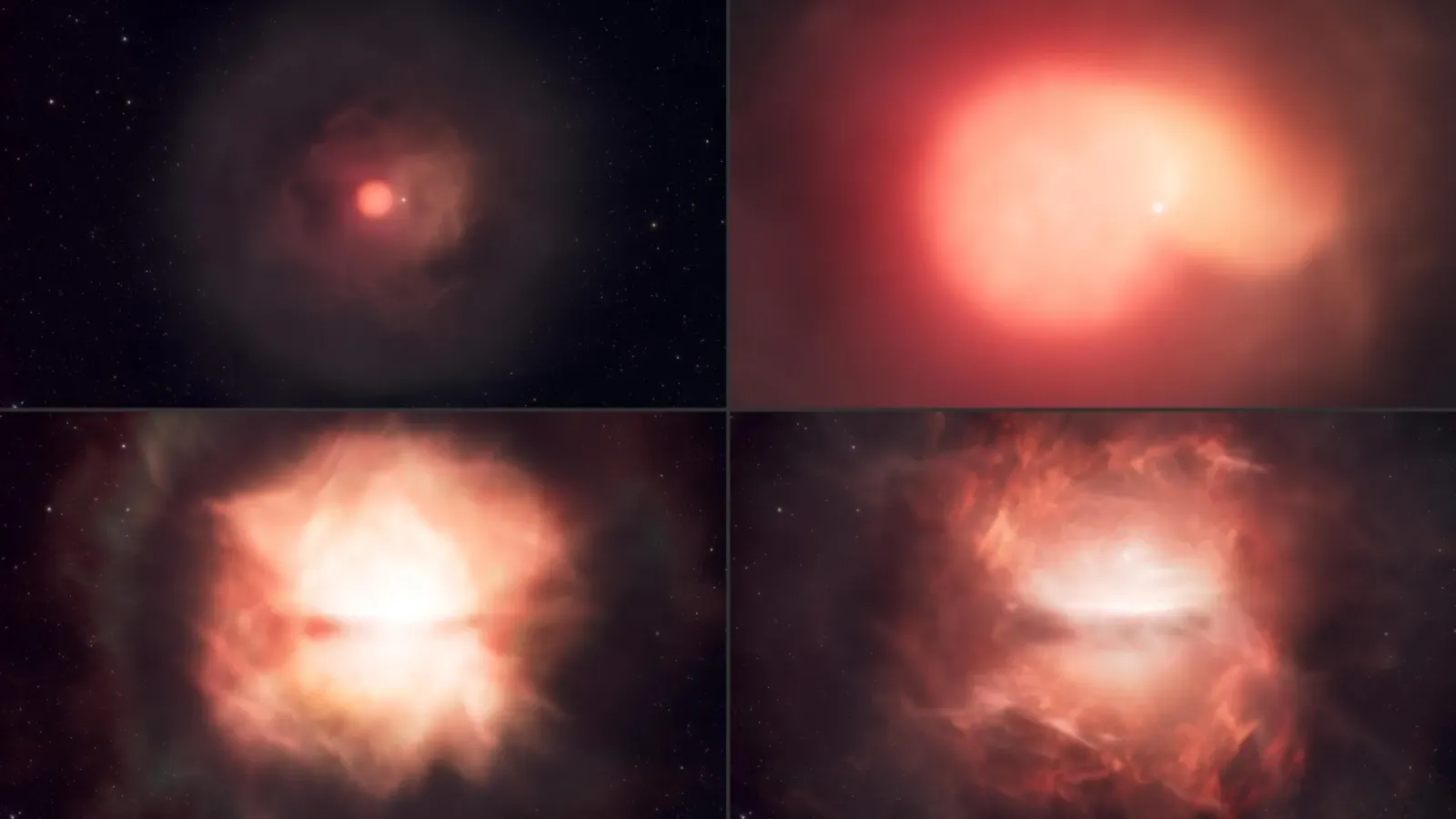
A star swallowed another star. Webb caught the aftermath in 47 days
Astronomers watched a small star spiral into a giant 18,000 times brighter than the Sun in Andromeda, and Webb's 47-day follow-up is rewriting how stellar mergers get studied.