
Ghostly 'sand body' found at Sutton Hoo, with a second grave beneath
A month-long 2025 dig at Sutton Hoo's Garden Field turned up a bone-free 'sand body' burial, a knife, beads, tweezers and a brooch, plus evidence of a second person in the same grave, shifting the research spotlight from a king's ship burial to the everyday East Anglians around him.
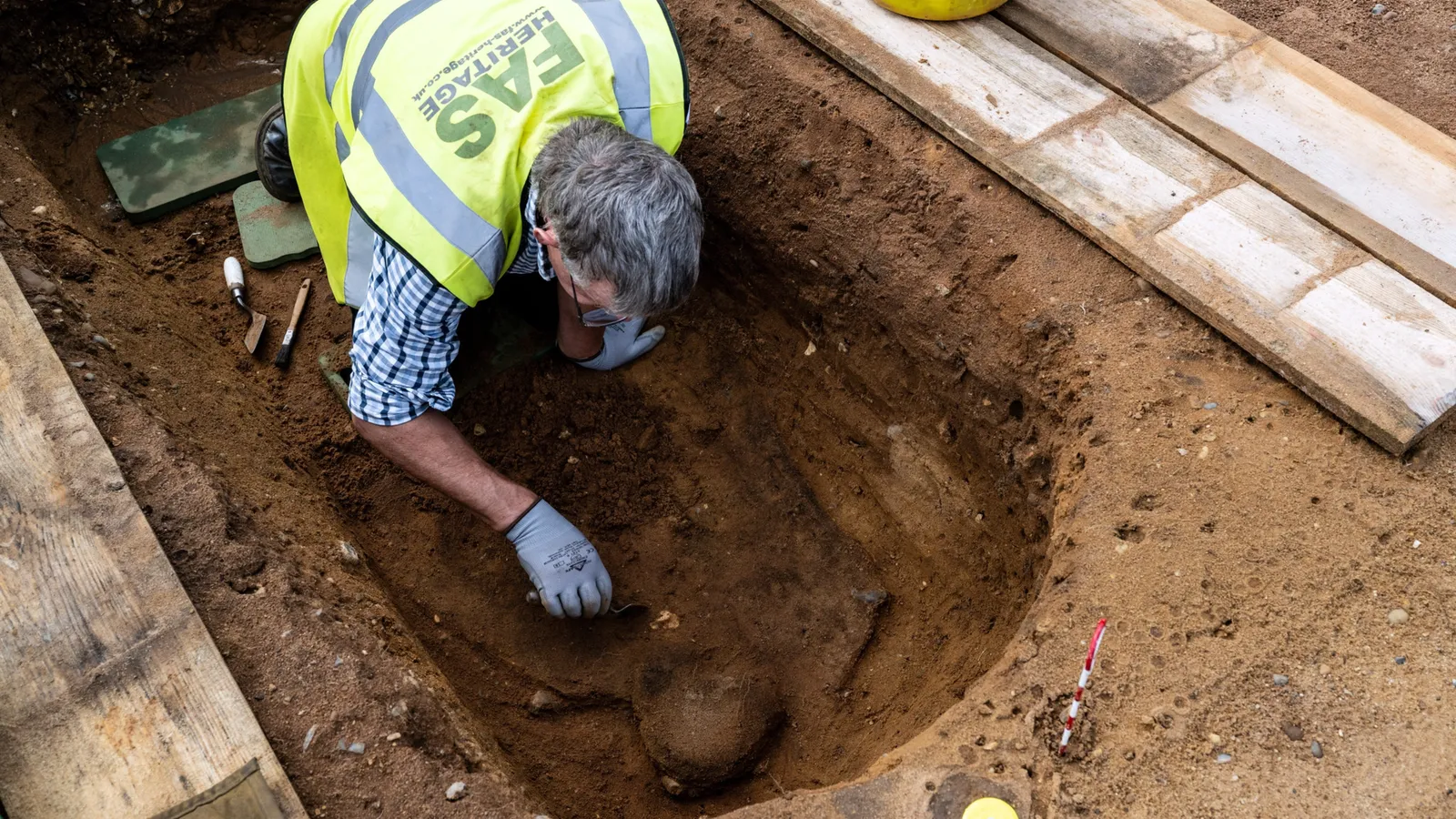
Archaeologists with the National Trust, FAS Heritage and the television series 'Time Team' unearthed a new 'sand body' burial at Sutton Hoo's Garden Field, with grave goods and evidence of a possible second burial underneath. The find, aired in a four-part documentary launched on YouTube on Nov. 14, shows how heritage institutions are pairing excavation with distribution to keep public attention, and funding, flowing to sites whose flagship discoveries are already made.
Archaeologists have unearthed another 'sand body' at Sutton Hoo, the Anglo-Saxon cemetery in the U.K. famous for a seventh-century ship burial, and this one came with a twist: a possible second grave hidden directly beneath it. The discovery came in the final week of a month-long 2025 excavation at a burial ground called Garden Field, according to a statement from the National Trust. The grave held no bones. What it held instead was the ghost-like shape of a person who had once been buried there, plus grave goods: beads, tweezers, a knife and a brooch. Directly underneath that imprint, the team found evidence that a second person may have been buried in the same grave.
Sand bodies are 'burials where the bodies and bones had dissolved away in the acid soil, replaced by hard sand which held the form of the person, not unlike some of the bodies at Pompeii,' said Angus Wainwright, an archaeologist at the U.K.'s National Trust, in the statement. The soil is the culprit: it consumes bone. What survives is the cavity a body left behind, cast in sand that hardened before it could collapse. Such burials have turned up at Sutton Hoo before, and at other Anglo-Saxon sites in the Suffolk area, which is why the team recognized the shape when it emerged.
The 2025 dig was not chasing royalty. It was built around three questions: how far the cemetery extended, when it was in use, and whether the people buried there had any connection to the occupant of the famous ship burial. 'Until now, archaeologists have focused on the royal burial mounds,' Wainwright said. The previous season, in 2024, turned up pieces of a bronze bucket used in a cremation ritual. The 2025 season widened the lens onto ordinary East Anglians, which, in Wainwright's words, 'moves the focus to these people and their ancestors and descendants.'
That is what makes the Garden Field sand body more than a curiosity. Experts think the sand bodies and cremations found in this burial ground may predate the famous ship burial. For decades the headline question at Sutton Hoo has been who lies in the great ship burial, possibly King Rædwald, who ruled a kingdom in East Anglia and died around A.D. 627. That grave also contained an intricate and striking helmet. Garden Field asks a different question: who were the people who lived and died around that king, and what did they own? Wainwright called the new burial 'certainly a high point of this latest dig.'
The dig is also a media product. The work features in a four-part documentary made by the television series 'Time Team' with archaeological experts from the National Trust and FAS Heritage. The first episode launched on YouTube on Nov. 14. In it, experts found new evidence that people buried in the Garden Field cemetery were acquiring wealth and increasing their social status, enough that they buried at least one person with a gold ingot. The team also investigated the possible remains of a dock used to build and launch ships into the River Deben, and found an unusual fragment of a cremation urn that surprised archaeologists because it was decorated rather than plain. 'Well, it's at Sutton Hoo. Anything can happen,' said Justin Garner-Lahire, managing director at FAS Heritage, in the video.
Strip away the romance and this is a case study in how research institutions create and distribute value. A site like Sutton Hoo is a finite asset with an obvious flagship: the ship burial, its helmet, its possible royal occupant. Flagship assets do not produce new headlines forever. Garden Field does, because its questions are still open. Pairing excavation with a documentary series and a YouTube release means the dig generates public attention, and historically that attention is what keeps heritage funding alive. It is a structural lesson for any organization sitting on a famous asset. Public archaeology in the U.K. typically runs on a mix of institutional funding, grant money and volunteer labor, which means visibility is not a nice-to-have. It is part of the operating model. The research calendar also bends toward what makes good television: a month-long dig, a final-week reveal, a four-part arc.
For executives outside archaeology, the parallel is hard to miss. The most valuable discoveries often sit underneath the asset everyone already knows about, in the unglamorous plot nobody has fully surveyed. The 2025 team went looking for the edges of a cemetery and came back with a double burial and a decorated urn fragment. Nobody has answered the Rædwald question, and the sand bodies may not even be his contemporaries. But the Garden Field dig has done something a royal mound cannot: it turned anonymous East Anglians into named research questions, and it gave a four-part series a reason to exist. Garner-Lahire's line is the whole brief. It is Sutton Hoo. Anything can happen.
This story's Key Insights and Take-aways are locked.
Create a free account to unlock Executive Actions for one credit.
Register to UnlockAlways free for Executives Club members. Join the Club
More in Science

AI that nails brain-activity tests may be solving them the wrong way
A new discovery suggests strong neural-prediction scores do not prove a model works like the brain, a warning for labs, neurotech investors, and anyone selling brain-like AI.

Scientists Want to Test Whether a Clock Can Run on Two Flows of Time
An atomic-clock experiment has been proposed to catch a never-observed quantum effect, a result that would redraw the boundary between time and gravity.
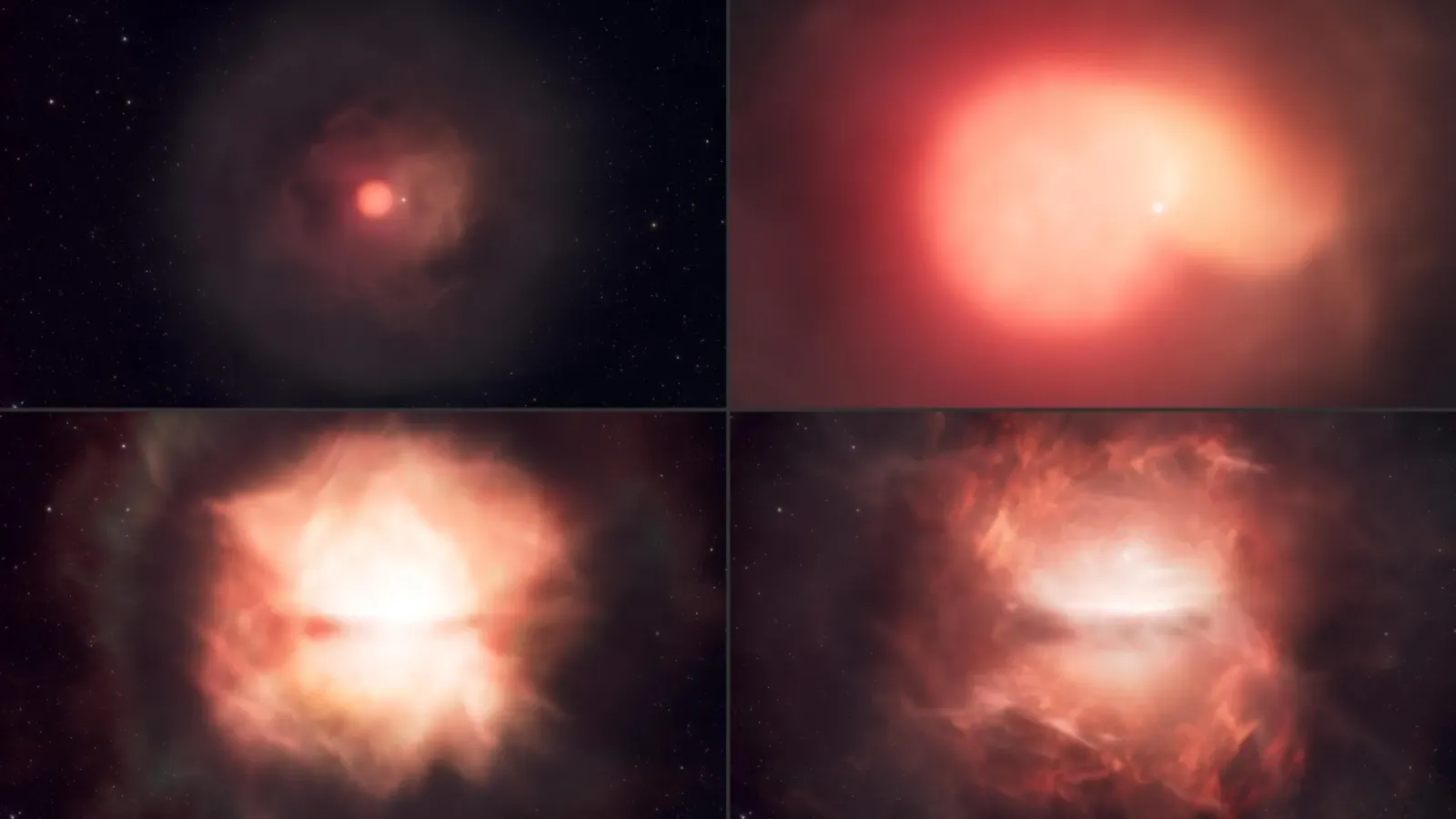
A star swallowed another star. Webb caught the aftermath in 47 days
Astronomers watched a small star spiral into a giant 18,000 times brighter than the Sun in Andromeda, and Webb's 47-day follow-up is rewriting how stellar mergers get studied.