

Gravity Bypasses Brick Walls: How Australian Physicists Sent Data Through Solid Matter
University of Queensland researchers used a 1950s elevator and binary code to prove that fundamental forces can transmit messages through physical barriers.
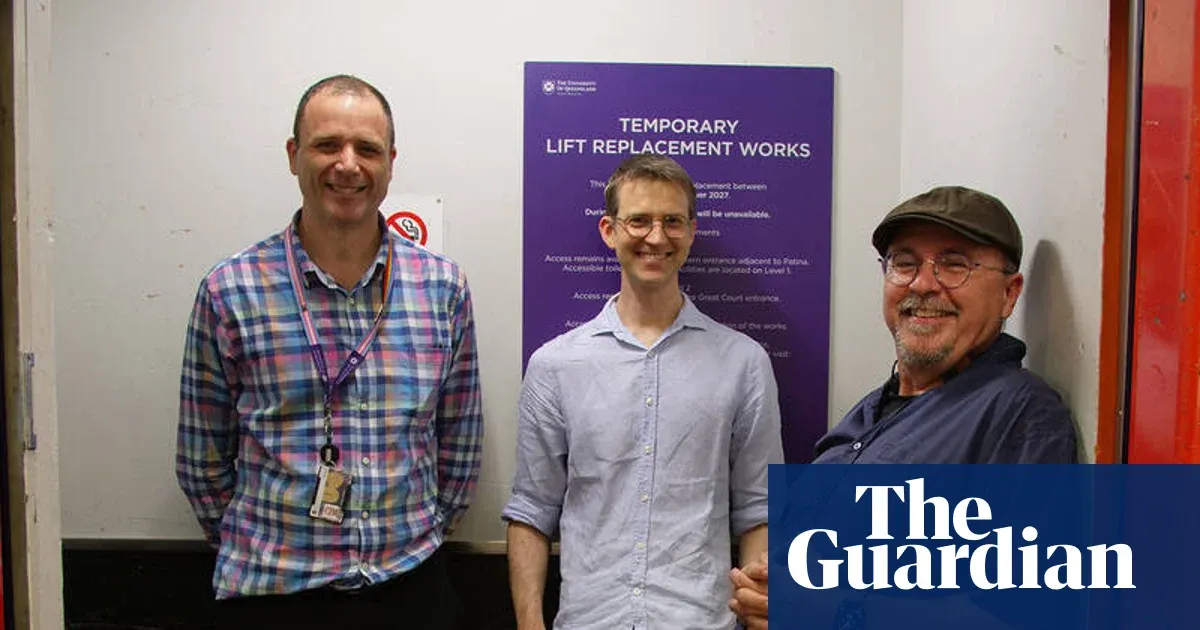
Physicists at the University of Queensland successfully demonstrated a proof-of-concept experiment using gravity to transmit binary code through a solid brick wall. This breakthrough fundamentally challenges current assumptions about signal transmission and physical communication limitations.
The concept sounds like a physics experiment from a quirky science fiction novel, but the reality is a genuine breakthrough in communication theory. Researchers at the University of Queensland in Australia have successfully used gravity itself as a medium to transmit a message. They managed to send the word 'gravity' in binary code through a solid brick wall, a feat that they describe as creating a 'practically unblockable' communication channel. This wasn't achieved with lasers, radio waves, or fiber optics. Instead, the team leveraged the movement of a 1950s elevator.
To understand the magnitude of this, you have to look past the novelty of the elevator and the bathroom setting. The core of the experiment involved sending the elevator up and down between two floors. As the elevator moved, it caused measurable changes in the local gravitational field. The physicists then measured these minute changes in the gravitational field and translated those fluctuations into binary data. By modulating the elevator's movement, they were able to encode and transmit the message across a distance of about 70 centimeters, passing directly through the brick wall separating the two floors.
For context, traditional communication methods are highly dependent on the medium. Radio waves are blocked by dense materials, light is absorbed or scattered, and even seismic vibrations are limited by material density. The brick wall, a dense and opaque physical barrier, represents a hard limit for most conventional signal transmission. By utilizing gravity, the researchers sidestepped this limitation entirely. Gravity, unlike electromagnetic waves, is not confined by the material composition of the wall itself; it interacts with mass, and the elevator, being a mass, is the key component of the signal.
This is not merely a clever parlor trick; it is a proof of concept that opens up massive theoretical and practical implications for signal integrity and infrastructure design. If this technology can be scaled and refined, it could revolutionize how we approach communication in environments where traditional signals fail. Think about deep underground infrastructure, dense urban centers where signal interference is rampant, or even future scenarios involving extreme physical barriers.
From an executive perspective, the implications for signal robustness are profound. Current network design often requires complex routing, signal boosting, and redundancy to overcome physical obstacles. A system that can transmit data through solid matter fundamentally changes the cost-benefit analysis of infrastructure. If you can transmit data through a concrete foundation or a thick structural wall, you eliminate the need for costly, disruptive, and often impossible physical relays.
Furthermore, the use of binary code confirms that the system is not just transmitting a simple physical vibration, but is capable of encoding complex digital information. The challenge now shifts from 'can we transmit?' to 'can we scale and stabilize?' The current setup relies on a specific, slow-moving elevator and precise gravitational field measurements, which are inherently limited. However, the fact that the message was 'practically unblockable' is the critical takeaway. It suggests a pathway to communication that is fundamentally immune to the physical obstructions that plague modern telecommunications.
This research, originating from the University of Queensland, places Australia at the forefront of fundamental physics applied to engineering challenges. It forces us to reconsider the boundaries of what is physically possible in data transfer. While the immediate application might seem confined to a laboratory setting, the underlying principle-using a fundamental force to bypass physical barriers-is a paradigm shift. It suggests that the next generation of communication technologies might not rely on pushing faster waves through existing mediums, but on manipulating the fundamental forces of the universe itself. The strategic value here lies in understanding the physics of the interaction between mass movement and gravitational field perturbation, a field ripe for future engineering exploitation.
This story's Key Insights and Take-aways are locked.
Create a free account to unlock Executive Actions for one credit.
Register to UnlockAlways free for Executives Club members. Join the Club
More in Science

Anthropic's I.P.O. Made Rank-and-File Researchers Worth Tens of Millions
Researchers who joined just a few years ago are now worth tens of millions, and the windfall resets the pay benchmark for every private A.I. lab still paying in paper.

Sea Lion Culling Strategy Fails: New Model Says Killing Them Won't Save Salmon
The latest research from AAAS overturn a long-held conservation assumption, forcing policymakers to rethink critical resource allocation in marine ecosystems.

Microplastics do more than pile up: they react with water to damage cells
Scientists have found that plastic particles can generate highly reactive molecules in water, a mechanism that could explain links to heart attacks, strokes, and neurological disorders.