
GTA 6 Cuts the Soliciting Mechanic That Survived 25 Years and Every Console
Rockstar's most realistic Grand Theft Auto yet drops a 25-year franchise staple, and the reason is the story it now wants to tell.
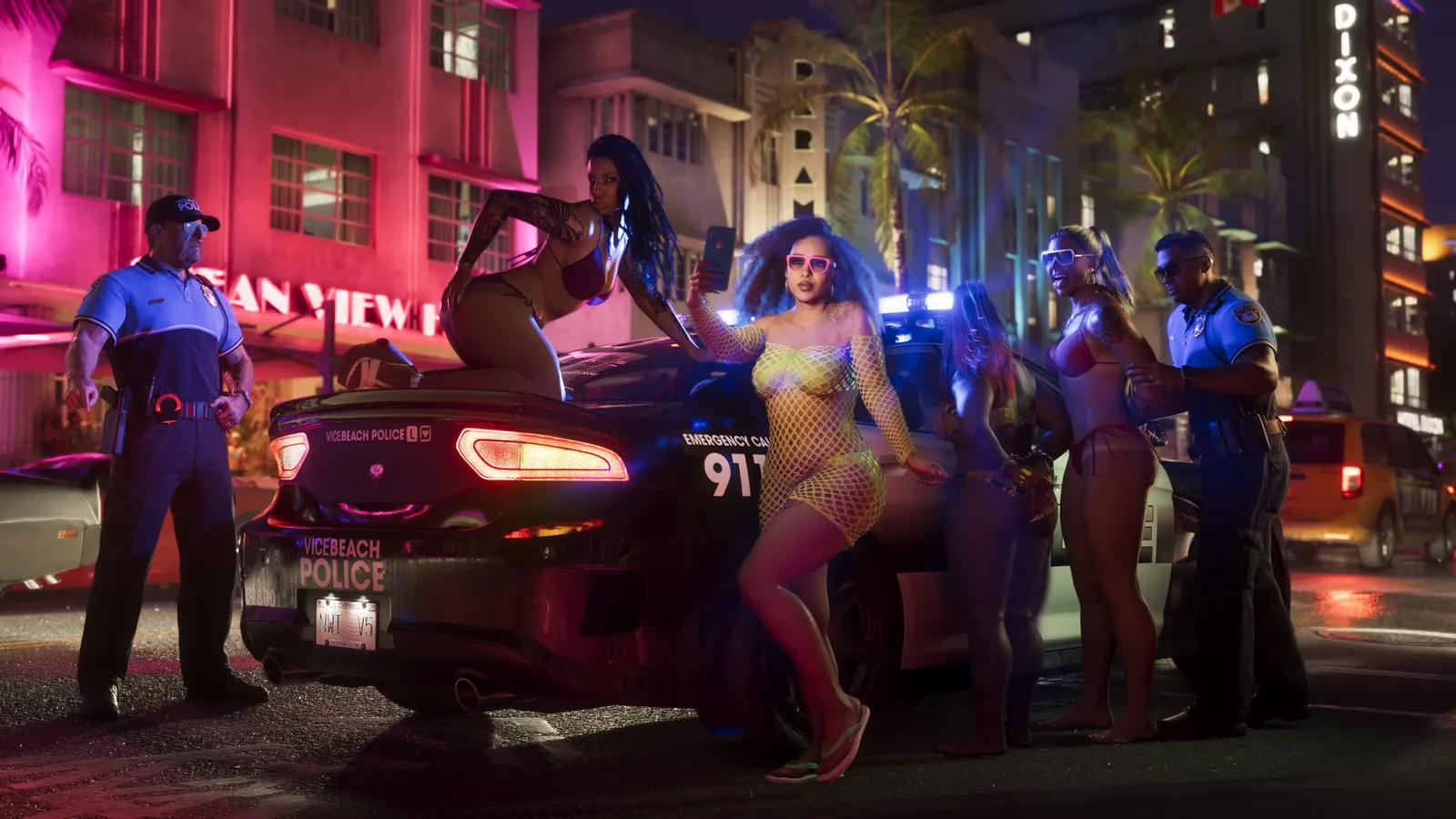
Rockstar Games has cut the long-running soliciting-a-prostitute mechanic from Grand Theft Auto 6, ending a franchise staple that Polygon reports has appeared across multiple hardware generations for roughly 25 years. For peers in games and entertainment, the move signals that the industry's biggest franchise is trading shock value for narrative credibility, raising the bar for how flagship titles justify mature content.
Grand Theft Auto 6 has cut one of the franchise's oldest and most argued-about mechanics: soliciting a prostitute. Polygon reports the feature, which has appeared in many Grand Theft Auto games across multiple hardware generations, is absent from the new entry, ending a run that stretches back roughly 25 years. That is not a small edit. Grand Theft Auto has historically been defined by a handful of specific mechanics, and the source lists them bluntly: steal a car, shoot pedestrians, and, for better or worse, solicit a prostitute. Two of those three survive. The third does not.
The reason matters more than the removal. GTA 6 is, by Polygon's description, an unusually realistic game that tells a humane story about a couple, and those shifts in approach are reflected in the game's actions. Read that again: the mechanics changed because the story changed. This is not a publisher scrubbing content to dodge a ratings fight. It is a design team deciding that a mechanic built for a sandbox of chaos does not belong in a game about two people.
For most of the franchise's life, that mechanic was part of the brand's promise. Grand Theft Auto sold itself on the idea that you could do anything you want, and the anything included behavior most games would not touch. The feature showed up across console generations, surviving every technological reset the industry threw at it, which is exactly why its absence reads as a signal rather than a bug. Features that endure that long usually endure because they are cheap to keep and expensive to explain away. This one was kept for a quarter century.
For context on why this is a business story and not just a fan-forum argument: mature-rated games sit inside a ratings and retail ecosystem. In the United States, the ESRB assigns age ratings based on content, and platform holders and major retailers have historically used those ratings to decide what gets shelf space and what gets promoted. Grand Theft Auto has spent decades as the industry's favorite test case for where that line sits, drawing political attention and parental-advocacy scrutiny long before streaming and live service games took over the argument. Removing a long-standing flashpoint removes a category of friction that has followed the franchise into every new generation of hardware.
The commercial stakes are hard to overstate. Grand Theft Auto is among the best-selling entertainment properties ever made, and its parent company, Take-Two Interactive, has built a business around the franchise's long tail: re-releases, online modes, and in-game spending that keep a single title earning for years. When a property that size changes its creative posture, the change is not confined to one game. It resets expectations for the sequel, for the online component that follows it, and for every studio that has spent a decade trying to copy the formula.
The second-order effect is a credibility trade. For 25 years, the franchise's edgiest mechanics doubled as marketing: they generated headlines, outrage, and free distribution. That playbook is aging out along with the audience that grew up on it. Players who were teenagers when the early entries shipped are now in their thirties and forties, and the mainstream audience for a flagship release is broader and less tolerant of content that reads as gratuitous. A humane story about a couple is a bet that narrative ambition now sells better than shock. That bet is testable, and the whole industry will read the result.
For executives at other studios, the lesson is not "remove your controversial content." It is that the biggest, most risk-tolerant brand in the medium has decided its mechanics must serve its story. That is a harder standard than it sounds. It means every feature has to justify itself against the narrative, not just against the marketing calendar. Studios that treat mature content as a personality trait rather than a design choice will find that argument harder to make.
None of this is a moral verdict, and Polygon is not framing it as one. The franchise has historically been defined by a handful of mechanics, and one of them is now gone. What replaces it is a couple, a story, and a studio betting that the most realistic Grand Theft Auto yet does not need the oldest trick in its own playbook to hold the audience it already has.
This story's Key Insights and Take-aways are locked.
Create a free account to unlock Executive Actions for one credit.
Register to UnlockAlways free for Executives Club members. Join the Club
More in Entertainment

GTA 6 banks $3.8bn in one day, torching every launch record
One game just out-earned every video game launch and every single-day film box office haul in history, and the fallout lands on every media CEO's forecast.

GTA VI Racked Up $3.79 Billion in a Single Day, Topping Every Film Ever
A 13-year wait produced a $3.79 billion day, more than any movie has made in its entire run, and it resets the launch math for every studio, streamer, and brand chasing the same attention.

GTA 6 sells 32.5M pre-sales and $3.79B day one, torches 13-year record
Rockstar's sequel didn't just beat Grand Theft Auto V's 13-year-old benchmark; it reset what a launch can be, with 32.5 million pre-sale copies and $3.79 billion in a single day.