
GTA 6 Recruits Keith Richards and Gloria Estefan, Hands Them Strange DJ Aliases
Rockstar's Leonida dial spans blues to hip-hop and beyond, and the weird aliases behind the mic show how granular detail becomes a marketing asset.
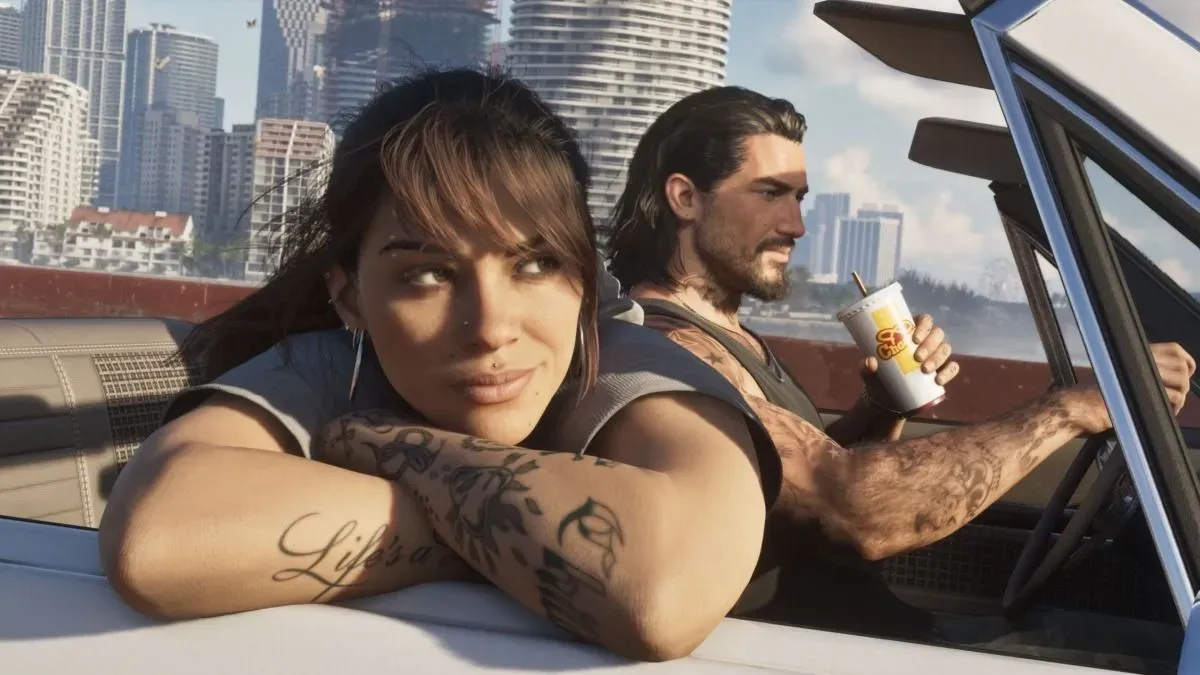
Rockstar has staffed Grand Theft Auto VI's radio stations with Rolling Stones guitarist Keith Richards, Fleetwood Mac's Lindsey Buckingham, and Miami pop icon Gloria Estefan, each hosting under a strange DJ alias, per Consequence. For executives in entertainment, media, and consumer brands, the move is a case study in converting production detail into pre-launch attention and a licensing moat competitors cannot copy quickly.
Grand Theft Auto VI has opened the airwaves of Leonida, and Rockstar has packed the dial with names that could sell out an arena. Consequence reports that the game's radio DJs include Rolling Stones guitarist Keith Richards, Fleetwood Mac's Lindsey Buckingham, and Miami pop icon Gloria Estefan, each hosting under an appropriately strange DJ alias. The roster reaches well beyond rock royalty. The outlet describes a collection of musicians, actors, comedians, DJs, and other familiar voices keeping players company behind the wheel, spread across stations that span blues, classic rock, Latin music, jazz, metal, hip-hop, country, and electronic music.
The names are the headline. The aliases are the strategy. Casting Richards, Buckingham, and Estefan as fictional hosts rather than as themselves lets Rockstar borrow the credibility and the curiosity those names carry while keeping the game's world sealed and self-referential. Consequence frames the roster as another example of the absurd level of detail tied to the game's highest-rated standing, and that framing is the point. For anyone building a consumer product, granularity is not decoration. It is differentiation, and it is the thing competitors cannot copy quickly.
For context, radio has been load-bearing in Grand Theft Auto since the series went 3D. Stations historically do double duty: they score the drive, and they build the place, teaching players what a fictional city sounds like before they ever read a line of dialogue. The franchise's Vice City entries have long leaned on Miami's musical identity, which makes the presence of Estefan, a star synonymous with that city's sound, read less like a random booking and more like deliberate world-building. Leonida, the game's fictional Florida, ends up with a roster that includes a genuine Miami legend.
Then look at the shape of the dial itself. Blues, classic rock, Latin, jazz, metal, hip-hop, country, electronic: that is not a soundtrack, it is a segmentation strategy. Each station is a product surface aimed at a different listener, and each host is a signal to that audience that the game was built with them in mind. Stacking musicians next to actors, comedians, and working DJs widens the net further, because the person who tunes in for a guitar hero is not necessarily the person who tunes in for a punchline. One title, many tribes, no dilution.
The economics behind that dial are worth understanding. Music licensing in games is typically negotiated track by track with labels and publishers, and it has historically been one of the quieter line items in a large production. The harder obstacle is usually coordination rather than budget, since every track involves rights holders with their own priorities. Celebrity hosting adds a second layer: agents, schedules, likeness, and a star's willingness to attach their name to the product. Recruiting this many recognizable voices into one title signals leverage, and leverage in licensing usually shows up as better terms and access to catalogs smaller studios simply cannot reach.
The second-order effects cut both ways. Artists who land on a Grand Theft Auto station historically get something money struggles to buy: reintroduction to an enormous, younger audience that discovers back catalogs through play. For the talent's representatives, a game credit now sits alongside film, streaming, and brand deals as a legitimate marketing channel. For Rockstar, every name on the roster is a press cycle, and every press cycle is attention captured before a single player turns the key. The dial is not background noise; it is a distribution channel for other people's music and for the game's own reputation.
That is the part peers in entertainment, consumer brands, and platform businesses should study. Attention is the scarce resource, and the roster turns production spend into earned media months before launch. Detail at this scale also functions as a moat: competitors can match a feature list, but matching a cultural Rolodex and the licensing apparatus behind it takes years. The same logic applies far outside gaming, wherever a company competes on craft rather than price. Depth is expensive up front and cheap to defend later.
What to watch next is straightforward. Which stations get the marquee names, how those aliases get used in marketing, and whether the radio dial becomes a template other publishers try to imitate. Rockstar has already answered the first question loudly, and the aliases give its marketing team a cast of characters it owns outright. Either way, the dial reads as a launch asset rather than an afterthought. The rest of the industry is now on the clock.
This story's Key Insights and Take-aways are locked.
Create a free account to unlock Executive Actions for one credit.
Register to UnlockAlways free for Executives Club members. Join the Club
More in Entertainment

GTA 6 banks $3.8bn in one day, torching every launch record
One game just out-earned every video game launch and every single-day film box office haul in history, and the fallout lands on every media CEO's forecast.

GTA VI Racked Up $3.79 Billion in a Single Day, Topping Every Film Ever
A 13-year wait produced a $3.79 billion day, more than any movie has made in its entire run, and it resets the launch math for every studio, streamer, and brand chasing the same attention.

GTA 6 sells 32.5M pre-sales and $3.79B day one, torches 13-year record
Rockstar's sequel didn't just beat Grand Theft Auto V's 13-year-old benchmark; it reset what a launch can be, with 32.5 million pre-sale copies and $3.79 billion in a single day.