
GTA 6's $99.99 Ultimate Edition Locks Standard Players Out of Shops
Rockstar's $20 upcharge buys access to four Leonida shops, but Standard Edition buyers find locked doors, and the backlash is colliding with a record $3.79 billion launch.
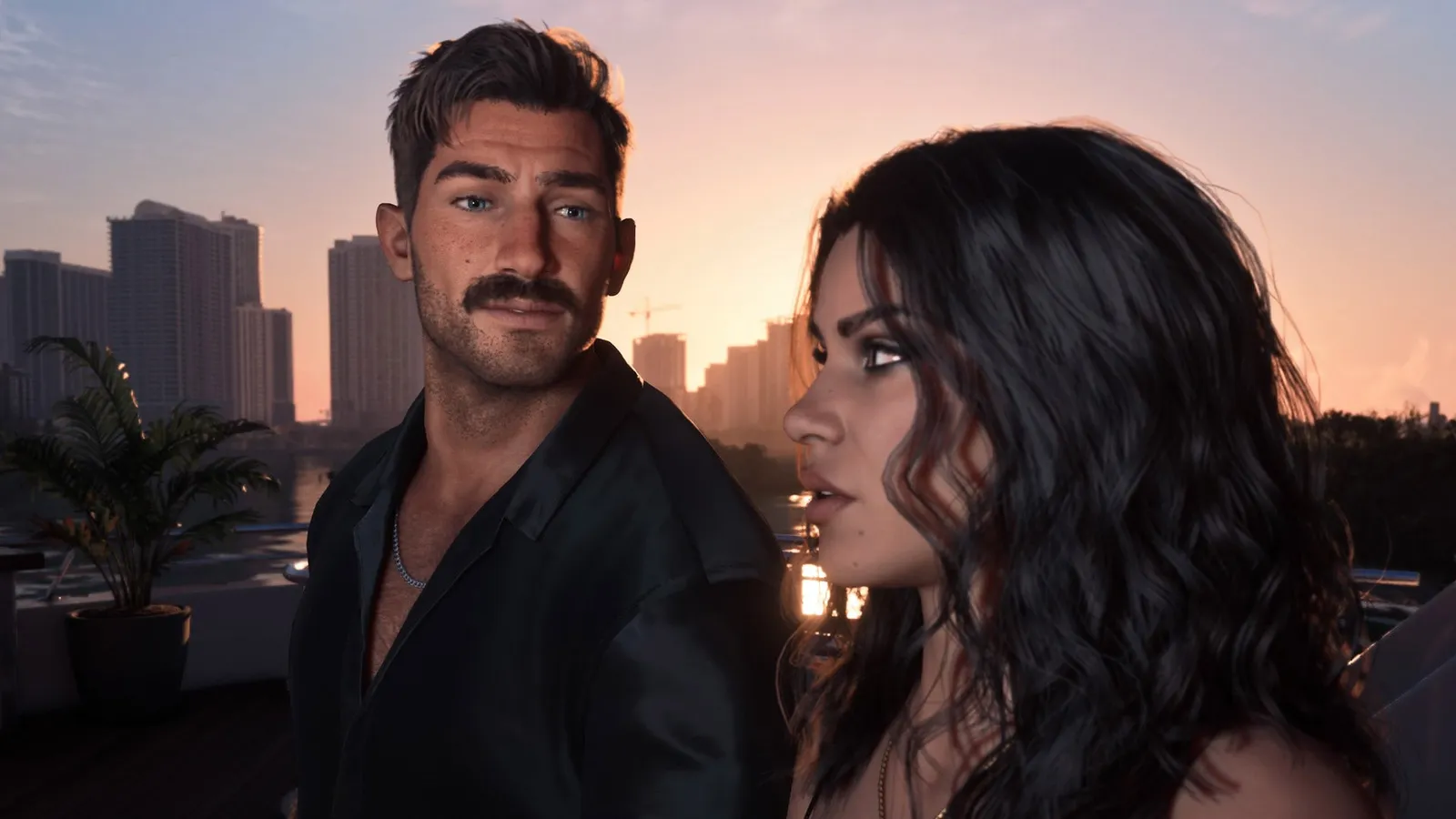
Rockstar Games is selling a $99.99 GTA 6 Ultimate Edition that includes access to exclusive in-game shops, while $79.99 Standard Edition buyers are finding those same storefronts physically locked. The backlash over finished content gated behind a $20 upcharge is testing player goodwill just as Rockstar claims the biggest entertainment launch in history at $3.79 billion in 24 hours.
Rockstar Games did not just sell a $20 cosmetic bundle. It sold a key. GTA 6 launched for PlayStation 5 and Xbox Series X/S on November 19 with two editions: a $79.99 Standard Edition and a $99.99 Ultimate Edition. The Ultimate Edition grants access to a few stores across Leonida, including One-Eyed Willie's, Sara's Unisex Salon, Stock 305, and Electric Fang Tattoo Parlor. Standard Edition players who walk up to those shops do not get a menu, a preview, or a polite upsell. They get locked doors. The interiors are fully decorated, according to IGN's side-by-side breakdown, but they are completely closed off to anyone who did not pay the extra $20. That is the flashpoint.
Players expected some restriction. Rockstar had been clear about what the Ultimate Edition would mean for Standard owners. But many assumed they could at least enter the locations and not buy anything. Instead, the door itself is the paywall. The reaction online has been blunt. One player said, "I'm all for companies making money - but when you pull the kinda money rockstar is - this just feels greedy/shady." Another replied, "Paid $80 just to get bounced from a store like I'm under 21." Another player reacted, "So the Ultimate Edition just locks the door in your face?" And another: "That's the most expensive closed sign I've ever seen." The words "greedy" and "shady" are not a pricing debate. They are a trust signal.
Why this stings more than a normal preorder bonus. In games, premium editions typically bundle cosmetics, early access, or virtual currency. Those are additive: the base game still feels whole. Here, the source says the shops have fully decorated interiors and represent a relatively substantial amount of finished content. The player is not missing a skin. They are standing outside a building that exists, looks open, and is functionally dead to them. That turns an upsell into a visible class divide inside the game world. Every time a Standard player walks past Stock 305 or Electric Fang Tattoo Parlor, Rockstar's monetization is not a menu screen. It is architecture.
The timing sharpens the contradiction. Rockstar says GTA 6 secured the biggest entertainment launch in history with $3.79 billion in just 24 hours. IGN gave the game a 10/10 review. That is a victory lap by any measure. But the same launch is generating a backlash over a $20 gate. The math is simple: if millions of players already paid $79.99, the marginal revenue from the Ultimate Edition is enormous, but the marginal goodwill cost is also visible. A locked door is a permanent reminder of what the player did not buy. In live-service games, resentment compounds. It shows up in review bombs, refund requests, support tickets, and social posts that outlive the launch window.
For context, the industry has spent years testing how far premium editions can go. Publishers have sold season passes, day-one DLC, and early access. The standard defense is that the content is optional and the base game is complete. GTA 6's locked shops test that defense because the content is not just optional. It is physically embedded in the open world. Players can see it, walk to it, and be turned away. That is a different psychological contract. It says the world itself has tiers. For a game built on immersion, that breaks the fiction more than a missing outfit ever could.
The player suggestions in the source point to a cheaper compromise. Some said the exclusive shops could have been a late-game unlock. That would preserve the sense of progression and still give Ultimate buyers early access or perks. Instead, Rockstar chose a hard binary at launch. That choice may be defensible on a spreadsheet. It is harder to defend in a Vice City street. The source does not include a Rockstar comment on the backlash. What is clear is that the door policy is now part of the GTA 6 story, alongside the $3.79 billion figure and the 10/10 review.
The strategic stakes reach beyond Rockstar. Every publisher watching this launch is weighing the same trade-off: extract more revenue from superfans or protect the perceived fairness of the base game. GTA 6 is a rare test case because its scale is so large. If the backlash fades, the industry may read it as permission to put more finished content behind premium gates. If it persists, boards may demand softer paywalls, late-game unlocks, or clearer disclosure. The source shows players are not rejecting monetization outright. One player explicitly said they are all for companies making money. They are rejecting the feeling of being locked out of a world they already paid $80 to enter.
For executives, the lesson is not that premium editions are bad. It is that visible exclusion carries a cost that does not show up in the launch-day revenue line. Rockstar's $3.79 billion in 24 hours proves demand. The locked doors prove that demand and goodwill are not the same asset. The next earnings call may celebrate the former. The next community update may have to manage the latter. In a franchise this big, the door in the face is not a small design choice. It is a signal about who the game is for.
This story's Key Insights and Take-aways are locked.
Create a free account to unlock Executive Actions for one credit.
Register to UnlockAlways free for Executives Club members. Join the Club
More in Business

S&P 500 Enters Correction, Down 10% From Its High on AI Worries
The index's slide past the 10 percent line is a symbolic verdict on investor mood, and the AI trade that powered the rally is now the thing testing it.

Dow and S&P 500 enter correction as Nasdaq logs worst week since 2020
All 11 S&P 500 sectors fell more than 1% in the same week for the first time since April 2025, a breadth signal that matters more than any single index level.

Chip stocks lose $2.3 trillion in a week, worst run in 25 years
A $2.3 trillion weekly wipeout in semiconductors is forcing every board with an AI story to ask whether it owns a thesis or just a crowded trade.