
GTA 6's Japanese build hides male nudity behind a thong, and players noticed
A single regional compliance edit in Japan became the game's biggest launch-week story, proving that localization decisions now travel globally in hours.
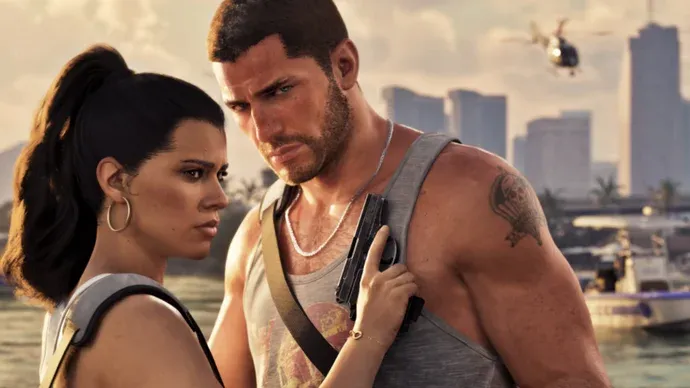
GTA 6 is rolling out market by market, and Japanese players have found that male nudity in the game is only partially obscured by a thin black thong worn by Jason and the other men in Leonida. For publishers, platform holders and anyone shipping products across borders, the episode is a live case study in how a small regional edit becomes a global marketing event within hours.
GTA 6 is rolling out country by country, and Japan has handed the game its first genuine launch-week talking point. Players there have discovered that male nudity is only partially obscured, covered by a thin black thong worn by Jason and the other men in Leonida. Not cut. Not replaced with a different camera angle. Covered, barely, by a strip of fabric. The game is already playable in markets including South Korea and New Zealand, so the detail surfaced as part of a staggered global release rather than a single worldwide switch-on.
That detail is the story. Regional censorship is routine across games, film and television. What is not routine is the shape it takes here. A full removal would have been invisible, a quiet edit nobody outside a compliance team would ever notice. A thong is visible, specific, and instantly screenshot-able. Within hours the change stopped being a footnote and became the most-shared image from a title that has spent years at the center of the industry's release calendar.
For context, most major markets run some form of age-rating or content-classification body, and publishers routinely submit different builds to different regulators. Japan's system has historically been among the more restrictive in the major markets, and edits made for a single territory are usually kept quiet, buried in patch notes or never mentioned at all. The source of this particular change has not been confirmed publicly. The working assumption among players is regional censorship, which is why the phrase "seemingly due to regional censorship" is carrying so much weight in the coverage.
Here is the part executives should sit with. A censorship decision designed to reduce exposure generated more exposure than the uncensored version ever would have. The thong is funny, it reads in a single frame, and it needs no context to land. That is the exact profile of content that travels. Rockstar Games, the studio behind the series, and its parent company Take-Two Interactive have built a business on provocation, but this particular provocation was not authored by them. It was authored by a compliance process, and it escaped.
The mechanics matter too. A staggered rollout means the game's content is being stress-tested in public, market by market, with each new territory acting as a fresh reveal. Every regional divergence is now a potential news cycle. For a release of this scale, that cuts both ways: the same staggered schedule that lets a publisher manage server load and retail logistics also guarantees that any local edit gets discovered by a global audience within hours rather than months.
There is also a commercial angle that is easy to miss. Japan is one of the largest games markets in the world, and a launch there is not a rounding error. Publishers do not make these edits casually; they make them because the alternative is a delayed release, a higher age rating, or no release at all. The trade-off is usually invisible to players. This time it was not, and the cost of that visibility is a global audience now scrutinizing every regional build for the next odd detail.
The second-order effects land on teams that rarely get attention. Localization and compliance staff now operate in a world where their smallest judgment call can become a headline. That raises the internal cost of every edit. Legal wants the change, marketing wants consistency, community teams want to avoid a moderation fire, and nobody wants to be the person who signed off on the version that went viral for the wrong reason. Expect more publishers to route regional content decisions through communications earlier, and to design scenes with ratings thresholds in mind before a build is locked.
The broader lesson for anyone shipping a product across borders is that localization is no longer a back-office function. It is a brand surface. A regional edit is a public statement about what a company believes its audience in that market can handle, and audiences increasingly read it that way. That holds for games, and it holds just as firmly for streaming catalogues, advertising creative, and app features that get switched off in some countries and left on in others. What to watch next: whether other territories show similar or different edits, whether the thong becomes a permanent piece of GTA 6 iconography, and whether publishers start treating regional divergence as a launch-communications problem rather than a purely legal one. The game is still rolling out. The thong, for now, is winning.
This story's Key Insights and Take-aways are locked.
Create a free account to unlock Executive Actions for one credit.
Register to UnlockAlways free for Executives Club members. Join the Club
More in Entertainment

GTA 6 banks $3.8bn in one day, torching every launch record
One game just out-earned every video game launch and every single-day film box office haul in history, and the fallout lands on every media CEO's forecast.

GTA VI Racked Up $3.79 Billion in a Single Day, Topping Every Film Ever
A 13-year wait produced a $3.79 billion day, more than any movie has made in its entire run, and it resets the launch math for every studio, streamer, and brand chasing the same attention.

GTA 6 sells 32.5M pre-sales and $3.79B day one, torches 13-year record
Rockstar's sequel didn't just beat Grand Theft Auto V's 13-year-old benchmark; it reset what a launch can be, with 32.5 million pre-sale copies and $3.79 billion in a single day.