
GTA 6's Real Star Power Is on the Radio: Weird Al to Jeremy Irons
Rockstar's launch credits confirm a radio roster running from Weird Al and Lana Del Rey to Bad Bunny, Keith Richards and Jeremy Irons, and it reveals where game publishers now spend to buy attention.
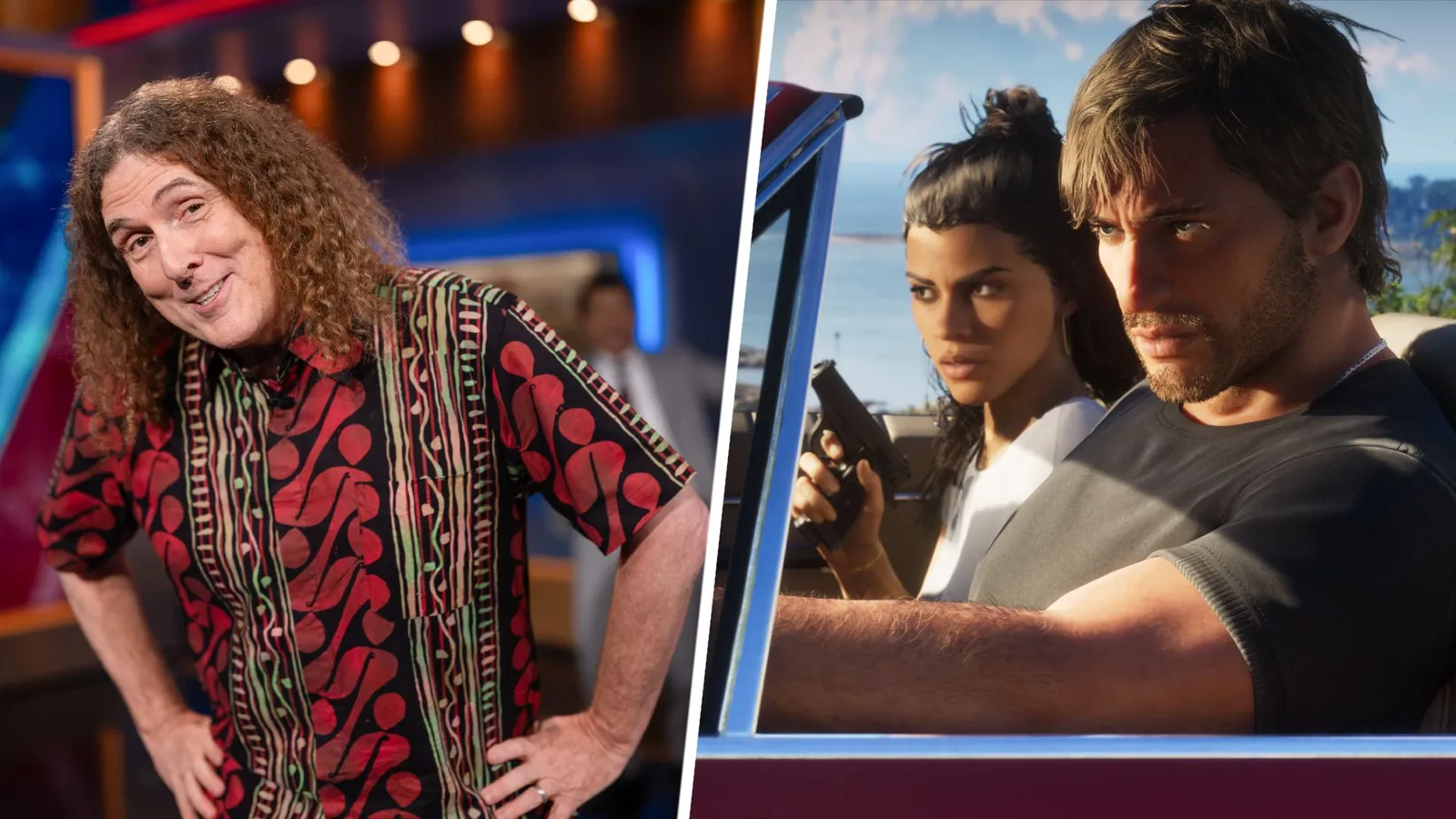
Rockstar Games published the full Grand Theft Auto 6 credits at launch, confirming that 'Weird Al' Yankovic hosts the Vice City FM '80s station alongside Brigitte Nielsen, with Lana Del Rey, Bad Bunny, Keith Richards, Robyn, Gucci Mane and Jeremy Irons among the other radio voices. For executives in media, music and marketing, the roster shows how a blockbuster game has become a launch-scale distribution channel for talent, catalog music and in-game advertising.
Rockstar Games did not bury the lede in its credits. 'Weird Al' Yankovic confirmed on Bluesky that he is the voice of DJ Al, host of Vice City FM, Grand Theft Auto 6's 'non-stop '80s' radio channel, sharing the booth with Swedish actress, model and singer Brigitte Nielsen. 'I also wrote some in-game commercials, and I'm the voice of the Burger Shot ads as well!' he wrote, adding that as a long-time fan of the Grand Theft Auto franchise he 'couldn't be more excited about this. Okay, gotta get back to playing the game!' Rockstar's full credits, published the moment launch time hit, double-confirmed every word.
Yankovic is the funniest name on that list, not the biggest. Lana Del Rey hosts Back Country Radio. Latin music phenom Bad Bunny runs Cocoteo FM. Dirty South Classics is held down by Trina, Trick Daddy and Gucci Mane. Pop station Flash FM is helmed by Robyn and Alex Consani, the first transgender model to win Model of the Year at the British Fashion Awards and a celebrated TikTok personality. Keith Richards is in there. On talk radio you get Ted Lasso's Jason Sudeikis, Abbott Elementary's Janelle James and John Leguizamo, plus Stavros Halkias doing a conservative talk radio bit. And Kaleidoscope FM is hosted by Jeremy Irons. The Academy Award-winning actor. The man was in Kafka. Now he is in cyber-Florida.
Here is why the radio bench matters more than it looks. Radio is the one channel inside a game like this that a player cannot skip. You can fast-forward a cutscene, mute a tutorial, ignore a menu. You cannot avoid the DJ when you are driving across a map for the two-hundredth time. That makes the station roster the highest-frequency real estate in the entire product, heard for hundreds of hours by millions of people who are, by definition, not looking at their phones. It is ambient media with a captive audience, and Rockstar has stacked it with names that generate headlines on their own.
Note the second layer: Yankovic did not just host. He wrote in-game commercials and voices the Burger Shot ads. That is a talent deal spanning performance, writing and advertising reads inside a fictional economy. For anyone negotiating brand or creator contracts, that is the template to watch, because it collapses three line items into one relationship and puts a celebrity voice inside the game's own ad inventory.
The narrative cast follows a different logic. SNL alumnus Bobby Moynihan voices Cal, described as Jason's bumbling, conspiracy-brained buddy, while the pair's criminal boss man, Brian Heder, is performed by Stephen Root, recognizable as Bill Dauterive on King of the Hill, Milton in Office Space, and a parade of magnificent weirdos across the Coen brothers filmography. So the structure is two-tier: a smaller, tightly cast group carries the story, while a much larger, much more famous group carries the vibe, the cultural credibility and the launch-week press cycle.
Historically, the Grand Theft Auto series has treated radio as a cultural artifact rather than a soundtrack, a curated mixtape with DJ patter that doubles as a time capsule of a city and an era. That history is exactly why the station list functions as a licensing product and a marketing surface at once. For labels and publishers, placement inside a launch of this scale is distribution. For artists, a catalog track can get a second commercial life in front of an audience that was not alive when it charted. For brands, the in-game commercial slots are a test case in advertising inside a world people chose to enter.
The credits themselves are also a piece of strategy. Rockstar published them at launch, which turned a bureaucratic appendix into a spoiler-safe press release and a second news cycle that did not require a trailer, a demo or a review embargo to break. That is cheap, durable attention, and it arrives precisely when the audience is already searching for reasons to keep talking about the game.
The strategic stakes for peers are straightforward. If you sell attention, music, talent or advertising, the biggest entertainment launch of the moment just told you where it believes the audience's ears live: in the unskippable, ambient, hours-long middle of the experience, not in the set pieces. Watch whether radio engagement becomes a metric publishers start bragging about, whether in-game advertising matures into a real channel with real rate cards, and whether rival studios respond by building their own celebrity radio rosters. The cost of that talent is real, and attaching famous names to a mature-rated product carries its own reputational math. But the upside is a roster that markets itself, one drive at a time.
This story's Key Insights and Take-aways are locked.
Create a free account to unlock Executive Actions for one credit.
Register to UnlockAlways free for Executives Club members. Join the Club
More in Entertainment

GTA 6 banks $3.8bn in one day, torching every launch record
One game just out-earned every video game launch and every single-day film box office haul in history, and the fallout lands on every media CEO's forecast.

GTA VI Racked Up $3.79 Billion in a Single Day, Topping Every Film Ever
A 13-year wait produced a $3.79 billion day, more than any movie has made in its entire run, and it resets the launch math for every studio, streamer, and brand chasing the same attention.

GTA 6 sells 32.5M pre-sales and $3.79B day one, torches 13-year record
Rockstar's sequel didn't just beat Grand Theft Auto V's 13-year-old benchmark; it reset what a launch can be, with 32.5 million pre-sale copies and $3.79 billion in a single day.