
GTA VI hits 'masterpiece' reviews after 13 years and two delays
Critics say Rockstar's two-lead gamble in Vice City was worth the wait, and a trailer that drew 90m views in 24 hours shows why this launch matters far beyond gaming.
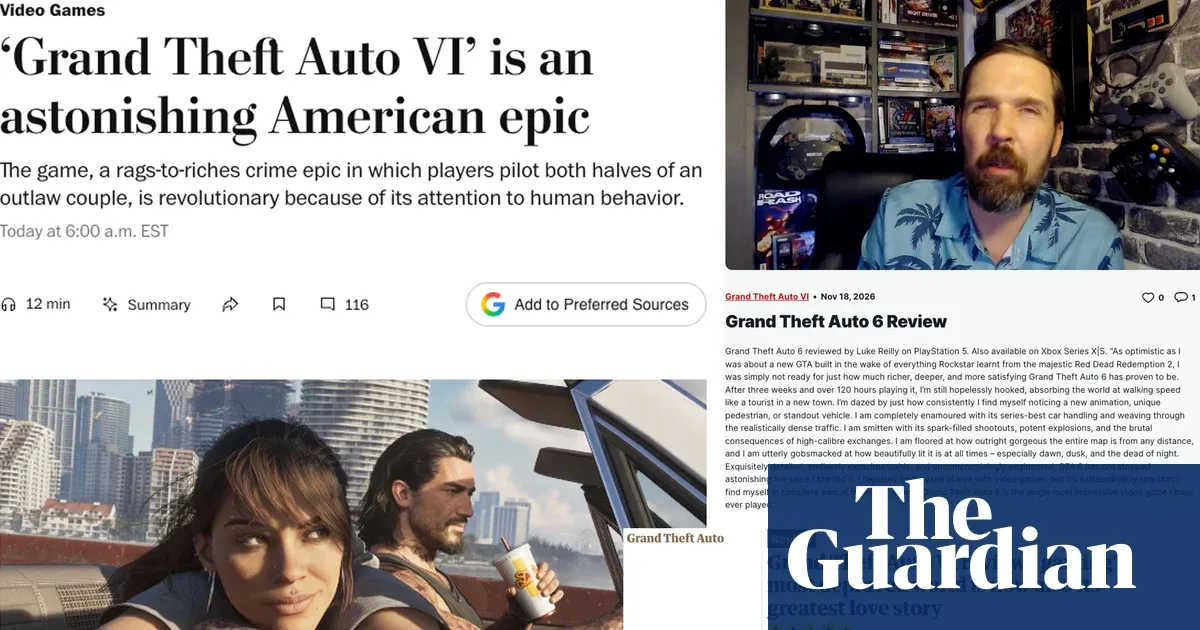
Rockstar Games' Grand Theft Auto VI has arrived to critical praise, with reviewers singling out the relationship between its two leads after 13 years of anticipation, two release delays and a debut trailer that pulled more than 90m views in 24 hours. For executives, the launch is a case study in how one release can command global attention, reshape competitors' release calendars and turn patience into pricing power.
Thirteen years of waiting ended with a verdict critics did not hedge: Grand Theft Auto VI is a masterpiece. Rockstar Games has returned players to Vice City, its fictional version of Miami, and the reviews landing now praise the game in terms usually reserved for film festivals rather than console launches. The scale of the audience was never in doubt. The first trailer, released in December 2023, pulled in more than 90m views in 24 hours, a figure that puts most film trailers and streaming premieres in the shade.
The specific thing reviewers keep circling is not the size of the map or the handling of the cars. It is the relationship between the game's two leads. That is the creative bet at the centre of the release, and according to critics it is the one that pays off, giving the series an emotional engine it has historically done without. For a franchise built on satire, mayhem and a single antihero, a two-hander is a structural change, not a cosmetic one. It alters how missions are written, how dialogue is paced, and how long a player stays invested once the novelty of a new city wears off. Critics calling it out first tells you where the differentiation actually lives.
Context matters here. The anticipation has been building for 13 years, and the road was not smooth. There were two release delays, each one pushing the date and testing the patience of an audience that had already waited more than a decade. Between those delays came a steady stream of leaks and speculation that kept the game in headlines even when Rockstar said nothing at all. That is an unusual marketing position: the product generated its own news cycle, and the company's job became managing attention rather than manufacturing it. Very few brands get to operate that way, and fewer still survive it without the hype curdling into resentment.
For the business side of the industry, the launch is a scheduling event as much as a cultural one. Rockstar's parent company, Take-Two Interactive, sits on one of the few franchises capable of moving hardware, subscriptions and storefront traffic at the same time. Publishers have historically treated a GTA launch window as territory to avoid, because competing for the same wallets and the same hours in the same fortnight is a losing trade. If that pattern holds, the ripple runs through release calendars, marketing budgets and quarterly guidance across the sector, not just inside one studio. Rivals do not have to lose to this game to feel it; they only have to launch near it.
The 13-year gap also says something uncomfortable about how premium games get made. Titles at this scale typically involve years of production, thousands of contributors and budgets that would make a mid-sized film studio flinch. Delays are expensive, and two of them are the kind of thing that tests a board's nerve. The counterargument, now backed by reviews, is that the wait protected the asset. A franchise this valuable only gets one shot at a first impression, and shipping early is the one mistake that cannot be patched later. That trade-off between schedule certainty and brand equity is familiar well beyond gaming.
What happens next is where the real money sits. Reviews are the opening data point, not the verdict. The longer test is whether the two-lead relationship holds up across dozens of hours, and whether the online component that turned the previous entry into a long-tail revenue engine repeats the trick. Live-service revenue is what converts a strong launch quarter into a decade of cash flow, and it depends entirely on players staying after the credits roll. A masterpiece review does not guarantee that; it only buys the game the time to earn it.
For executives outside gaming, the lesson is about patience as a strategy rather than a virtue. Rockstar spent 13 years and absorbed two delays to protect a brand that now does much of its marketing for it, and the payoff is a launch that arrives pre-loaded with attention. That is the opposite of the ship-fast, iterate-later playbook that dominates consumer tech, and it works only when the underlying product is scarce and the audience is loyal enough to wait. Most companies do not have that luxury. The ones that do should study what it bought.
This story's Key Insights and Take-aways are locked.
Create a free account to unlock Executive Actions for one credit.
Register to UnlockAlways free for Executives Club members. Join the Club
More in Entertainment

GTA 6 banks $3.8bn in one day, torching every launch record
One game just out-earned every video game launch and every single-day film box office haul in history, and the fallout lands on every media CEO's forecast.

GTA VI Racked Up $3.79 Billion in a Single Day, Topping Every Film Ever
A 13-year wait produced a $3.79 billion day, more than any movie has made in its entire run, and it resets the launch math for every studio, streamer, and brand chasing the same attention.

GTA 6 sells 32.5M pre-sales and $3.79B day one, torches 13-year record
Rockstar's sequel didn't just beat Grand Theft Auto V's 13-year-old benchmark; it reset what a launch can be, with 32.5 million pre-sale copies and $3.79 billion in a single day.