
Hakeem Jeffries Is Set to Become the First Black Speaker of the House
The New Yorker's Jason Zengerle tells NPR how a Brooklyn Democrat climbed to the top of a party mid-handoff, and why the gavel he is set to hold is the real prize.

Hakeem Jeffries, the New York Democrat, is set to become the first African American speaker of the U.S. House of Representatives, a rise that The New Yorker's Jason Zengerle traced in conversation with NPR's Scott Simon. For executives, the change means new committee chairs, new staff gatekeepers, and a fresh set of priorities controlling what can reach the House floor.
Hakeem Jeffries is set to become the first African American speaker of the U.S. House of Representatives, a first that has taken more than two centuries to arrive. That is the headline from NPR's Scott Simon, who spoke with Jason Zengerle of The New Yorker about how Jeffries got there. The office is nearly as old as the republic itself: the House first convened in 1789, and every speaker to hold the gavel since has been white. Jeffries, a Democrat from New York, is positioned to end that run.
The Simon-Zengerle conversation is a reported walk through that climb rather than a victory lap. Zengerle's New Yorker work traces the rise of a lawmaker who arrived in Washington as one of many and methodically worked his way into the room where his party's biggest decisions get made. The word "set" is doing real work here. The speaker is chosen by the House majority, which means Jeffries' path to the chair runs through an election result, not a coronation. If his party wins control, the caucus votes and the milestone follows. If it does not, the same reporting still explains how the top Democrat in the House built the standing to be the obvious pick when the opportunity comes.
Jeffries represents a Brooklyn district and came to Congress after a stretch in the New York State Assembly, with a lawyer's training behind him. That resume shapes how he operates. He is not a bomb-thrower by temperament; his reputation inside the Capitol is that of a disciplined, message-conscious operator who picks his fights carefully. For a party that has spent years arguing with itself about identity and direction, that profile is the point. The speaker's job is not to be the loudest voice in the room. It is to count votes, hold a fractious majority together, and decide what actually reaches the floor.
The history here is not decorative. Black lawmakers have served in Congress since Reconstruction, and the Congressional Black Caucus, founded in 1971, has produced committee chairs, caucus leaders, and serious legislative operators. The speaker's chair stayed out of reach. Jeffries' ascent is the product of a party that has changed demographically and a lawmaker who read that change early, building a national profile without ever becoming the loudest person in the room.
The speaker's power is structural, which is why this milestone lands well beyond symbolism. The speaker sets the House agenda, decides which bills get a vote, shapes committee assignments through the steering process, and sits second in the line of presidential succession, behind only the vice president. For anyone running a company with business before Congress, that makes the person holding the gavel the effective gatekeeper for what is even debatable. A speaker can park a bill forever or move it in a week.
The timing is not accidental. Democrats have been mid-handoff from the Pelosi era, and Jeffries has been the face of that transition at the top of the caucus. Elevating him to speaker would formalize a shift that has been underway for years: a younger, more diverse leadership team taking over an institution still run on seniority, relationships, and favors. That transition is where the real story sits, because the skills that make a good minority leader and the skills that make an effective speaker are not the same skills.
For executives, the practical read is about calendar and leverage. A new speaker means new committee chairs, new staff directors, and a fresh set of priorities for whatever your industry cares about, whether that is tax policy, tech regulation, energy permitting, or federal spending. Lobbying operations typically re-map their relationships the moment the gavel changes hands, because the staff who gatekeep a bill often matter more than the member whose name is on it. The earlier you know who is writing the first draft, the cheaper your influence is.
The larger stake is what the milestone says about the institution itself. The House has been the most volatile branch of the federal government for years, with a speaker ousted mid-term and majorities decided by a handful of seats. Putting the first Black lawmaker in the chair would be a genuine first, and it would also be a stress test: whether a leader known for discipline can hold a narrow, loud, and ideologically restless majority together long enough to actually legislate. That is the question Zengerle's reporting sets up, and it is the one that will define the next Congress.
This story's Key Insights and Take-aways are locked.
Create a free account to unlock Executive Actions for one credit.
Register to UnlockAlways free for Executives Club members. Join the Club
More in Politics
Cybersecurity Was an Afterthought for Decades. AI Is Now Sending the Bill
The internet's vulnerable code was never fixed, and AI is finding it faster than anyone can patch it, turning decades of technical debt into a live balance-sheet risk.

Hannity vows to name GOP lawmakers skipping votes before the majority expires
A prime-time host is turning the House attendance sheet into a public scoreboard, and Speaker Mike Johnson is sitting right next to him while the Republican majority runs out of days.
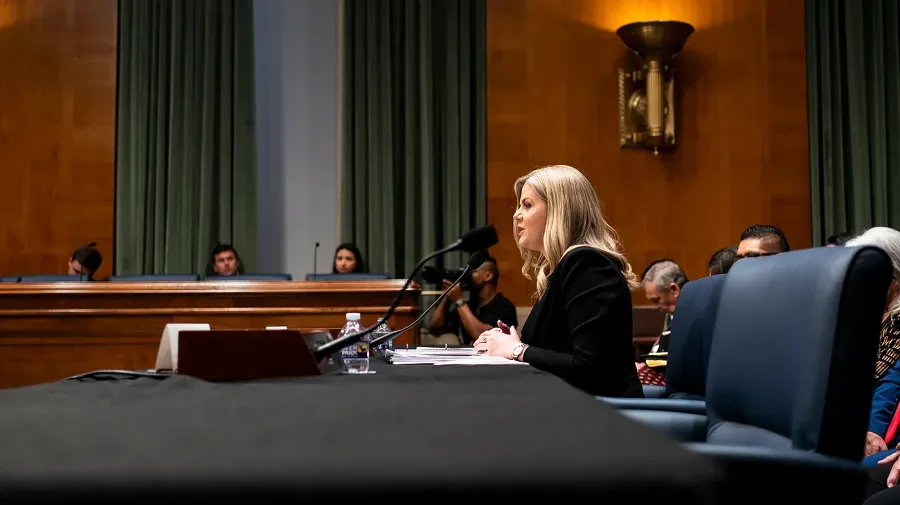
White House yanks FDA nominee, blindsiding senators and extending a six-month vacuum
Heidi Overton's abrupt withdrawal leaves the FDA without a confirmed commissioner six months after the last one resigned, and the Senate committee that would vet a replacement found out at the last minute.