

He Demanded $10M From Rockstar. Now He's in GTA 6's Credits
Lawrence Sullivan, the Florida Joker, turned a $10 million likeness threat into a credited voice role in GTA 6, and the reversal is a template for how studios now buy off right-of-publicity risk.
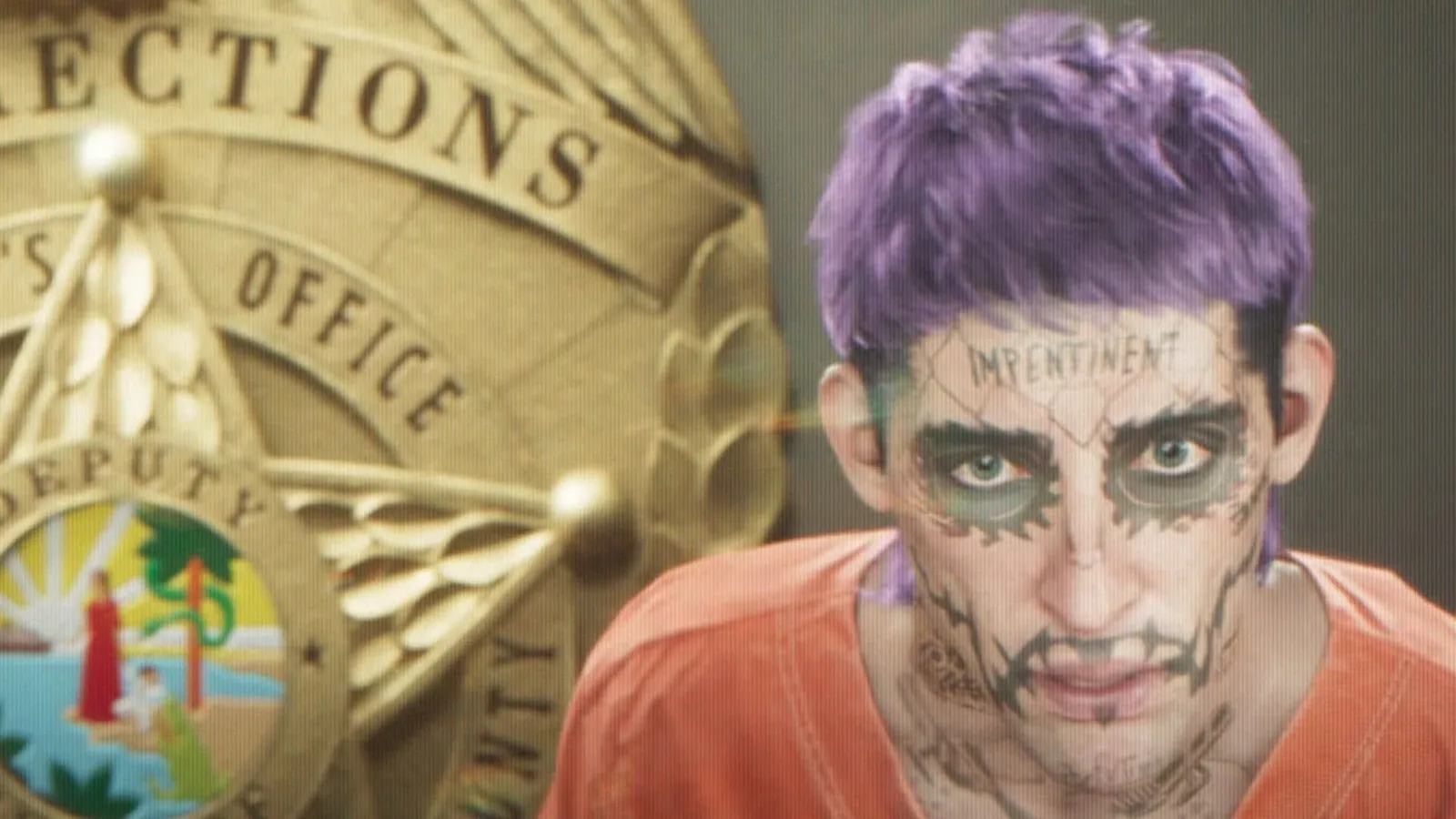
Lawrence Sullivan, the face-tattooed Floridian known as the Florida Joker, has confirmed he voices his own lookalike in Rockstar Games' GTA 6 after threatening a $10 million likeness suit and then scaling his demand down to involvement in the game. For executives, the episode shows how cheaply a studio can convert a right-of-publicity claim into a credited cameo, free promotion, and a playbook other publishers will copy.
Lawrence Sullivan, the face-tattooed Floridian the internet knows as the Florida Joker, has confirmed he voices his own lookalike in GTA 6, ending a three-year standoff that started with a $10 million lawsuit threat against Rockstar Games. In a video posted to social media, Sullivan did not hedge: "What's up? It's your boy Florida Joker, official voice actor on the GTA 6 game. For the last three years a lot of people were saying that I was not going to be in the game... but now it's time for me to s*** on them." His name sits in the credits alongside the other voice actors for the game's "local population," the ambient characters that make a Rockstar open world feel alive.
The role is not a background blur. Sullivan's purple-haired avatar appears in an in-game Snapmatic clip, the game's fictional social feed, where he confronts another man for stealing his look, knocks him out, and is later arrested. The dialogue is his: "Who the real one now b****. Take them fake tats off." It is a small part with an outsized wink, a studio turning a potential legal headache into a piece of content that markets itself.
The road there was not smooth. Sullivan went viral years ago after his mug shot, complete with distinctive facial tattoos and bright hair, circulated online. When Rockstar released the GTA 6 announcement trailer, viewers spotted a purple-haired character whose ink bore more than a few similarities to Sullivan's. Rockstar never confirmed the character was based on him. Sullivan responded by threatening a $10 million suit over the apparent use of his likeness, then walked the demand back to something simpler: involvement. "Let me voice the character. Let me go to the meet-and-greets. Let me promote the game," he said.
That pivot is the interesting part. Right of publicity, the doctrine that lets people control commercial use of their name, image, and likeness, is a real risk for studios that build worlds out of real-world texture. It is also a hard claim to win. Lindsay Lohan sued Take-Two Interactive, Rockstar's parent company, over a character in Grand Theft Auto V, and the case was dismissed, with the court finding the depiction was not recognizable as her. For context, that is the usual outcome: studios tend to win these fights, but they win them slowly and expensively, and a lawsuit is a headline either way. A trailer character modeled on a real person is an unpriced liability until someone clears it.
For Rockstar, the math is simple. GTA 6 is arguably the most anticipated game release in years, and Take-Two Interactive has a lot riding on it. One voice line and a cameo cost almost nothing next to a multi-year legal fight, and they buy something money usually cannot: a real person, with a real following, enthusiastically promoting the game for free. Rockstar's worlds are famous for dense, reactive crowds, and the local population is the layer that makes them feel lived-in, which means these small parts are not throwaway work. Sullivan gets what he actually asked for, a credit, a character, and a story he can tell forever. Both sides walk away with a win, which is exactly why this template tends to repeat.
The lesson lands well beyond one Florida man. Viral likeness is now a bargaining chip. People who become recognizable by accident, through a mug shot, a meme, a clip, increasingly find that the cheapest path for a large company is not a courtroom but a contract. That flips the usual power dynamic: an individual with no lawyer and no leverage suddenly holds something a studio wants, which is authenticity and a built-in audience. Sullivan's three-year arc, from $10 million demand to credited voice actor, is that playbook written in public, and it is now a reference point for anyone else who sees their face in a trailer.
For executives, the takeaways are operational. Likeness clearance is now a product decision, not just a legal one: the character that ships in a trailer is a claim waiting to be filed. Deals with non-traditional creators can be cheaper and louder than traditional casting, but they need contracts that cover voice, likeness, promotion, and the messy aftermath of a viral moment. And the reputational math cuts both ways. A studio that quietly hires the person it was accused of copying looks generous. One that ignores the claim and loses in the press looks like it stole from a guy with face tattoos. Rockstar, notably, never confirmed the character was based on Sullivan. It did not have to. It just put him in the credits.
This story's Key Insights and Take-aways are locked.
Create a free account to unlock Executive Actions for one credit.
Register to UnlockAlways free for Executives Club members. Join the Club
More in Entertainment

GTA 6 banks $3.8bn in one day, torching every launch record
One game just out-earned every video game launch and every single-day film box office haul in history, and the fallout lands on every media CEO's forecast.

GTA VI Racked Up $3.79 Billion in a Single Day, Topping Every Film Ever
A 13-year wait produced a $3.79 billion day, more than any movie has made in its entire run, and it resets the launch math for every studio, streamer, and brand chasing the same attention.

GTA 6 sells 32.5M pre-sales and $3.79B day one, torches 13-year record
Rockstar's sequel didn't just beat Grand Theft Auto V's 13-year-old benchmark; it reset what a launch can be, with 32.5 million pre-sale copies and $3.79 billion in a single day.