
Hutcherson Confirms Justice League Role as DC's Post-Gunn Slate Takes Shape
The Hunger Games star is officially a DC Universe franchise asset, and his public confirmation is the clearest signal yet that the slate is still being built after Gunn left the CEO seat.
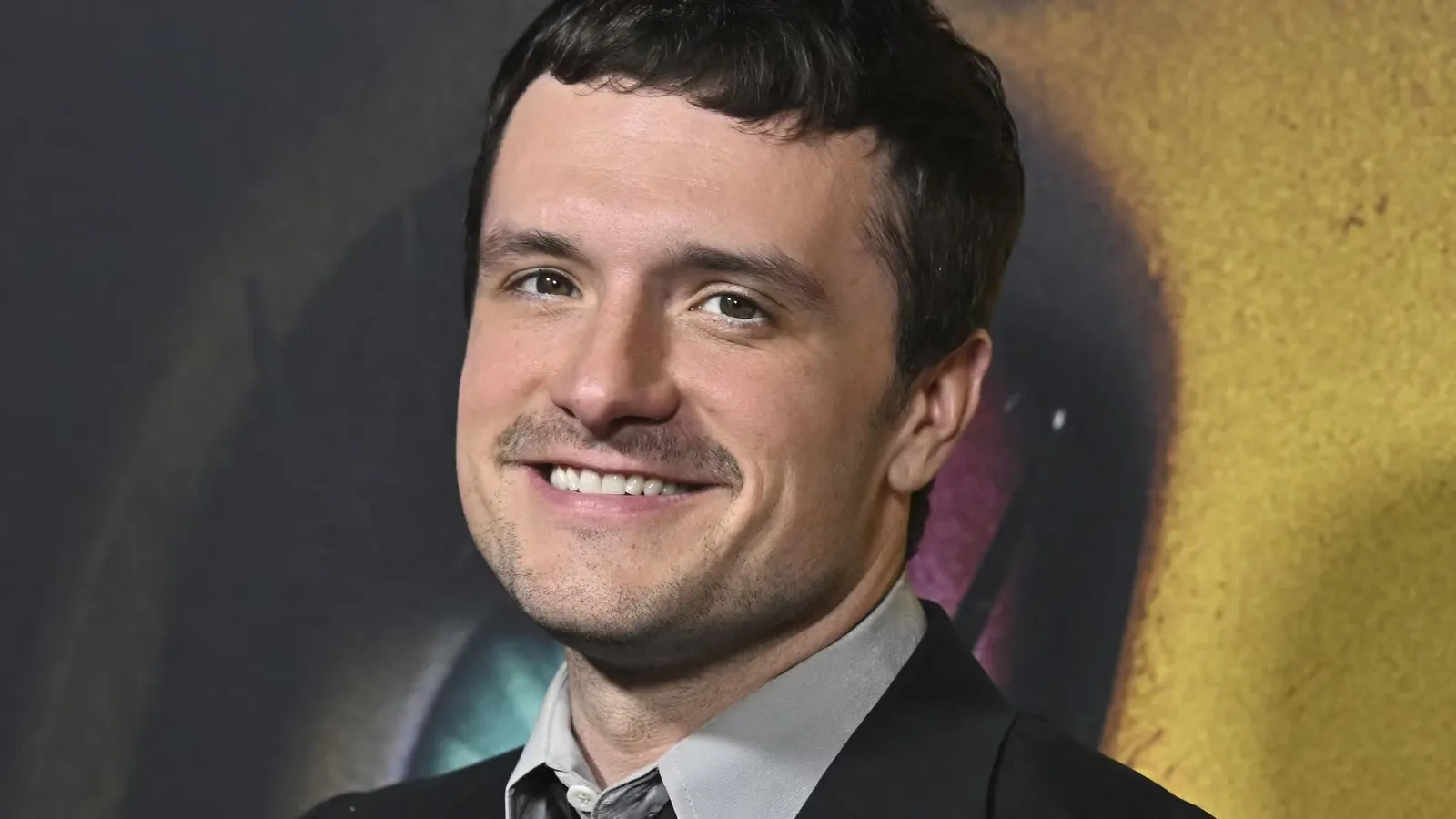
Josh Hutcherson has publicly addressed his casting as a Justice League hero in James Gunn's DC Universe, confirming he is officially joining the franchise as new heroes and villains continue to be added. For decision-makers in entertainment and IP, the announcement is a continuity signal: League-level casting implies multi-picture commitments, and it suggests the slate is still moving after Gunn's exit from the DC Studios CEO role.
Josh Hutcherson has officially addressed his casting as a Justice League hero in James Gunn's DC Universe, ending the silence that followed word he was joining the franchise. The ScreenRant report is the actor's first public acknowledgment of the role, and it settles the basic question fans have been arguing about since the news broke: he is in. What it does not do is name the hero, which is exactly the kind of withheld detail that keeps a franchise's marketing engine running for months. The timing is what makes it interesting. Gunn has exited the DC Studios CEO role, and new heroes and villains are still being added to the universe he built.
For context on why this is more than a single casting notice: the Justice League is not one movie, it is the load-bearing wall of DC's shared universe. Historically, the team has served as the studio's crossover hub, the place where solo franchises are meant to converge and where the biggest contracts, the longest commitments and the heaviest marketing spend tend to concentrate. Signing an actor to a League-level role typically means a multi-picture option rather than a one-off appearance. That is why the industry reads the news as a signal about slate planning, not merely as talent news.
The economics underneath are simple. A shared-universe franchise lives or dies on continuity, and audiences pay a premium for the promise that the film they watch this year connects to the one they watch in three. Every casting announcement is therefore a small piece of forward guidance, telling exhibitors, merchandising partners, streamers and international distributors that the pipeline is real. When a studio keeps announcing names after a leadership change, the subtext is that the slate survived the transition. When it goes quiet, the market reads the silence the same way.
That is the lens for Gunn's exit from the CEO seat. Leadership changes at a franchise studio raise a question that has burned peers before: does the creative map stay, or does new management redraw it? Casting is one of the few public answers available. A studio typically does not sign an actor to a League-level role, with the multi-film obligations that implies, if it is preparing to torch the blueprint. It also matters for the talent side, because actors, agents and the teams around them price leadership stability into the deals they sign, and a franchise with a clear creative steward historically attracts better terms and better names. Hutcherson's confirmation, thin as it is on specifics, reads as continuity rather than reset.
There is a talent-market angle as well. Hutcherson built his name as a co-lead of The Hunger Games, a four-film young-adult franchise, which is a specific kind of resume: he has already carried a global campaign, already worked the press circuit in multiple languages, already been the face on the merchandise. Studios value that. A superhero franchise is less a job than an annuity for the actor, and a proven franchise performer is a lower-variance bet for the studio than an unknown. The trade is straightforward: scale and exposure for the talent, a known quantity for the machine.
What to watch now comes down to three things. First, the character: which Justice League member he plays determines how central he is to the crossover math and how many films he is contractually on the hook for. Second, the timing: whether he debuts in an already-announced project or in something not yet on the calendar. Third, and most consequential, whether the casting holds through the leadership transition. Franchise history is littered with actors announced for roles that were quietly written out when a slate was reorganized. Announced is not the same as filmed.
The strategic stakes reach past one studio. Anyone running an IP-driven business, whether that is a film franchise, a game studio or a consumer brand, is making the same bet DC is: that audiences will follow a long, expensive story across years if the connective tissue holds. Casting and leadership are the two cheapest signals a company can send about whether that tissue is intact. Hutcherson's confirmation is a small, cheap, useful one. The lesson for operators outside Hollywood is not subtle: in any business built on long-dated promises, the announcement is a leading indicator and the delivery is the lagging one, and the gap between the two is where credibility is made or lost. The expensive signals come next, when the cameras actually roll.
This story's Key Insights and Take-aways are locked.
Create a free account to unlock Executive Actions for one credit.
Register to UnlockAlways free for Executives Club members. Join the Club
More in Entertainment

GTA 6 banks $3.8bn in one day, torching every launch record
One game just out-earned every video game launch and every single-day film box office haul in history, and the fallout lands on every media CEO's forecast.

GTA VI Racked Up $3.79 Billion in a Single Day, Topping Every Film Ever
A 13-year wait produced a $3.79 billion day, more than any movie has made in its entire run, and it resets the launch math for every studio, streamer, and brand chasing the same attention.

GTA 6 sells 32.5M pre-sales and $3.79B day one, torches 13-year record
Rockstar's sequel didn't just beat Grand Theft Auto V's 13-year-old benchmark; it reset what a launch can be, with 32.5 million pre-sale copies and $3.79 billion in a single day.