
Hydrogen flames flip from orange to invisible on trace airborne sodium
Trace sodium in the air decides whether a hydrogen burner glows orange or vanishes, so the hydrogen stoves now being designed cannot rely on visual flame detection.
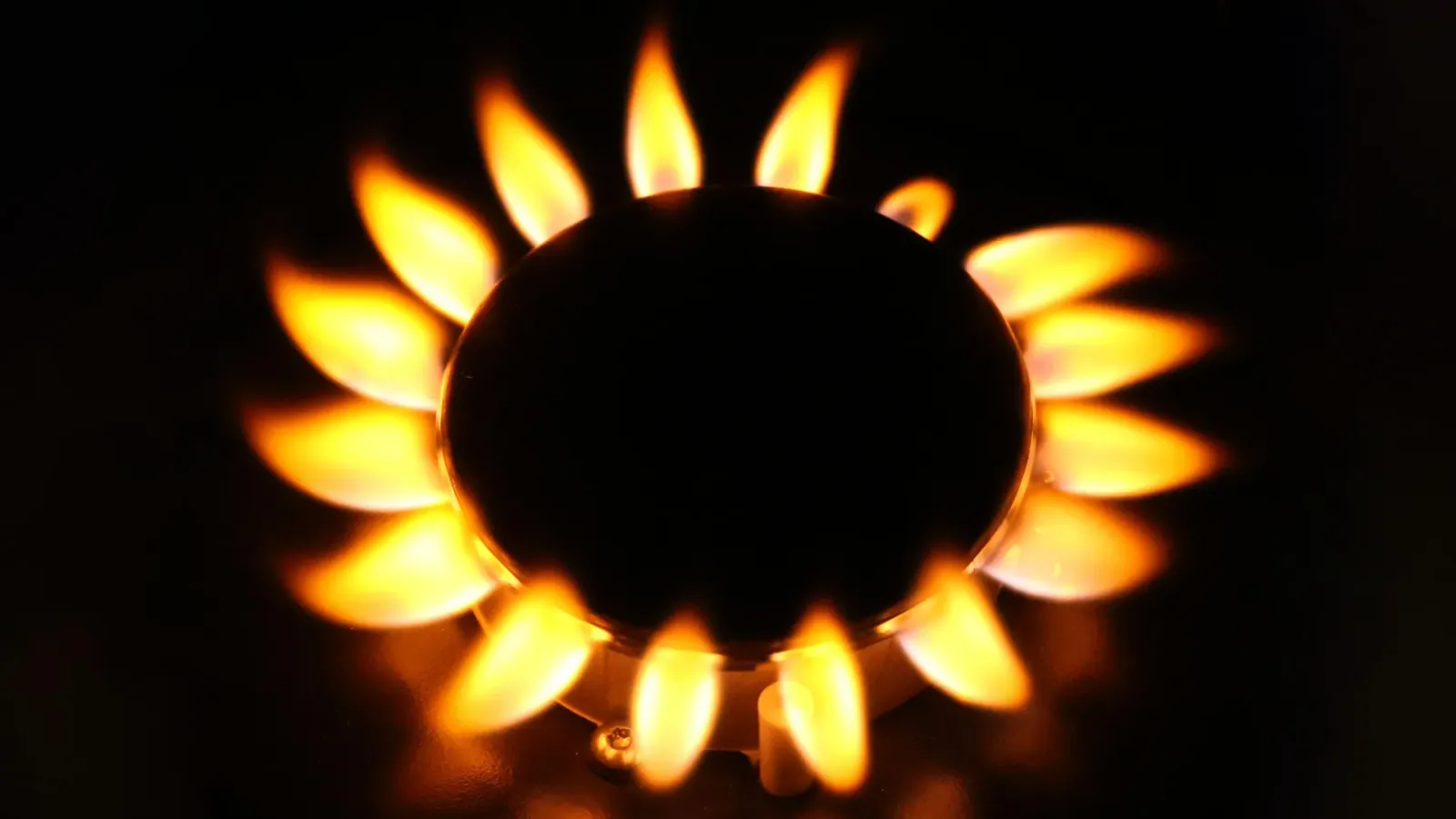
Scientists have found that tiny amounts of sodium floating in the air can shift a hydrogen flame from bright orange to nearly invisible, a quirk that undermines visual flame detection in future hydrogen stoves and ovens. For appliance makers, utilities and standards bodies, it means safety certification must be rebuilt around specialized sensors rather than what the eye can see.
Hydrogen flames can flip from bright orange to nearly invisible, and the switch is thrown by something almost no one would think to check: tiny amounts of sodium floating in the air. That is the finding from scientists studying how hydrogen burns, and it lands at an awkward moment. Hydrogen is being pitched as a clean-burning fuel for the next generation of stoves and ovens, and the safety case for a kitchen appliance has historically rested on one very human assumption: if there is a flame, you can see it. Sodium breaks that assumption.
For context, sodium is the element behind the orange glow of old low-pressure street lamps. When sodium atoms are present in even trace amounts, they absorb energy inside a flame and re-emit it as a strong orange light. Take the sodium out of the air and hydrogen's own flame, which is faint and blue, becomes nearly impossible to spot in a bright kitchen. Same fuel, same burner, radically different visual signature. The variable is not the appliance. It is the air around it.
The practical consequence is blunt. Scientists say the discovery could help make future hydrogen-powered stoves and ovens safer, but not by making the flame easier to see. It points the other way: toward replacing visual flame detection with specialized sensors. The fix is to stop trusting your eyes.
That matters because the kitchen is one of the last places where hydrogen is expected to show up in daily life. Utilities and appliance makers have spent years exploring hydrogen as a way to decarbonize heating and cooking, typically by blending it into existing gas networks or designing dedicated hydrogen appliances. The appeal is straightforward: burning hydrogen produces no carbon dioxide at the point of use. The complication is that almost everything about how a gas appliance is designed, tested and certified was built around natural gas, a fuel that behaves differently and, crucially, announces itself with a visible flame.
Hydrogen is the smallest molecule on the periodic table, which is why engineers have historically treated sealing and leak detection as the hard part of any hydrogen system. Its flame also radiates comparatively little heat, so it can be difficult to feel as well as see. In industrial settings, an invisible hydrogen flame has long been a known hazard, and the standard workaround is a broom handle or a thermal camera rather than a glance. None of that translates well to a home kitchen, where the person standing at the stove is not an engineer and the safety system has to work every single time.
So what does "specialized sensors" actually mean? In gas appliances, flame detection typically relies on a handful of proven approaches: thermocouples and flame rectification that sense heat or current, and ultraviolet or infrared detectors that look for the specific light signature a flame emits. Each has tradeoffs. Optical sensors can be fooled by ambient light or by the wrong wavelength. Contact sensors respond slowly. Every added sensor is another component that can drift, foul or fail, and a sensor that fails silently is arguably worse than a flame you cannot see, because it removes the human backstop without replacing it.
That is where standards bodies, certification labs and insurers enter the picture. Appliance safety codes are typically written around demonstrable, repeatable detection: a test that proves the system notices a flame-out and shuts off the gas. A finding like this one complicates that test. If the visible signature of a hydrogen flame depends on trace sodium in the air, then a lab test run in one room may not predict behavior in another, and a certification built on "we saw the flame" is not a certification at all. Regulators and standards groups will need detection criteria tied to physics rather than appearance, and manufacturers will need to prove their sensors work across the messy range of real kitchens: coastal air, cooking aerosols, dust, humidity.
The strategic stakes reach past the stove. Hydrogen's credibility as a consumer fuel depends on a chain of small, unglamorous engineering wins, and safety perception is the load-bearing one. A single high-profile incident involving an invisible flame would do more damage to the hydrogen appliance market than a decade of pilot programs could repair. For appliance makers, that argues for treating detection as a core product feature rather than a compliance checkbox, and for budgeting sensor redundancy the way the auto industry budgets braking. For utilities and hydrogen suppliers, it argues for getting ahead of the standard-setting conversation instead of reacting to it. For boards, the broader lesson is the one that keeps showing up: the expensive failures are the invisible ones. Sodium in the air is a tiny variable with an outsized vote on whether a multi-billion-dollar product category can be sold as safe.
This story's Key Insights and Take-aways are locked.
Create a free account to unlock Executive Actions for one credit.
Register to UnlockAlways free for Executives Club members. Join the Club
More in Science

Anthropic's I.P.O. Made Rank-and-File Researchers Worth Tens of Millions
Researchers who joined just a few years ago are now worth tens of millions, and the windfall resets the pay benchmark for every private A.I. lab still paying in paper.

Sea Lion Culling Strategy Fails: New Model Says Killing Them Won't Save Salmon
The latest research from AAAS overturn a long-held conservation assumption, forcing policymakers to rethink critical resource allocation in marine ecosystems.

Microplastics do more than pile up: they react with water to damage cells
Scientists have found that plastic particles can generate highly reactive molecules in water, a mechanism that could explain links to heart attacks, strokes, and neurological disorders.