
'I had felt overconfident': the mistakes five senior scientists say made their discoveries
Nature asked five veteran researchers, including a Nobel prizewinner, to revisit the dead ends and stubborn certainty behind their work, and the lesson travels well beyond the lab.
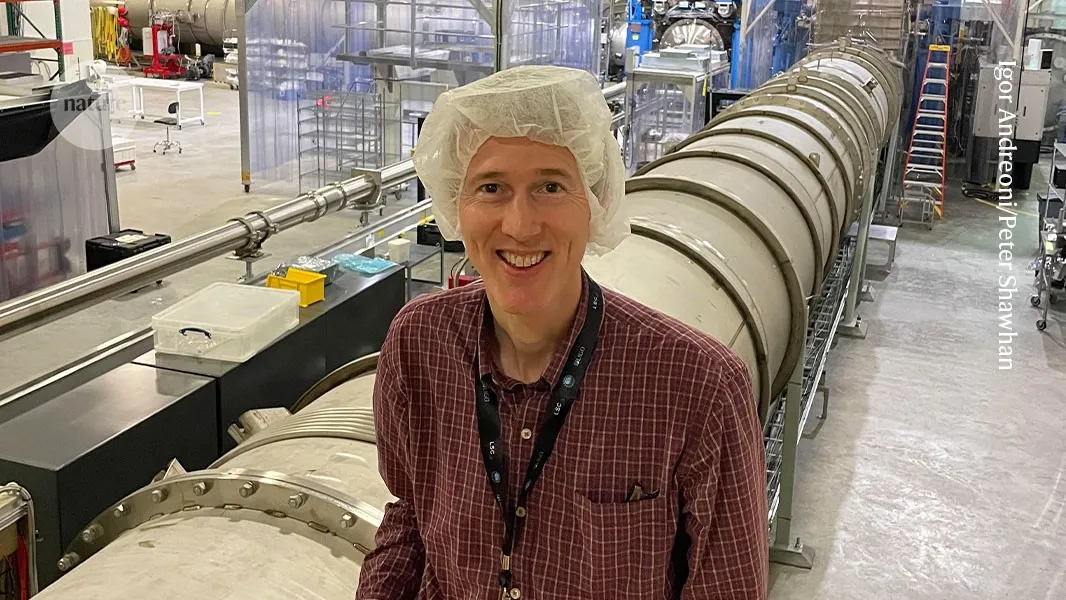
Nature published a piece on 20 November 2026 in which five experienced researchers, one of them a Nobel prizewinner, revisit the dead ends, bloopers and moments of stubborn certainty that shaped their science. For leaders who fund, staff and judge research, the takeaway is that the errors were not detours from the discovery, they were part of the mechanism.
The confession is the headline. On 20 November 2026, the journal Nature published a piece in which five experienced researchers, including a Nobel prizewinner, revisit the dead ends, bloopers and moments of stubborn certainty that shaped their science. The title carries the line from one of them: 'I had felt overconfident.' Read that again, because who is saying it is the point. These are not graduate students venting in a bar. They are senior scientists with reputations, careers and, in one case, a Nobel prize, and the mistakes they describe did not derail the work. According to the piece, they aided discovery.
That is a different claim than the usual 'failure is a great teacher' sermon, and it is worth being precise about what the piece is and is not. It is not a story about fraud, retraction or misconduct. It is five researchers walking back through their own histories and naming the dead ends, the bloopers and the moments of stubborn certainty that turned out to matter. The stubborn certainty is the most interesting item on that list, because it is the failure mode that feels like a virtue. Overconfidence, as the title quote suggests, is not the opposite of good science. It is frequently what keeps a researcher on a problem long enough to be right about it.
Which is why the venue matters as much as the content. Nature is about as selective as scientific publishing gets, and the incentive structure of the field has historically pointed the other way: journals favor positive results, negative results sit in drawers, and careers are built on published wins rather than documented wrong turns. For context, the long-running conversation about reproducibility has been, at bottom, an argument about that gap. So when a top-tier journal gives space to the bloopers, it is a small signal about what the institution now thinks is worth printing.
The Nobel detail does real work too. If the only people telling failure stories were the ones who failed and then disappeared, the lesson would simply be that failure is common. When one of the five holds the field's biggest prize, the collection is much harder to read as a set of consolation prizes. The implication is not that error causes discovery. It is that error and discovery are frequently the same process, viewed at different points on the timeline.
The parallel to how companies run research, product and capital allocation is hard to miss. Most organizations are structurally better at producing wins than at processing losses. Post-mortems get scheduled and then cancelled. Retrospectives get softened into status updates. The person who says 'I was overconfident' in a quarterly review is taking a real career risk, which is exactly why so few do it, and exactly why the information stays hidden until it is expensive. The cost of that silence compounds quietly: a dead end nobody names gets funded twice, and a wrong assumption nobody challenges gets built into the roadmap.
There is a second-order effect on talent that is easy to overlook. Seniority is what makes a failure story credible. A junior employee describing a mistake can be dismissed as inexperience; a decorated operator describing one is data. That inverts the usual instinct to send the most junior person to deliver bad news. The most valuable post-mortem in the building is the one delivered by the person with the most to lose from delivering it.
None of this is a recommendation to celebrate error for its own sake, and the Nature piece does not make that argument. The five researchers are revisiting mistakes that shaped their science, which is a narrower and more useful claim: the errors were load-bearing. For leaders, the strategic question is whether their own organizations can tell the difference between a mistake that is load-bearing and one that is merely expensive. That distinction is nearly impossible to make after the fact, and nearly free to make in the moment, if the culture allows the sentence 'I had felt overconfident' to be spoken out loud before the results are in.
This story's Key Insights and Take-aways are locked.
Create a free account to unlock Executive Actions for one credit.
Register to UnlockAlways free for Executives Club members. Join the Club
More in Science

Anthropic's I.P.O. Made Rank-and-File Researchers Worth Tens of Millions
Researchers who joined just a few years ago are now worth tens of millions, and the windfall resets the pay benchmark for every private A.I. lab still paying in paper.

Sea Lion Culling Strategy Fails: New Model Says Killing Them Won't Save Salmon
The latest research from AAAS overturn a long-held conservation assumption, forcing policymakers to rethink critical resource allocation in marine ecosystems.

Microplastics do more than pile up: they react with water to damage cells
Scientists have found that plastic particles can generate highly reactive molecules in water, a mechanism that could explain links to heart attacks, strokes, and neurological disorders.