
IEA Warns AI Datacentres Will Emit 70% More Carbon by 2030
The world's energy watchdog says datacentre electricity demand will double by 2030, with AI driving three-quarters of the growth and the US and China turning to fossil fuels to keep pace.
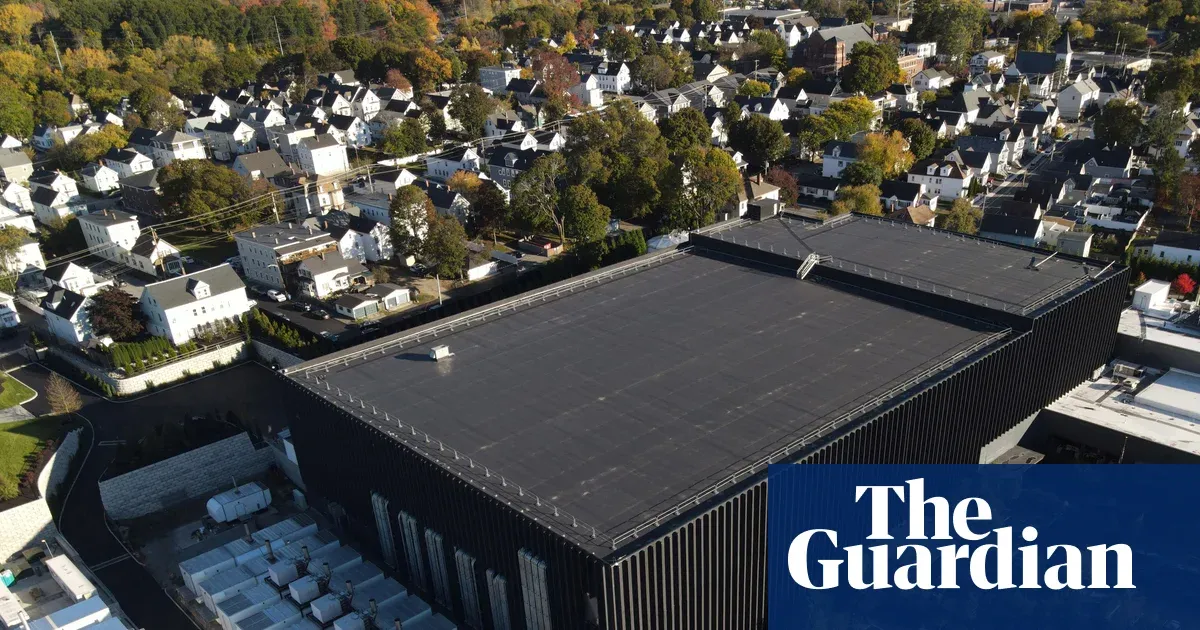
The International Energy Agency warns that global datacentres will create 70% more carbon emissions within four years and consume twice as much electricity by 2030, with the global AI expansion accounting for three-quarters of that growth as the US and China turn to fossil fuels. For operators, boards and investors, power supply rather than chip supply is now the constraint that will set AI timelines, costs and climate exposure.
The world's energy watchdog has put a number on AI's appetite for electricity, and it is not flattering. Datacentres will create 70% more carbon emissions within the next four years, the International Energy Agency warned, as the US and China turn to fossil fuels to power their AI growth agendas. The IEA also said datacentres will consume twice as much electricity by 2030 compared with today, with the global expansion of artificial intelligence accounting for three-quarters of that growth. Read that last figure again, because it is the one that should reframe the debate: AI is not a modest new line on the world's power bill, it is most of the new demand.
Why it lands harder coming from the IEA: this is the intergovernmental energy body whose forecasts governments, utilities and lenders lean on when they plan supply, and it does not need AI to be a villain for its arithmetic to work. When an institution built to track the energy transition instead flags a fossil-fuelled buildout, the signal is about what is actually being built, not what is being promised on a sustainability page. The 70% figure covers a four-year window, which is roughly the length of a single corporate planning cycle. It is not a distant scenario.
Datacentres are a peculiar kind of customer, and that is why the forecast moves so fast. A factory ramps production up and down with demand. A datacentre, historically, does not: racks that are live draw power around the clock, which is why operators typically sign long-term supply contracts rather than buy on the spot market. AI stacks two more loads on top. Training a frontier model is a concentrated burst of compute, and then serving that model, the inference step behind every prompt a user types, runs indefinitely. One is a sprint. The other is a standing order on the grid.
The geographic detail is where the 70% comes from. The IEA points to the US and China, the two largest economies and the two loudest AI growth agendas, turning to fossil fuels to keep pace. That sits awkwardly against the climate progress many operators report, and it puts corporate emissions pledges on a collision course with the physics of a buildout. A pledge is a target with a date attached. A grid connection is a contract with a signature attached, and contracts tend to get signed first.
The bottleneck here is not silicon, it is power. Historically, large-scale renewable projects in many markets face long waits to connect to transmission networks, while dispatchable fossil generation can typically be brought online faster. When an operator needs hundreds of megawatts live for a launch date, the interconnection queue shapes the energy mix far more than the sustainability slide deck does. That is the mechanism behind the IEA's warning: demand growth is outrunning the clean supply that can realistically be delivered in time to meet it.
The second-order effects are where executives should be looking. If electricity becomes the scarce input for AI, then the cost and carbon intensity of power becomes a competitive variable rather than a footnote in a report. Access to firm, cheap generation starts to look like a moat that capital alone cannot buy quickly. Utilities and grid operators, meanwhile, get pulled into a political fight they did not ask for, because the cost of new generation tends to land on ratepayers and, eventually, on voters.
Two caveats worth holding onto before anyone rewrites a strategy off one headline. First, this is a forecast four years out, not a measurement, and forecasts bend when power prices, policy or chip efficiency move. Second, the IEA's framing is about trajectory, not inevitability: the same body that models the rise is also the one governments use to model how to bend it. But the direction of travel is the part boards cannot ignore, because datacentre construction decisions being made this year lock in power contracts and emissions for a decade or more.
The practical read for anyone running a company with an AI roadmap is that energy strategy is now product strategy. Teams that can show where their power comes from, and lock in supply before the queue gets longer, are the ones who will not be renegotiating in a seller's market. The IEA's 70% is a warning shot aimed at governments. The companies building on top of the AI economy have roughly four years to make sure it is not aimed at them too.
This story's Key Insights and Take-aways are locked.
Create a free account to unlock Executive Actions for one credit.
Register to UnlockAlways free for Executives Club members. Join the Club
More in Science

Anthropic's I.P.O. Made Rank-and-File Researchers Worth Tens of Millions
Researchers who joined just a few years ago are now worth tens of millions, and the windfall resets the pay benchmark for every private A.I. lab still paying in paper.

Sea Lion Culling Strategy Fails: New Model Says Killing Them Won't Save Salmon
The latest research from AAAS overturn a long-held conservation assumption, forcing policymakers to rethink critical resource allocation in marine ecosystems.

Microplastics do more than pile up: they react with water to damage cells
Scientists have found that plastic particles can generate highly reactive molecules in water, a mechanism that could explain links to heart attacks, strokes, and neurological disorders.