
In Total War: Warhammer 40,000, a space marine costs a decade and your trust
Creative Assembly's 80-minute alpha strike livestream shows a campaign where reinforcements arrive by drop pod, suspicion is a currency, and no casualty is cheap.
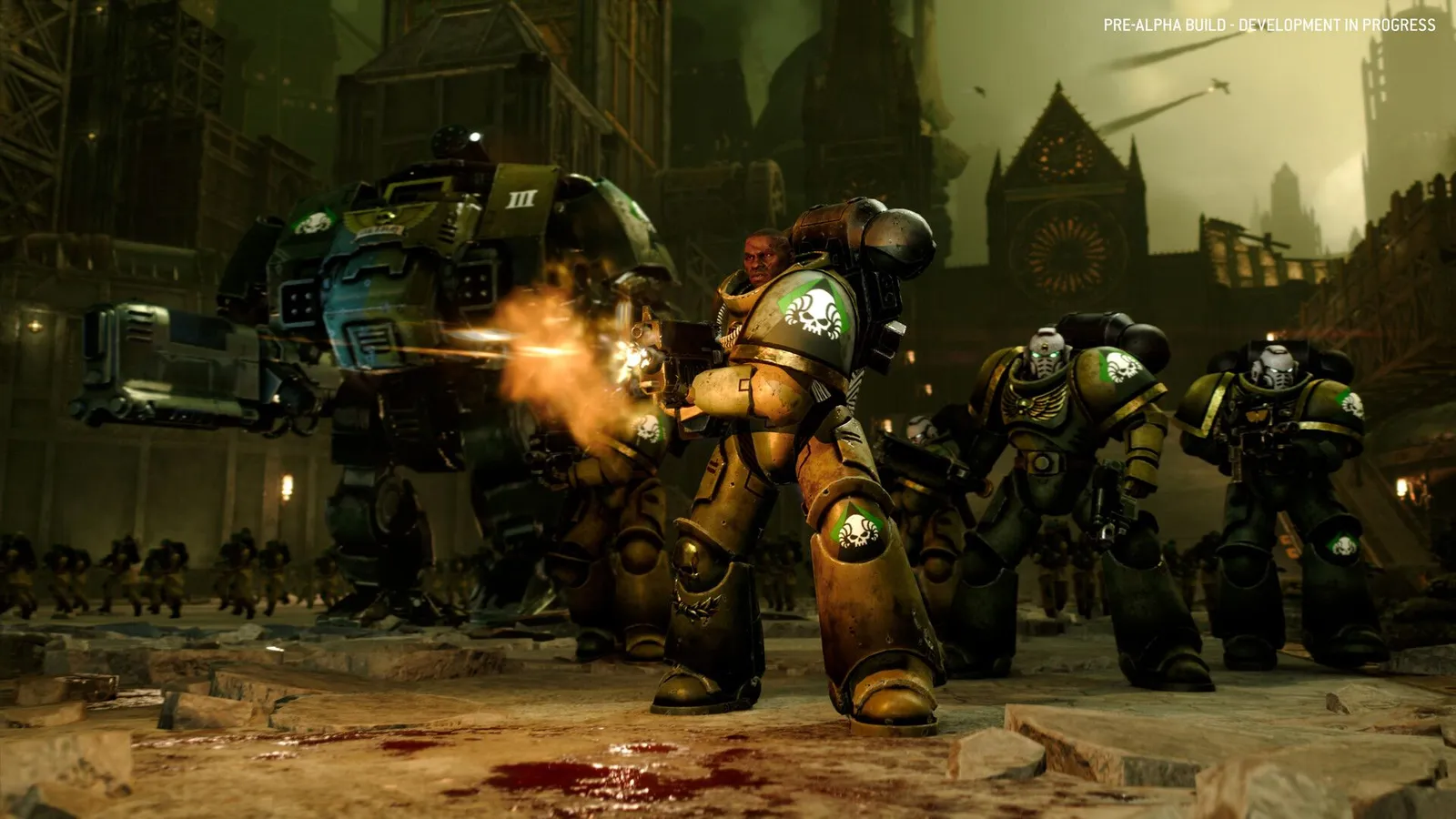
Creative Assembly's alpha strike livestream showed 80 minutes of Total War: Warhammer 40,000, an Ultramarines campaign where space marines take a decade to train and alienating Imperial worlds costs Influence. For strategy studios and license holders, it is a live test of whether lore-driven scarcity can keep players invested past the point where most grand campaigns go stale.
Creative Assembly just spent 80 minutes proving that in Total War: Warhammer 40,000, a space marine is not a unit. He is a decade of training, a rare progenoid gland, and a diplomatic incident waiting to happen. The studio's "alpha strike" livestream ran a solid hour and 20 minutes and dropped viewers 23 turns into an Ultramarines campaign in the Praevoss system, where three planets can be conquered while a gas giant and a dead world cannot be fought over at all. The headline mechanic is scarcity. Where other factions simply replenish losses after a battle, the marines cannot. It takes a decade to train each one, and there are only so many progenoid glands to go around.
That scarcity is paired with something rarer in strategy games: a reputation system that punishes you for winning too brutally. When the Ultramarines take a region, one option is to "scour the battlefield" in return for a big payout in Requisition, at the cost of raised Suspicion. Calling down a fleet bombardment to soften up orks before the fight also raises Suspicion, because there are still civilians in the area. It is a sharp piece of fiction to emulate. Imperial planets have their own governments, and a random Imperial governor might not be thrilled at transhuman giants stomping across their world, especially given that space marines have gone rogue before. The head of the Astral Claws chapter infamously hoarded planetary tithes for himself and became known as the Tyrant of Badab, and then there is the whole Horus Heresy thing. Playing nice keeps Suspicion down and pays out Influence points, which the marines spend to gain reinforcements from local Imperial troopers.
The Praevoss objective itself is straightforward: liberate Imperial planets from an ork scourge. What is more interesting is the scaffolding around it. Every system in the game gets its own narrative, a mini-campaign that plays out before you move on to the next one, and you carry some but not all of what you have built with you. That is a direct answer to the oldest problem in grand strategy, the one where a campaign gets boring once you have painted half the map and still have 100 turns before the end. A soft reset, a new theatre, and different foes is a cheap way to keep a long campaign feeling fresh. Whether it holds up across dozens of hours is the question the livestream cannot answer.
Reinforcements are where the scarcity bites hardest. Some casualties return after battle because transhuman physiology lets marines survive injuries that would normally be fatal, and important characters who fall can be jammed into dreadnoughts. But actual new bodies have to be called down from the orbiting fleet, and they can arrive mid-battle via drop pods that slam down right on top of the enemy. That is a spectacular visual and a real tactical constraint. The Total War: Warhammer trilogy built its reputation on making each faction play differently, and this is that philosophy applied to the vanilla Ultramarines, the most default faction in the box. If the baseline Space Marine faction already feels this distinct, the stranger factions have room to be genuinely strange.
Customization reinforces the point. Players can outfit marines with bespoke wargear loadouts, which speaks to a similar dedication to detail. What the livestream did not show is any suggestion of fleet battles. Ships in orbit clearly matter to the campaign as a source of reinforcements, a source of bombardments, and a way of moving armies between planets, but they function as logistics rather than combat. That reads as a deliberate omission rather than an oversight. If you want 40K ship battles, Battlefleet Gothic: Armada 2 already exists and is quite good.
Zoom out and the commercial logic is clear. Licensed strategy games historically live or die on two things: fidelity to the source material and systems that stay interesting past hour 40. Creative Assembly is answering both at once here, using the fiction to justify mechanical asymmetry rather than bolting lore onto a generic ruleset. The Suspicion and Influence loop is the clearest example. It turns a lore detail, the uneasy relationship between space marines and the worlds they defend, into a resource the player has to manage every single turn. That is how a license stops being a skin and starts being a design constraint, which is typically the thing that keeps players recommending a game to friends a year after launch.
For a strategy audience, the takeaway is that the next Total War is not trying to be a bigger map with more units. It is trying to make every loss hurt, every planet resent you a little, and every reinforcement feel like a delivery you earned. The open questions are whether the per-system mini-campaigns stay varied over dozens of hours, and whether the absence of fleet combat becomes a complaint or a non-issue. On the evidence of 80 minutes, Creative Assembly has picked a lane: fewer, better, more expensive space marines.
This story's Key Insights and Take-aways are locked.
Create a free account to unlock Executive Actions for one credit.
Register to UnlockAlways free for Executives Club members. Join the Club
More in Science

Anthropic's I.P.O. Made Rank-and-File Researchers Worth Tens of Millions
Researchers who joined just a few years ago are now worth tens of millions, and the windfall resets the pay benchmark for every private A.I. lab still paying in paper.

Sea Lion Culling Strategy Fails: New Model Says Killing Them Won't Save Salmon
The latest research from AAAS overturn a long-held conservation assumption, forcing policymakers to rethink critical resource allocation in marine ecosystems.

Microplastics do more than pile up: they react with water to damage cells
Scientists have found that plastic particles can generate highly reactive molecules in water, a mechanism that could explain links to heart attacks, strokes, and neurological disorders.