
Inside the F1 helmet factory where a driver's artwork is also their survival gear
Formula 1 helmets are the rare product where a driver's personal brand and their life-saving equipment come off the same production line, and that dual demand explains the economics of the sport's smallest, most regulated supply chain.
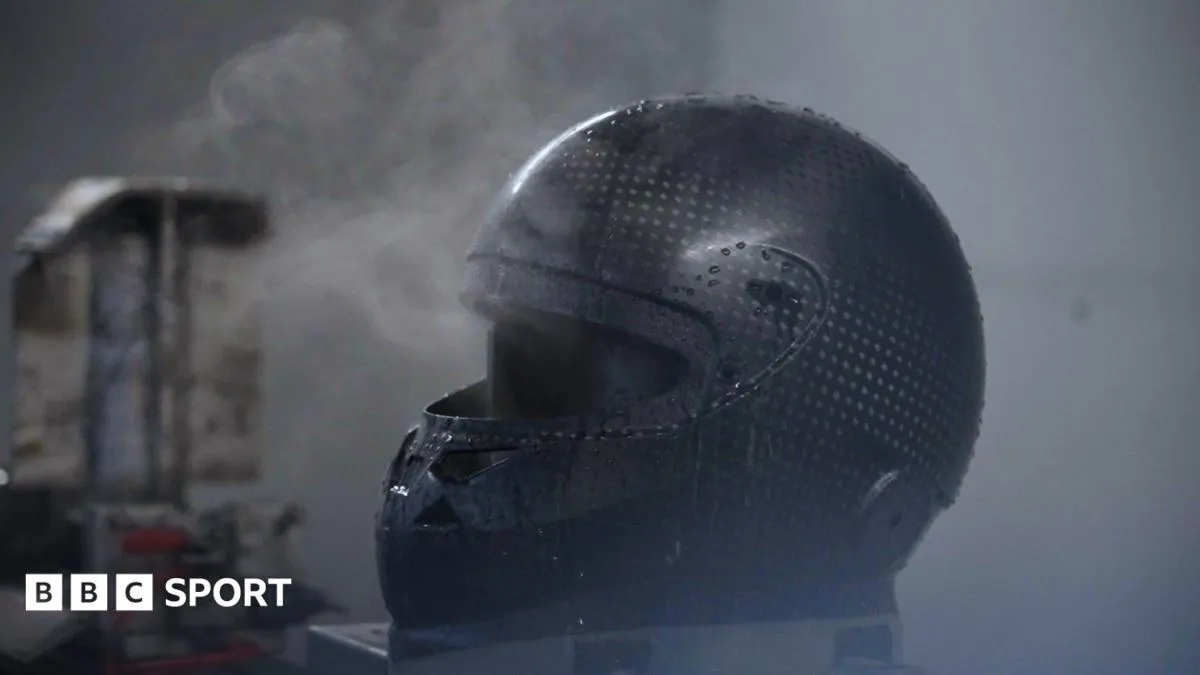
F1 helmet manufacturers such as Arai, Bell, Schuberth and Stilo build a product that is simultaneously a driver's personal brand and certified life-saving equipment, as BBC Sport's inside look at an F1 helmet factory shows. For decision-makers, the category is a case study in how regulation and certification, not marketing spend, create durable moats in premium manufacturing.
A Formula 1 helmet is two products sharing one shell. It is a driver's self-expression, hand-painted and sponsor-laden, and it is the thing that has to hold together when the car does not. BBC Sport went inside an F1 helmet factory, and the striking part is how casually those two jobs occupy the same room: precision engineering, personal expression and life-saving technology, in the outlet's framing, all joining forces in a single object.
That framing is the whole story. The paint is not decoration bolted on after the engineering is finished. It is the driver's brand, their signature, the thing fans photograph and replica buyers pay for. The shell underneath is the last line of defence in a sport that has spent decades learning, sometimes brutally, that the head is the part you cannot protect after the fact. One object, two value propositions, and no way to sell either without the other.
For context on how unusual this supply chain is: F1 helmets are made by a handful of specialist manufacturers, names such as Arai, Bell, Schuberth and Stilo, whose volumes are tiny by any industrial standard. They are not mass-market consumer businesses with an F1 side project. They are precision shops whose output is measured in hundreds of units, not millions, and whose reputation rests on a certification regime written by the sport's governing body, the FIA. The FIA's 8860 standard for F1 helmets is historically among the most punishing helmet test programmes in motorsport, covering impact energy, penetration, retention and visor performance. Passing it is the price of admission. Failing it is not a marketing problem.
That is where the economics get interesting. Certification is expensive, slow and unforgiving, which means the barrier to entry is not capital alone but accumulated test data and the institutional knowledge to interpret it. A new entrant cannot buy twenty years of crash outcomes. This is the classic shape of a regulated niche: few suppliers, high switching costs, and customers who care about failure rates rather than unit price. For a CFO looking at where durable margins hide in sports manufacturing, this is the template.
Then there is the art, and it is not a rounding error. Drivers typically have helmets moulded to their own heads, scanned and fitted rather than picked off a shelf, and the exterior is a personal canvas that carries sponsor obligations separate from the team's own commercial deals. Historically, teams and drivers have treated paint weight as a real variable, because every gram on top of a driver's head is a gram the car has to carry. The result is a manufacturing process that has to satisfy an artist, a sponsor, a regulator and a physicist at the same time, usually on a deadline set by a race weekend.
The safety stack itself is where the life-saving claims earn their keep. A modern F1 helmet typically combines a carbon fibre composite shell, an energy-absorbing liner, a visor engineered to resist debris and to be peeled clean by tear-offs, and integration with the sport's wider head and neck protection systems. Helmets also carry data: accelerometers in the earpieces feed crash information back to the sport, which is how safety rules get written from evidence rather than instinct. That feedback loop is the quiet engine of the whole category. Rules change, helmets change, and the next generation of protection is designed against the last generation's worst day.
The second-order effect is where this stops being a motorsport curiosity. Safety technology built for a few dozen drivers tends to migrate. The head and neck restraint systems, the composite shell techniques, the visor materials and the testing methodologies that F1 pays to develop have historically shown up, in adapted form, in consumer motorcycle and cycling helmets. The elite series functions as an expensive research lab whose findings eventually reach people who will never sit in a race car. That is an unusual kind of subsidy, and it is worth understanding before dismissing the category as a marketing exercise.
For executives outside motorsport, the lesson is structural rather than sentimental. Certification is a moat. Personalization is margin. And the two can coexist in the same product line if the operation is built to handle both, which is exactly what these factories have done. The companies that survive the next decade of consolidation in premium sports equipment will probably look a lot like this: small, obsessive, standards-fluent, and selling identity and survival in a single box. The helmet is the product. The trust is the business.
This story's Key Insights and Take-aways are locked.
Create a free account to unlock Executive Actions for one credit.
Register to UnlockAlways free for Executives Club members. Join the Club
More in Entertainment

GTA 6 banks $3.8bn in one day, torching every launch record
One game just out-earned every video game launch and every single-day film box office haul in history, and the fallout lands on every media CEO's forecast.

GTA VI Racked Up $3.79 Billion in a Single Day, Topping Every Film Ever
A 13-year wait produced a $3.79 billion day, more than any movie has made in its entire run, and it resets the launch math for every studio, streamer, and brand chasing the same attention.

GTA 6 sells 32.5M pre-sales and $3.79B day one, torches 13-year record
Rockstar's sequel didn't just beat Grand Theft Auto V's 13-year-old benchmark; it reset what a launch can be, with 32.5 million pre-sale copies and $3.79 billion in a single day.