
Jennifer Tzelee Teo pays US$72m for The Round House at Shek O Road
A HK$562.6m mansion deal puts a Singapore-linked buyer beside Richard Li and Pony Ma in Hong Kong’s elite enclave.
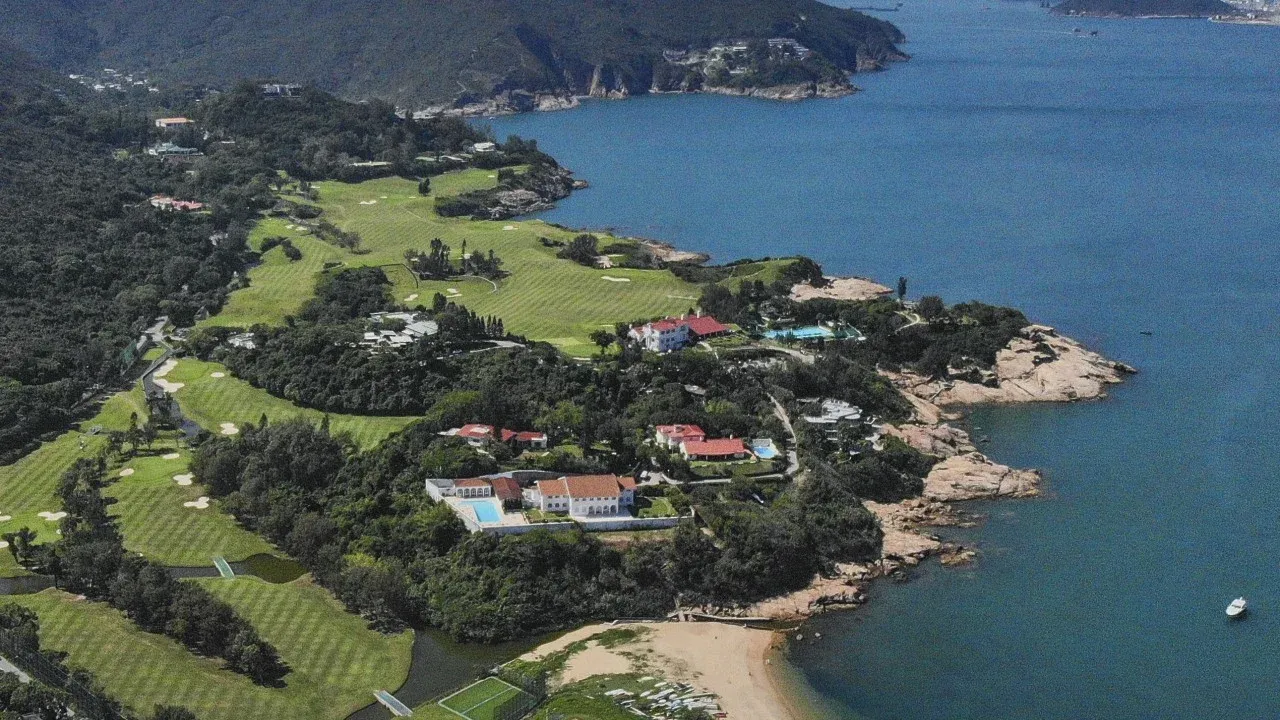
Jennifer Tzelee Teo, linked to a Singapore investment firm, bought 14 Shek O Road, known as The Round House. The sale price was HK$562.6 million (US$72 million), under a sale and purchase agreement signed on May 11.
Jennifer Tzelee Teo just dropped HK$562.6 million, about US$72 million, to buy 14 Shek O Road, also known as The Round House. The Land Registry records cited in the report show the Singapore-linked buyer made the purchase under a sale and purchase agreement signed on May 11, buying into one of Hong Kong’s most exclusive residential communities.
Why does anyone outside Hong Kong care? Because the same story name-checks the people who typically move early on wealth, capital, and influence. The enclave’s neighbours include PCCW chairman Richard Li Tzar-kai and Tencent Holdings CEO Pony Ma Huateng, which means Teo’s address is not just a real estate flex. It is proximity to a cluster of decision-makers tied to telecoms, internet platforms, and the kinds of ecosystems that shape deals and talent across Asia.
Shek O is not the kind of place where transactions are routine or casual. In markets like Hong Kong, ultra-prime residential areas function as a living snapshot of how wealth is positioned, not just where it is stored. When a property like The Round House changes hands for HK$562.6 million, it sends a signal about what buyers believe the premium is for location, privacy, and long-term scarcity. And it does so in a way that is easy for other wealthy participants to observe, track, and benchmark against.
There is also the matter of how these purchases get structured, especially when a buyer is “linked to an investment firm” rather than buying personally in the most straightforward way. The report frames Teo as being linked to a Singapore investment firm, which matters for executives because it reflects a broader pattern in cross-border wealth management. Complex structures can be used for efficiency, governance, and risk distribution. Even without getting into assumptions that are not in the article, the point is clear: this is a transaction made through a credible, professionally connected channel.
From a governance perspective, large residential acquisitions tend to raise questions boards and family offices often ask internally: liquidity needs, tax and regulatory compliance, and reputational risk. Hong Kong’s Land Registry documentation gives the deal an unusually checkable quality, which is one reason stories like this cut through. When the buyer, the address, and the purchase amount are all identified in public records, it becomes harder for market participants to hand-wave what is happening. That transparency can influence how peers think about relative pricing and how comfortable they feel about allocating capital in certain asset categories.
The “exclusive enclave” angle is where the second-order implications start to show up. Neighbouring power can matter in ways that do not always show in a spreadsheet. Being near Richard Li Tzar-kai and Pony Ma Huateng means Teo is in the same physical orbit as executives whose companies operate across telecom, online services, content, and cloud-adjacent infrastructure. In business ecosystems, relationships are not only formed at conferences and board meetings. They can also be reinforced in the background, through familiarity and reduced friction in day-to-day proximity. That is not a claim about any specific meeting. It is simply the practical reality of how elite clusters work.
The timeline in the record also matters for interpretation. The sale and purchase agreement was signed on May 11, tying the transaction to a specific moment rather than leaving everything vague. In a market where timing affects financing costs and sentiment, a dated agreement is one of the few concrete anchors available to observers. Executives looking at private market signals can take note that the deal moved through a defined process, not an open-ended negotiation.
So what should decision-makers take from this? At minimum, Teo’s HK$562.6 million purchase at 14 Shek O Road confirms that Shek O remains a magnet for high-net-worth capital. At maximum, it reminds boards and investors that prime real estate in Hong Kong is not just property. It is an address in a network, a hedge against scarcity, and a statement about where influential capital wants to live and stay connected. For anyone building a portfolio, running a family office, or advising on wealth positioning, the message is hard to miss: when capital targets a place like Shek O, it is buying more than square footage.
This story's Key Insights and Take-aways are locked.
Create a free account to unlock Executive Actions for one credit.
Register to UnlockAlways free for Executives Club members. Join the Club
More in Business

SpaceX IPO values it at $1.77tn, and Nasdaq fast-tracks its index entry
Forced buyers and tracker funds could amplify buying pressure as SpaceX joins the Nasdaq index on a rule tweak.

SpaceX’s $75B IPO: Japan retail got $2.2B, Nasdaq started trading today
The SPCX listing breaks records, but Japanese household investors quietly took a meaningful chunk of the biggest payday ever.
SpaceX’s Nasdaq debut puts Elon Musk’s control structure under a microscope today
The IPO lands on Nasdaq as critics question Musk’s near-absolute ownership, and the filings force boards to look hard.