
Judge Unlocks Trump's Defamation Suit Against NYT and Penguin Random House
The ruling allows the former president to proceed with his legal challenge against the media outlets regarding a 2024 book.
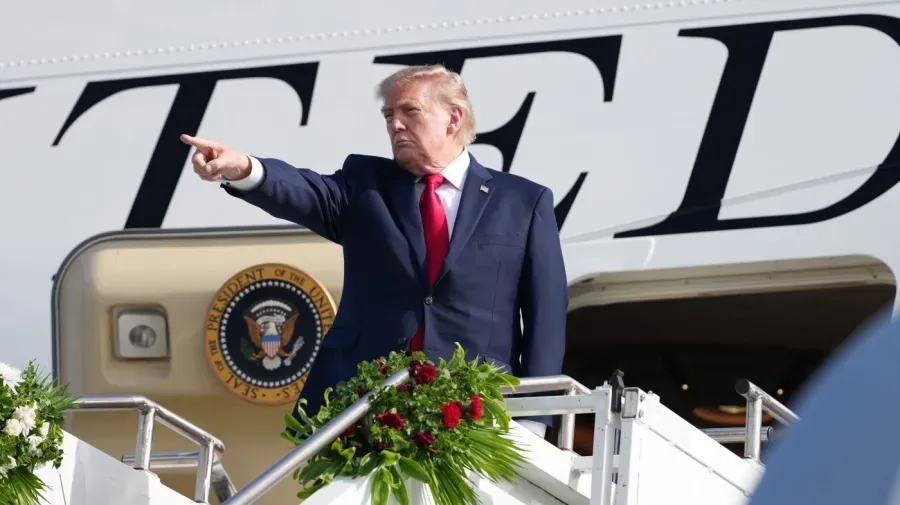
A federal judge ruled that Donald Trump's defamation lawsuit against The New York Times and Penguin Random House can proceed. This decision signals a significant legal battle over the boundaries of political speech and the liability of major media corporations.
The federal judge has ruled that Donald Trump's defamation lawsuit against The New York Times and its publisher, Penguin Random House, can proceed. This decision is a critical development in the ongoing legal push by the former president to challenge the accuracy and intent of investigative reporting published by major news organizations. The lawsuit centers on a 2024 book authored by two New York Times reporters, Russ Buettner and Susanne Craig, which Trump alleges contains defamatory statements about him.
This ruling is not merely a procedural win for the plaintiff; it is a high-stakes opening of a legal gauntlet that will test the limits of First Amendment protections against the aggressive tactics of political litigation. By allowing the suit to move forward, the court is effectively granting Trump the opportunity to present his case that the reporting surrounding him constitutes misinformation and actionable defamation. For the media companies involved, this ruling mandates a rigorous defense of their journalistic integrity and the legal protections afforded to the press.
To understand the weight of this decision, one must look at the broader context of defamation law in the United States. Defamation cases involving public figures, such as a former president, are notoriously complex and require plaintiffs to meet a very high burden of proof. They must typically demonstrate not only that a statement was false, but that it was published with 'actual malice'-meaning the publisher knew the statement was false or acted with reckless disregard for the truth. The fact that the judge allowed the suit to proceed suggests that the initial legal hurdles have been cleared, setting the stage for a deep dive into the specifics of the book's content and the editorial processes used by Buettner and Craig.
For the media industry, this case represents a significant risk management challenge. Penguin Random House, as the publisher, faces potential liability based on the content and the editorial oversight provided to its authors. The New York Times, as the originating news source, faces scrutiny over its vetting processes and the framing of its reporting. In an era where media outlets are increasingly scrutinized for bias and accuracy, a lawsuit of this magnitude forces these corporations to defend not just specific claims, but the entire business model of investigative journalism. They must demonstrate that their reporting adheres to the highest standards of verification, even when the subject of the reporting is a high-profile political figure.
From a strategic perspective, this litigation is a powerful tool for political figures seeking to control their narrative. The ability to initiate a lawsuit against established media giants is a way to force a public debate over the accuracy of the reporting, regardless of the ultimate legal outcome. The financial and reputational costs associated with defending such a suit are immense, which is why the decision by the judge to permit the suit to proceed is so consequential. It signals that the legal system is prepared to handle these high-profile, often politically charged, disputes.
Furthermore, this case touches on the evolving relationship between political figures and the press. As public trust in traditional media fluctuates, the line between legitimate political commentary and actionable defamation becomes increasingly blurred. For executives in media, this means that the risk profile of publishing politically sensitive content has never been higher. They must balance the imperative to report on public figures with the legal necessity of protecting the organization from costly and reputation-damaging litigation.
Ultimately, the outcome of this lawsuit will likely set a precedent for how political figures can challenge the narrative presented by major news organizations. It will force a public reckoning with the standards of truth, the definition of misinformation, and the legal boundaries of freedom of the press in the digital age. The battle between the political power of a high-profile plaintiff and the editorial independence of a major media house is now officially underway, and the stakes are far higher than just the content of a single book.
This story's Key Insights and Take-aways are locked.
Create a free account to unlock Executive Actions for one credit.
Register to UnlockAlways free for Executives Club members. Join the Club
More in Politics

Fifth Circuit Kills Pregnant Workers' Law Over Pandemic Proxy Votes
A procedural ruling, not a policy one, has blocked a federal pregnancy-accommodation law and put every pandemic-era statute in the crosshairs ahead of an expected Supreme Court appeal.

Measles kills a Virginia child under 5, the state's first death of 2026
Virginia's health department confirmed the death but withheld the child's vaccination status, leaving schools, clinics and employers to plan around the one detail that would explain the most.

Former Brazilian President Bolsonaro Hospitalized with Intestinal Obstruction
The health status of the former far-right leader raises immediate questions about political stability and the trajectory of Brazil's conservative movement.