
Julio Iglesias, 83, faces court investigation over abuse claims by two ex-employees
The singer is accused of abusing two former employees at Caribbean residences in 2021, a probe that puts reputation risk and duty-of-care squarely back on talent-led businesses.
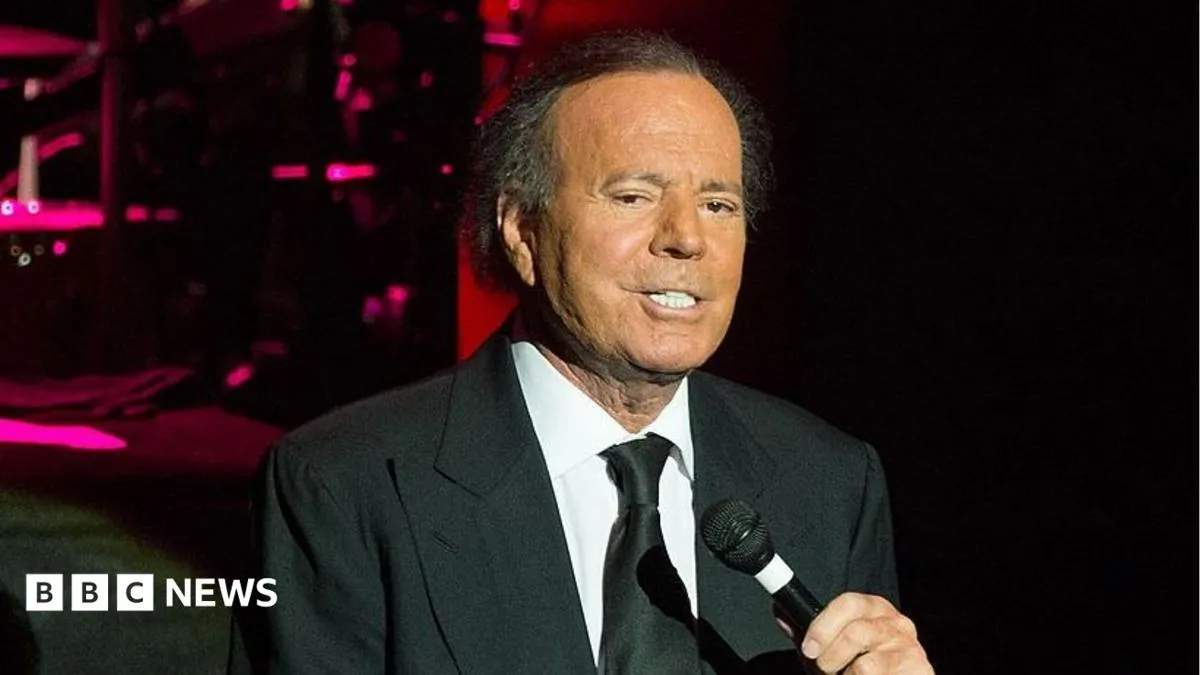
Julio Iglesias, the 83-year-old singer, is facing a court investigation over alleged sexual offences against two former employees at Caribbean residences in 2021, with no charge, trial or finding reported. For operators and investors in talent-led businesses, the case is a reminder that commercial exposure to such allegations runs through morality clauses, catalog valuations and the unglamorous treatment of household staff.
Julio Iglesias, the 83-year-old singer, is facing a court investigation over alleged sexual offences against two former employees at Caribbean residences in 2021. That is the full extent of what has been confirmed. An investigation has been opened, two people who say they worked for him are the complainants, and the alleged conduct is dated to 2021 and placed at properties in the Caribbean. It is not a charge. It is not a trial. It is not a finding of any kind, and anyone who reads the next 600 words should keep that sentence in their pocket, because the gap between "under investigation" and "guilty" is where most reputations actually get damaged.
The details that are missing matter as much as the ones that are present. The report does not specify which court or jurisdiction is handling the matter, does not name the complainants, and does not include any response from Iglesias or his representatives. In many legal systems, a court investigation is a pre-trial phase in which a judge gathers evidence to decide whether there is a case to answer at all; that stage can run for months or years and often concludes without charges being brought. For a reader trying to work out how much weight to put on this today, the honest answer is: enough to pay attention, not enough to conclude anything.
Iglesias is not a marginal figure. At 83, he is one of the most recognisable voices to come out of the Spanish-language music market, a performer whose career has run across decades and generations of listeners and whose name still carries weight in Latin America, Europe and the United States. That reach is exactly why a story like this travels. Allegations against a legacy artist do not stay on the entertainment pages; they move into the catalogues of streaming platforms, the calendars of promoters, the diligence files of funds that buy music rights, and the in-trays of the brands that still license his recordings.
The commercial architecture around an artist of that vintage is unusually exposed to reputational shock. Legacy acts typically earn through a mix of catalog royalties, licensing for film, advertising and compilations, occasional live dates or residencies, and endorsement or brand partnerships. Those contracts almost always include morality or termination clauses that let a partner walk if the talent's reputation takes damage, and they are frequently triggered by headlines rather than verdicts. That is the asymmetry worth understanding: the legal process moves slowly and presumes innocence, while the commercial process moves in days and presumes nothing.
The employment dimension is the part most operators should study. The allegations come from two former employees, and the alleged conduct is tied to private residences in the Caribbean, a setting where the usual corporate safeguards, HR departments, formal grievance routes, witnesses and written policies, are typically absent or informal. Household and private-estate staff often work under confidentiality agreements, on short notice, in isolated locations, and with a power imbalance that is hard to overstate. Regulators in several markets have spent the past few years tightening the rules around exactly those arrangements, and the reputational cost of getting them wrong now lands on the principal, not just the agency that hired the staff.
Why now, and why 2021? Complaints against public figures frequently surface years after the alleged events, for reasons that have little to do with the calendar: the complainants may have left the employment first, may have needed time, or may have been prompted by a wider cultural shift in what institutions are willing to investigate. That lag is a structural feature of these stories, not a quirk of this one, and it is why companies that assume a quiet decade means a closed file tend to be surprised.
For peers in the same position, the practical lessons are unglamorous. Music rights buyers and catalog funds have added reputational diligence to their checklists, because a headline can dent the cash flows they just paid a multiple for. Insurers who underwrite tour cancellation and talent liability are asking sharper questions about conduct exclusions. Publicists who once advised silence are now advising speed, because the first 48 hours usually set the frame. And boards that treat reputation as a soft asset tend to discover, at moments like this, that it is priced into every contract they hold.
What happens next is procedural, and that is the point. Watch whether the investigation advances toward formal charges or is closed, whether Iglesias or his representatives issue a statement, and whether any commercial partner, promoter or platform makes a public move. None of those things has happened yet in the reporting available. Until one does, the accurate story is a narrow one: an 83-year-old star, two former employees, a court, and a set of allegations from 2021 that have not been tested. The instinct to fill that gap with speculation is strong. Resisting it is the difference between being informed and being loud.
This story's Key Insights and Take-aways are locked.
Create a free account to unlock Executive Actions for one credit.
Register to UnlockAlways free for Executives Club members. Join the Club
More in Entertainment

GTA 6 banks $3.8bn in one day, torching every launch record
One game just out-earned every video game launch and every single-day film box office haul in history, and the fallout lands on every media CEO's forecast.

GTA VI Racked Up $3.79 Billion in a Single Day, Topping Every Film Ever
A 13-year wait produced a $3.79 billion day, more than any movie has made in its entire run, and it resets the launch math for every studio, streamer, and brand chasing the same attention.

GTA 6 sells 32.5M pre-sales and $3.79B day one, torches 13-year record
Rockstar's sequel didn't just beat Grand Theft Auto V's 13-year-old benchmark; it reset what a launch can be, with 32.5 million pre-sale copies and $3.79 billion in a single day.