
Larian's Douse argues GTA 6's cultural dominance doesn't define the industry
Michael Douse of Larian Studios challenges the notion that massive, singular hits like GTA 6 are the only path to industry success.
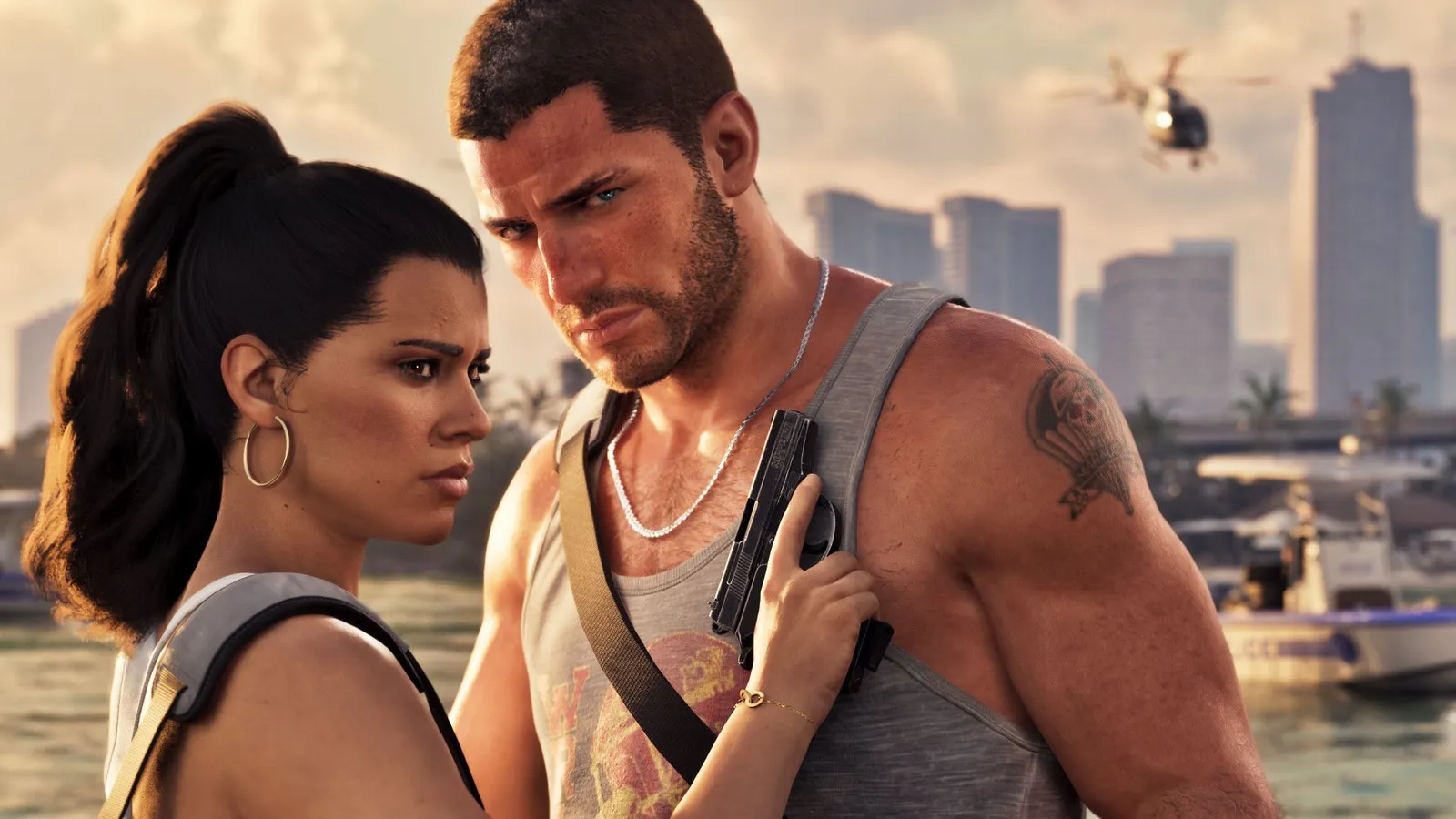
Michael Douse, Publishing Lead at Larian Studios, weighed in on the monumental launch of Grand Theft Auto 6, which has already achieved historic cultural and critical success. His perspective suggests that the industry's long-term health and creative vitality depend on fostering diverse experiences beyond blockbuster mega-hits.
The release of Grand Theft Auto 6 on November 18, 2026, has not just been a game launch; it has been a seismic cultural event. Its immediate impact is undeniable, evidenced by its Metacritic standing as the highest-rated game of all time, surpassing even classics like Nintendo's Ocarina of Time from 1998. This massive success has ignited a high-stakes debate within the development community regarding the future structure of the gaming market. While the sheer scale and brilliance of Rockstar's new offering are undeniable, Larian Studios' Michael Douse argues that this singular phenomenon should not be viewed as the industry's ultimate blueprint.
Responding to the prevailing narrative of the 'mega-hit' era, Douse posits that the industry thrives not solely on generational tentpoles, but on the existence of a diverse ecosystem. He argues that the cultural moment created by GTA 6 is valuable, but it is not the sole metric for success or sustainability. Douse asserts that the existence of these massive, singular releases is beneficial, but that they must coexist with a broader variety of experiences. His core message is that 'not every game needs to be GTA,' and that this diversity is what makes the rare, massive cultural moment even more special.
This perspective comes into sharp relief when contrasted with the views of industry veterans like Warren Spector, creator of the Deus Ex series. Spector, who has observed the industry's trajectory, has expressed a more cautious sentiment regarding the sustainability of the 'GTA model.' Spector has publicly stated his hope that GTA 6 might be the last of its kind, advocating instead for a market structure that supports a greater volume of titles. His argument is rooted in economic reality, suggesting that a system producing 'hundred of games and full employment' is preferable to one reliant on a single, colossal release. This introduces a critical tension for investors and operators: is the industry moving toward a winner-take-all model, or is there a viable path toward a more equitable, diversified creative economy?
For the decision-makers in this room, the debate centers on risk management and market definition. The GTA 6 phenomenon represents the ultimate success case for a highly polished, massive-scale, culturally resonant product. For a founder or investor, this is a powerful validation of the potential for hyper-successful, high-impact IP. However, Douse's argument serves as a necessary counterweight, reminding us that relying solely on such a behemoth introduces systemic risk. If the market becomes overly reliant on one type of product, the entire creative pipeline becomes vulnerable to shifts in consumer taste or market saturation.
Larian Studios' stance is not a dismissal of GTA 6's brilliance; it is a strategic plea for market health. By highlighting the importance of 'other types of experiences,' Douse is advocating for the value of niche markets, mid-tier successes, and genre innovation. This is a crucial message for publishers and studios who operate outside the blockbuster stratosphere. It suggests that while the spotlight is currently blindingly bright on one title, the long-term value proposition for a healthy industry lies in the breadth of its offerings, not just the height of its peaks.
Furthermore, the cultural impact of GTA 6 is undeniable. It has achieved a level of ubiquity that rivals cultural touchstones like Animal Crossing: New Horizons during the pandemic. This level of saturation is a powerful marketing engine, but it also sets an incredibly high bar for all subsequent releases. The strategic challenge for competitors is not just to make a good game, but to make a game that is different enough to carve out its own cultural space without being overshadowed by the sheer gravitational pull of Rockstar's new release. The industry is currently grappling with how to maintain creative momentum while navigating the shadow of a perfect storm of success.
Ultimately, the conversation between Spector and Douse is a debate about the soul of the modern creative economy. Is it a pyramid, where a few giants support the structure, or is it a robust, multi-tiered ecosystem? For those building the next generation of digital entertainment, the takeaway is clear: while chasing the cultural moment is tempting, building a sustainable, diverse portfolio of experiences is the ultimate act of strategic foresight.
This story's Key Insights and Take-aways are locked.
Create a free account to unlock Executive Actions for one credit.
Register to UnlockAlways free for Executives Club members. Join the Club
More in Entertainment

GTA 6 banks $3.8bn in one day, torching every launch record
One game just out-earned every video game launch and every single-day film box office haul in history, and the fallout lands on every media CEO's forecast.

GTA VI Racked Up $3.79 Billion in a Single Day, Topping Every Film Ever
A 13-year wait produced a $3.79 billion day, more than any movie has made in its entire run, and it resets the launch math for every studio, streamer, and brand chasing the same attention.

GTA 6 sells 32.5M pre-sales and $3.79B day one, torches 13-year record
Rockstar's sequel didn't just beat Grand Theft Auto V's 13-year-old benchmark; it reset what a launch can be, with 32.5 million pre-sale copies and $3.79 billion in a single day.