
LeBron James sues betting app Bron over an AI likeness he never approved
The NBA star says the previously unknown app used his nickname and a synthetic version of him to fake an association, and he wants a federal court to set the price.
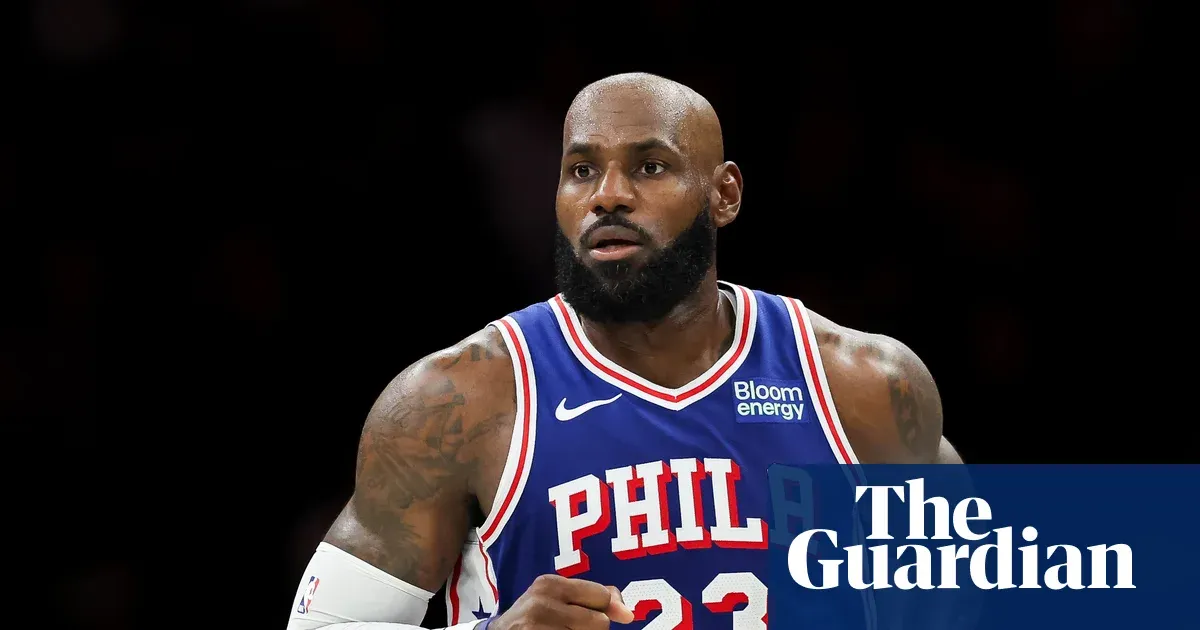
LeBron James sued the sports betting research app Bron in New York City federal court on Tuesday, alleging trademark infringement over its use of his nickname and an AI-generated likeness of him in a recent ad campaign without permission. The case tests whether the booming betting and AI-ad market can borrow a superstar's identity cheaply, and its outcome will shape how athletes, agents, and operators write likeness rights into contracts.
LeBron James sued the sports betting research app Bron on Tuesday, accusing it of trademark infringement for using his nickname and an artificial intelligence-generated likeness of him in a recent ad campaign without permission. The complaint landed in New York City federal court, and it is blunt about motive: the NBA star, whose nickname is Bron, says the app acted illegally to gain notoriety by making itself look affiliated with him. The app is also named Bron. That is not a coincidence the filing treats as flattering.
The heart of the case is not the name. It is the fake. According to the complaint, Bron ran an ad campaign built around an AI-generated likeness of James, a synthetic version of a man his own filing describes as one of the most recognizable identities in the world, deployed without his sign-off. James says he protects his image deliberately and chooses who he endorses, and that he commands tens of millions of dollars for endorsing products or ventures. The distance between that price and the near-zero cost of generating a lookalike is the business model this lawsuit is trying to torch.
Trademark law and the right of publicity are the two levers celebrities typically pull in a dispute like this. Trademark protects a name or mark used in commerce. The right of publicity protects a person's name, image, and likeness from commercial use without consent, and in the United States it is historically a patchwork of state law rather than a single federal statute. That patchwork is one reason filings like this get watched: New York is a favored venue for these claims, and a federal court there can move quickly on requests to halt the ads while the case proceeds.
Bron operates in the sports betting research category, a slice of the market that expanded fast after the US Supreme Court cleared the way for states to legalize sports wagering in 2018. That boom produced a crowded field of operators, affiliates, and research apps all competing for the same eyeballs, where customer acquisition costs are high and a recognizable face functions as an instant trust signal. For a small, previously unknown app, borrowing a superstar's name is the cheapest growth hack available. It is also, allegedly, the fastest route to a courtroom.
The complaint's theory is that Bron wanted to appear connected to James, not to sell a specific product on his behalf. That distinction matters. If consumers believed James backed or was tied to Bron, the app captured an endorsement it never paid for. The damage runs in two directions: to the market rate he commands, and to his control over which ventures he is associated with. James has spent two decades building one of the most recognizable identities in the world, per his own filing, and he says he selects endorsements carefully. A betting app carries reputational and regulatory baggage, which is precisely the kind of association a star with his leverage tends to avoid.
The AI element is what makes this more than a routine celebrity spat. Generating a convincing likeness of a public figure now takes minutes and costs almost nothing, and the tools are improving faster than the rules governing them. For brands, the risk calculus has flipped. The upside of an unauthorized AI ad is a brief spike in downloads. The downside is a federal lawsuit, discovery into exactly how the image was produced, and a permanent public record. For talent and their representatives, the lesson is contractual: likeness rights need explicit definitions in every deal, including what happens when a partner leans on generative tools.
James is not seeking a quiet settlement in the abstract. He is asking a court to treat the campaign as illegal. Remedies in a case like this typically include an injunction to stop the advertising and monetary damages, and a win for a plaintiff of his profile would hand every athlete, agent, and entertainment lawyer a reusable template. The reverse holds too. A narrow ruling would tell a fast-growing industry that AI-generated fame is cheap and largely unpoliced. Either way, the result lands on the desks of every founder whose growth plan leans on someone else's name.
The strategic takeaway for operators is not complicated. Permission is cheaper than litigation, and diligence on a name is cheaper still. A startup that adopts a nickname or a face it does not own is borrowing against a balance sheet it cannot see, and the lender here has lawyers. James, for his part, has made clear in the filing that his name is inventory he manages on purpose, and he is now asking a federal court to price it accordingly.
This story's Key Insights and Take-aways are locked.
Create a free account to unlock Executive Actions for one credit.
Register to UnlockAlways free for Executives Club members. Join the Club
More in Science

Anthropic's I.P.O. Made Rank-and-File Researchers Worth Tens of Millions
Researchers who joined just a few years ago are now worth tens of millions, and the windfall resets the pay benchmark for every private A.I. lab still paying in paper.

Sea Lion Culling Strategy Fails: New Model Says Killing Them Won't Save Salmon
The latest research from AAAS overturn a long-held conservation assumption, forcing policymakers to rethink critical resource allocation in marine ecosystems.

Microplastics do more than pile up: they react with water to damage cells
Scientists have found that plastic particles can generate highly reactive molecules in water, a mechanism that could explain links to heart attacks, strokes, and neurological disorders.