
Lili Reinhart in Talks for Polly Pocket After Lily Collins Exits
Amazon MGM and Mattel may have a new lead for Polly Pocket, but the scheduling swap tests whether star power can keep a toy franchise on schedule.
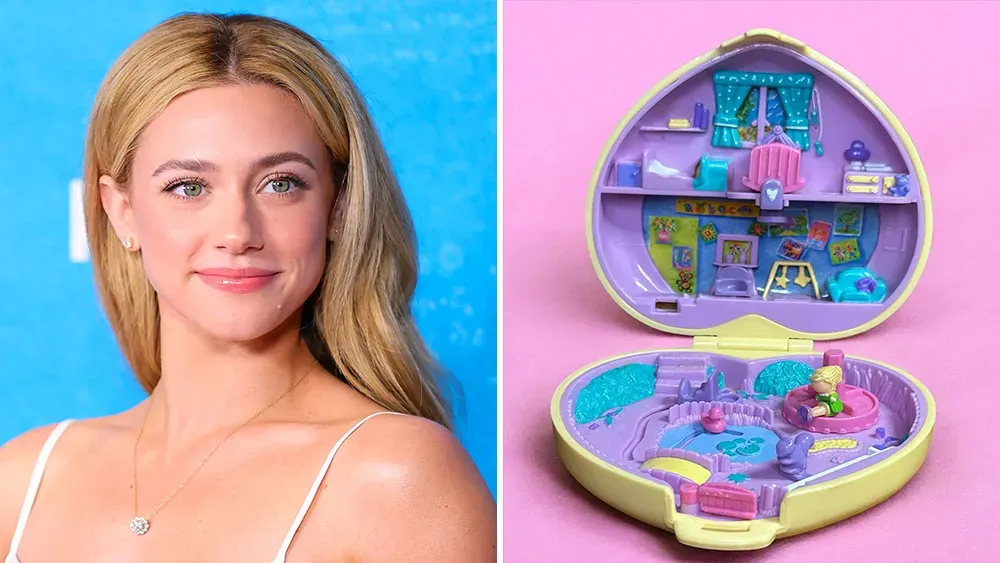
Lili Reinhart is in talks to star in and executive produce Amazon MGM Studios and Mattel Studios' Polly Pocket, following Lily Collins' exit from the starring role due to a scheduling conflict. For decision-makers, the move shows how talent scheduling, executive-producer continuity, and toy-IP pipelines are colliding as studios race to turn known brands into film franchises.
Lili Reinhart is in talks to star in and executive produce Amazon MGM Studios and Mattel Studios' Polly Pocket, Deadline understands. The move follows Lily Collins' departure from the starring role a while ago because of a scheduling conflict. Collins, the star of Emily in Paris, remains an executive producer on the project. Clea DuVall has boarded Polly Pocket. That is the headline fact, and it lands with more force than a typical casting update because it touches three things studios are watching closely: a known toy brand, a streaming-era buyer in Amazon MGM, and a lead actor who would also carry producer duties.
The first question is why a scheduling conflict matters so much. In film packaging, the lead actor is not just a face. She is a financing signal, a marketing hook, and often a creative partner. When Collins exited, the project lost its announced star but kept her as an executive producer. That is a deliberate continuity play. It keeps a familiar name attached, preserves relationships, and gives the studio a bridge to the next lead. Reinhart, if she signs, would step into that gap. She would not simply replace Collins on screen; she would also take on executive producer responsibilities, meaning she would have a seat at the table beyond acting.
Polly Pocket is a Mattel property, and Mattel Studios has been working to turn its catalog of toys into film and television. Amazon MGM Studios is the other half of the equation. For Amazon, known IP is a way to compete for attention in a crowded market. For Mattel, a film is a brand amplifier that can reach beyond the toy aisle. The combination explains why the project has moved through casting changes rather than being shelved. Toy brands arrive with built-in recognition, but recognition alone does not guarantee a hit. The film still needs a script, a director, a release plan, and a lead who can carry the marketing load. That is why the Reinhart talks matter: they are a signal that the project is still alive and still aiming for a star-led package.
The executive producer layer adds another dimension. Collins remains an executive producer even after leaving the starring role. Reinhart is in talks to star and executive produce. In practice, star EPs often help shape tone, casting, and public messaging. They can also serve as a bridge between the studio and the fan base. But overlapping EP credits can raise questions about who owns the creative direction. Studios typically manage this with clear reporting lines and contracts. The public only sees the credits. The internal reality is a set of negotiations about time, money, and control. For Amazon MGM and Mattel, keeping Collins involved while adding Reinhart would be a way to avoid a clean break. It signals that the project is not starting over from zero.
Clea DuVall boarding the project adds another established name to the mix. Deadline's report does not spell out every role, but the fact that DuVall has boarded suggests the creative team is taking shape around the new lead. In a toy-to-film adaptation, the creative team has to solve a specific problem: how to turn a small, nostalgic plaything into a story with stakes, humor, and a reason to exist on a big screen. That is not a casting problem alone. It is a world-building problem. The lead actor can open the movie, but the director and writers have to give her a world worth opening. The combination of Reinhart, Collins as EP, and DuVall on board is the studio's attempt to assemble that package.
The strategic stakes for peers are clear. Every studio and streamer is trying to build franchises from known IP. Every talent agency is trying to place stars in projects that can become multi-platform brands. Every scheduling conflict is a reminder that actors are not interchangeable parts. Collins had a conflict serious enough to step away from the starring role. That does not mean the project is in trouble. It means the calendar is a real constraint. Film production is a chain of commitments: actor availability, director availability, crew, locations, visual effects, marketing windows. One link moves, and the whole chain can shift. Amazon MGM and Mattel have to decide whether waiting for the right lead is worth the delay, or whether they can keep momentum with a new star.
For now, the deal is not closed. Reinhart is in talks, which means terms, schedule, and creative approvals still have to align. If she signs, the project gets a new lead with producer power and a familiar name in Collins still attached. If she does not, the search continues. Either way, the episode is a compact case study in how modern film franchises are assembled: toy IP plus streaming-era distribution plus star packaging plus executive-producer continuity. The winner will be the studio that can absorb a scheduling shock without losing the plot. The loser will be the one that treats casting as a simple swap. Amazon MGM and Mattel are betting they can do the former. Whether Reinhart is the answer depends on the deal.
This story's Key Insights and Take-aways are locked.
Create a free account to unlock Executive Actions for one credit.
Register to UnlockAlways free for Executives Club members. Join the Club
More in Entertainment

GTA 6 banks $3.8bn in one day, torching every launch record
One game just out-earned every video game launch and every single-day film box office haul in history, and the fallout lands on every media CEO's forecast.

GTA VI Racked Up $3.79 Billion in a Single Day, Topping Every Film Ever
A 13-year wait produced a $3.79 billion day, more than any movie has made in its entire run, and it resets the launch math for every studio, streamer, and brand chasing the same attention.

GTA 6 sells 32.5M pre-sales and $3.79B day one, torches 13-year record
Rockstar's sequel didn't just beat Grand Theft Auto V's 13-year-old benchmark; it reset what a launch can be, with 32.5 million pre-sale copies and $3.79 billion in a single day.