
Marlon Jackson, 69, Reveals Stage Four Prostate Cancer: 'God Got Me'
The Jackson 5 founding member turned a routine podcast question about staying healthy into a blunt on-mic diagnosis, and the disclosure lands on the cancer that kills Black men at the highest rates.
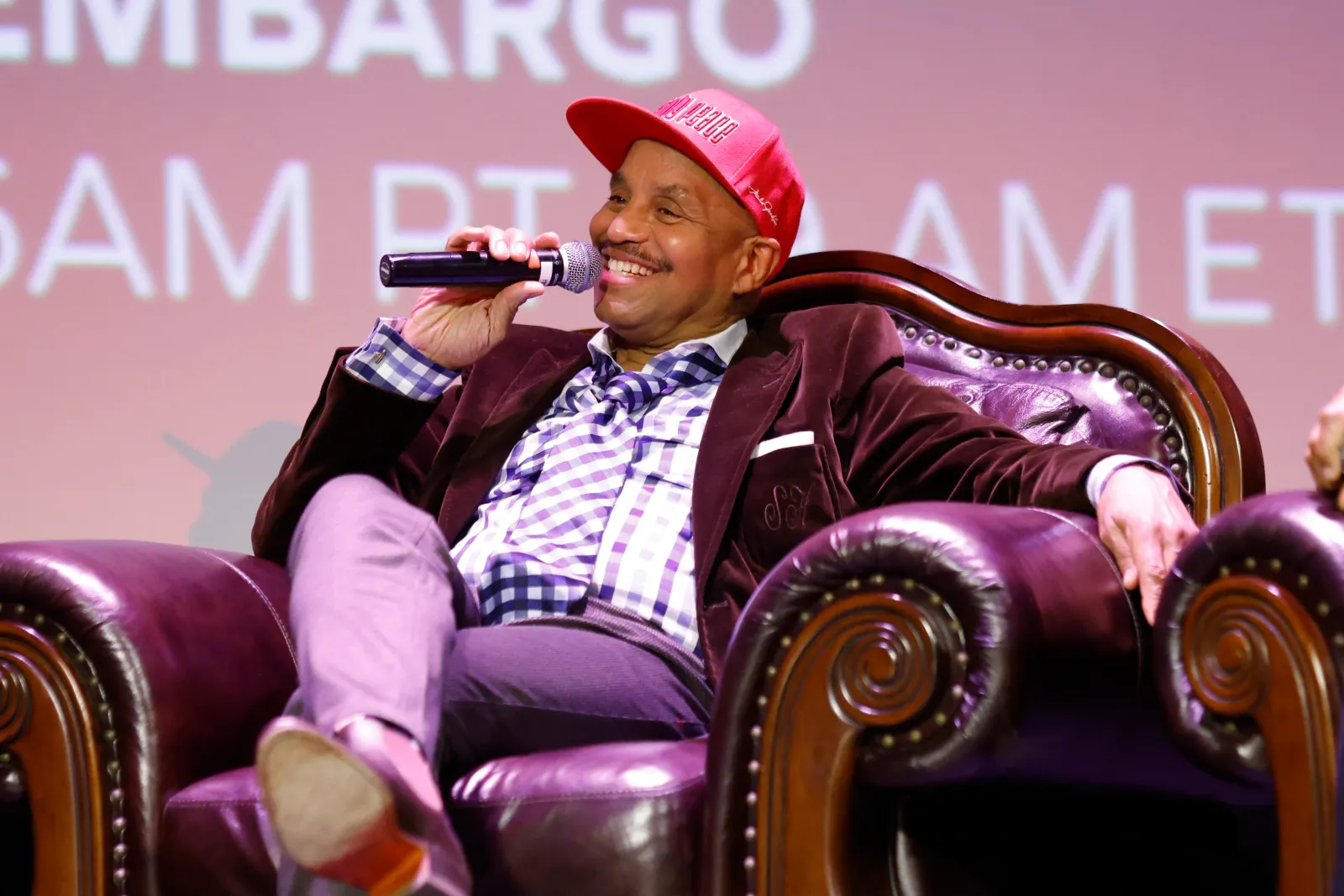
Marlon Jackson, 69, Michael Jackson's older brother and a founding member of the Jackson 5, disclosed on "The Farah Shammas Podcast" that he has stage four prostate cancer, answering a question about how he stays healthy with the line "Don't worry about it. God got me." The disclosure puts a globally recognizable name on the most commonly diagnosed cancer in men and on a racial mortality gap that public health data has documented for decades.
Marlon Jackson, 69, Michael Jackson's older brother and a founding member of the Jackson 5, has stage four prostate cancer. He disclosed the diagnosis while appearing as a guest on "The Farah Shammas Podcast," and he did it in the least choreographed way imaginable. Shammas asked him how he stays healthy at 69. Jackson's answer began, "I'ma break some news to" and then delivered the news itself. His follow-up line, now the one traveling across the internet, was pure composure: "Don't worry about it. God got me." No press release. No publicist-tuned statement. No prime-time sit-down. A wellness question, answered honestly, in a single sentence.
The words "stage four" are the part that carries the weight. In plain English, staging describes how far a cancer has spread from where it started, and stage four is the designation used when the disease has moved beyond the original site. For prostate cancer specifically, that is the point at which the medical conversation typically shifts from eradication to long-term management: doctors generally focus on slowing the disease, holding quality of life steady, and monitoring how the cancer responds over time. It is also the stage that makes screening history and family history suddenly relevant to everyone listening. Jackson offered no details about treatment, prognosis, or when he was diagnosed, and none should be assumed. What he offered was the fact itself, stated without a buffer.
Context matters here, because the voice delivering the news has been in the room for six decades of American music. Marlon was part of the Jackson 5, the Motown group built around his brothers that turned "I Want You Back," "ABC" and "I'll Be There" into a run of chart-topping singles and made a single family from Gary, Indiana into a global entertainment brand. He was the sibling who shared a stage with Michael through the group's peak years and has stayed in the public eye across solo projects, reunion tours, and the relentless press attention that follows the Jackson name. That is the other reason this disclosure travels: the family has spent 50-plus years being written about. Choosing a podcast, and choosing candor, is how a person takes the pen back.
Then there is the disease itself. Prostate cancer is the most commonly diagnosed cancer among men, skin cancer aside, and public health data have long shown that Black men are diagnosed at higher rates and die from it at roughly double the rate of white men. Researchers have pointed to a mix of factors over the years, including genetics, access to care, and how aggressively tumors are treated once found. Stage four diagnoses sit at the hard end of that picture, and they are the reason screening debates keep returning to the PSA blood test, the simple draw that can flag trouble early. Guidance on when and how often to screen has shifted repeatedly over the past two decades, and clinicians typically advise men to weigh family history and age with a doctor rather than rely on a single rule of thumb.
Disclosures like this one have a documented habit of moving behavior. Public health researchers have long noted that when a well-known figure names a disease out loud, searches, appointments, and screening requests tend to follow, particularly in communities that otherwise talk about it least. That matters more than usual for prostate cancer, where the symptoms can be silent for years and where men are historically reluctant to raise the subject. Jackson did not frame his announcement as advocacy. He did not have to. The phrase "Don't worry about it. God got me" is a statement of personal steadiness, but it also does the one thing a health announcement rarely does: it removes the terror from the sentence and leaves the information standing on its own.
The venue is worth noticing too. Ten years ago, a diagnosis at this level would have arrived through a magazine interview, a network special, or a statement handed to a publicist. Today it arrives in the middle of a long-form podcast conversation, where the subject sets the pace, there is no commercial break to hit, and no one can edit the answer down to a soundbite. That format has become the default disclosure channel for athletes, founders, and entertainers precisely because it trades spectacle for control. For the operators and talent managers who structure these things, the lesson is structural: the platform that lets a client be most human is usually the one that produces the most durable headline.
For everyone outside the family, the practical stakes are simple and unglamorous. A first-degree relative with prostate cancer is the kind of fact that belongs in a doctor's office conversation, not a folder. Men approaching their 50s, and earlier in some risk profiles, are typically advised to raise the topic directly rather than wait to be asked, because the question is easy to skip and the cost of skipping it is asymmetric. For companies built around a single beloved name, Jackson's announcement is also a quiet reminder that key-person health belongs in the risk register long before it becomes news, alongside insurance, touring obligations, and who speaks for the organization on day one.
Marlon Jackson said he would break some news, and then said the sentence plainly, and then told everyone not to worry. It is a strange, steady way to tell the world something enormous. It is also exactly the tone that gets people to listen.
This story's Key Insights and Take-aways are locked.
Create a free account to unlock Executive Actions for one credit.
Register to UnlockAlways free for Executives Club members. Join the Club
More in Entertainment

GTA 6 banks $3.8bn in one day, torching every launch record
One game just out-earned every video game launch and every single-day film box office haul in history, and the fallout lands on every media CEO's forecast.

GTA VI Racked Up $3.79 Billion in a Single Day, Topping Every Film Ever
A 13-year wait produced a $3.79 billion day, more than any movie has made in its entire run, and it resets the launch math for every studio, streamer, and brand chasing the same attention.

GTA 6 sells 32.5M pre-sales and $3.79B day one, torches 13-year record
Rockstar's sequel didn't just beat Grand Theft Auto V's 13-year-old benchmark; it reset what a launch can be, with 32.5 million pre-sale copies and $3.79 billion in a single day.