
Mercury-bound X-ray telescope wakes after 8 years and 10 billion km
The instrument's first cosmic observations beat expectations, and its readings could crack open Mercury's chemistry and the story of how the solar system's smallest planet formed.
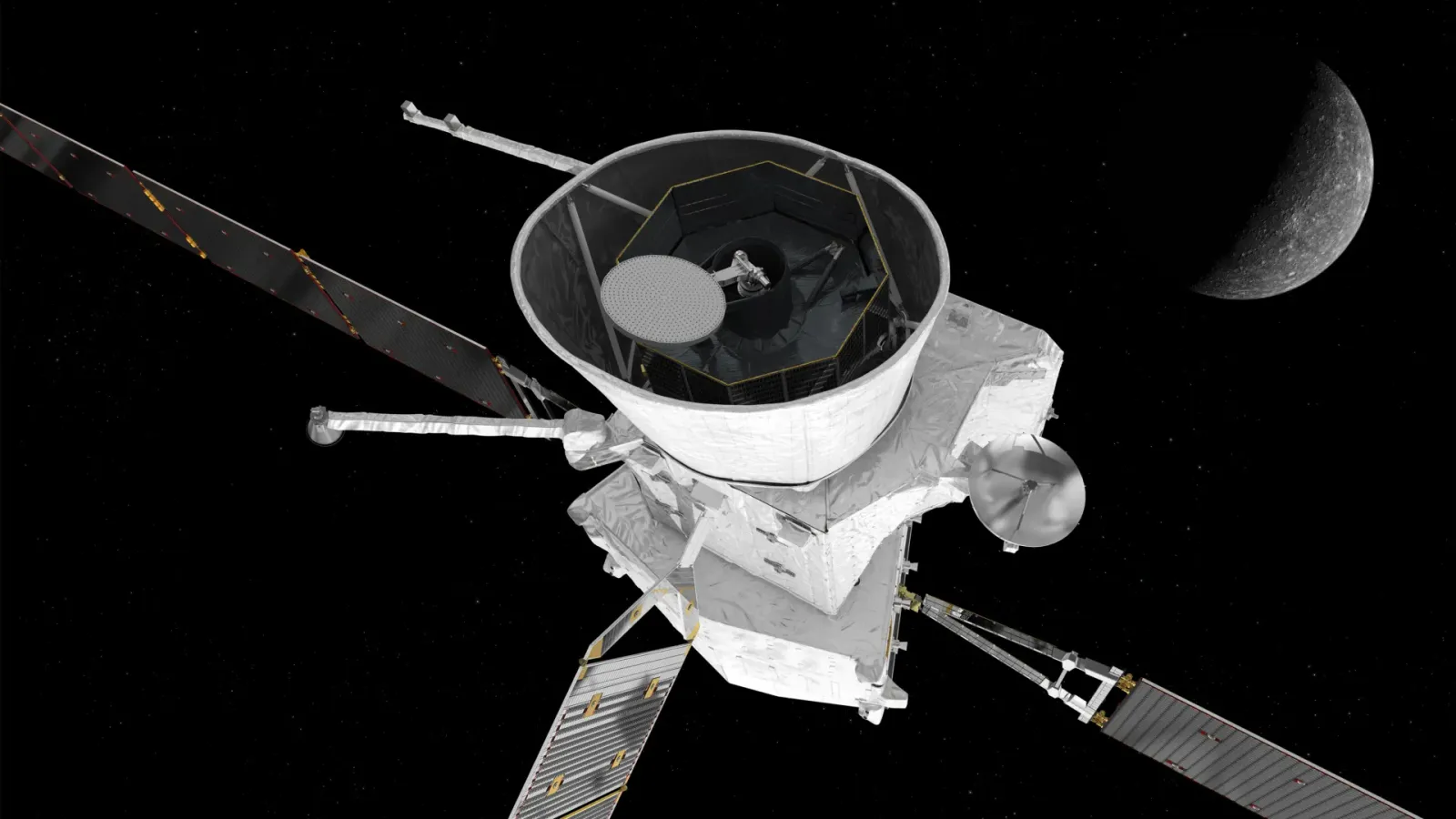
An X-ray telescope bound for Mercury has captured its first cosmic observations after eight years and 10 billion kilometers in space, and it is performing better than scientists expected. For decision-makers, the milestone is a case study in long-horizon hardware bets: the payoff arrives late, arrives all at once, and only if the program survives the wait.
Eight years. Ten billion kilometers. And only now, the first look. An X-ray telescope built to study Mercury has finally captured its first cosmic observations, and it is performing better than scientists expected. The spacecraft is still on its way to the solar system's smallest planet. It has not arrived. It has not begun its main mission. But the instrument that will do the science has just proven it works, and works well.
That matters because of what the telescope is for. Once it reaches Mercury, it is designed to read the planet's surface chemistry in X-rays, exposing what the planet is actually made of. Scientists expect those readings to reveal Mercury's hidden chemical secrets and to transform our understanding of how the solar system's smallest planet formed. The first observations are the proof of life: the telescope can see, and it can see better than the spec sheet promised. For a mission that has spent nearly a decade in transit, that is the difference between a science program and a very expensive piece of orbiting metal.
Why X-rays? For context, X-ray fluorescence has been a standard tool of planetary science for decades. When the Sun's X-rays strike a surface, atoms in the rock absorb that energy and re-emit X-rays at energies specific to each element. Read the spectrum, and you get the recipe. It is how researchers do chemistry on a world they cannot touch, sample, or bring home. The technique is unforgiving: it needs a working detector, a known geometry, and enough signal to separate real elemental lines from background noise. Which is exactly why an instrument that outperforms its design spec is worth more than a headline.
The eight-year, 10-billion-kilometer journey is not a detour. It is physics. Spacecraft typically cannot carry enough fuel to brake directly into orbit around a planet sitting deep in the Sun's gravity well, so missions to the inner solar system historically fly looping trajectories, using flybys of planets to shed speed and adjust course. That turns a trip measured in months into one measured in years. Ten billion kilometers is the odometer reading of a route that never once went in a straight line, and every one of those kilometers was logged before a single scientific measurement could be made.
That long cruise is also the mission's biggest hidden risk. Instruments that sit idle for nearly a decade are exposed to radiation, thermal cycling, and the simple passage of time. Detectors degrade. Calibrations drift. Electronics that worked on the bench in clean rooms face conditions no test chamber fully reproduces. So "better than expected" is not a throwaway line. It means the team gets more sensitivity, cleaner data, and a better shot at detecting elements that would otherwise sit below the noise floor. In planetary science, sensitivity is scope: the better the instrument performs, the more questions it can answer.
What those answers could look like matters beyond Mercury. The smallest planet is an outlier in the solar system, and its composition is a fingerprint of the conditions in the early cloud of gas and dust that formed the planets, plus the violent processes that followed. If the telescope can map which elements sit where on the surface, it hands modelers a hard constraint. Formation theories that cannot reproduce that fingerprint get retired. That is how planetary science advances: not one dramatic image, but a slow accumulation of measurements that narrow the space of plausible stories about how we got here.
There is a second-order lesson here for anyone building hardware on a long clock. The instrument was designed, built, launched, and then it waited. That is a decade of institutional patience, and it only pays off if someone keeps funding the wait through budget cycles, launch delays, and leadership changes. Programs that survive that stretch tend to share a trait: they are structured so that the first real data point arrives as a checkpoint, not a cliff. When the telescope opened its eyes and overdelivered, it converted eight years of sunk cost into an asset.
The strategic stakes are now straightforward. The first observations are a checkpoint, not a finish line. The real test comes when the spacecraft settles into its working orbit and the telescope begins the survey it was built for. But the checkpoint is the one that kills programs. Had the instrument failed to open its eyes, eight years and 10 billion kilometers would have bought nothing at all. It did not fail. It beat expectations. Now the chemistry of Mercury, and the story of how the solar system's smallest planet formed, is back on the table.
This story's Key Insights and Take-aways are locked.
Create a free account to unlock Executive Actions for one credit.
Register to UnlockAlways free for Executives Club members. Join the Club
More in Science

Anthropic's I.P.O. Made Rank-and-File Researchers Worth Tens of Millions
Researchers who joined just a few years ago are now worth tens of millions, and the windfall resets the pay benchmark for every private A.I. lab still paying in paper.

Sea Lion Culling Strategy Fails: New Model Says Killing Them Won't Save Salmon
The latest research from AAAS overturn a long-held conservation assumption, forcing policymakers to rethink critical resource allocation in marine ecosystems.

Microplastics do more than pile up: they react with water to damage cells
Scientists have found that plastic particles can generate highly reactive molecules in water, a mechanism that could explain links to heart attacks, strokes, and neurological disorders.