
Meta now sells 150 3D movies on Quest, from Avatar to Billie Eilish
Meta is turning the Quest 3 and 3S into a transactional movie store with 150-plus 3D titles and a new Theater view, a direct challenge to the living-room TV and a test of whether VR can sell content, not just hardware.
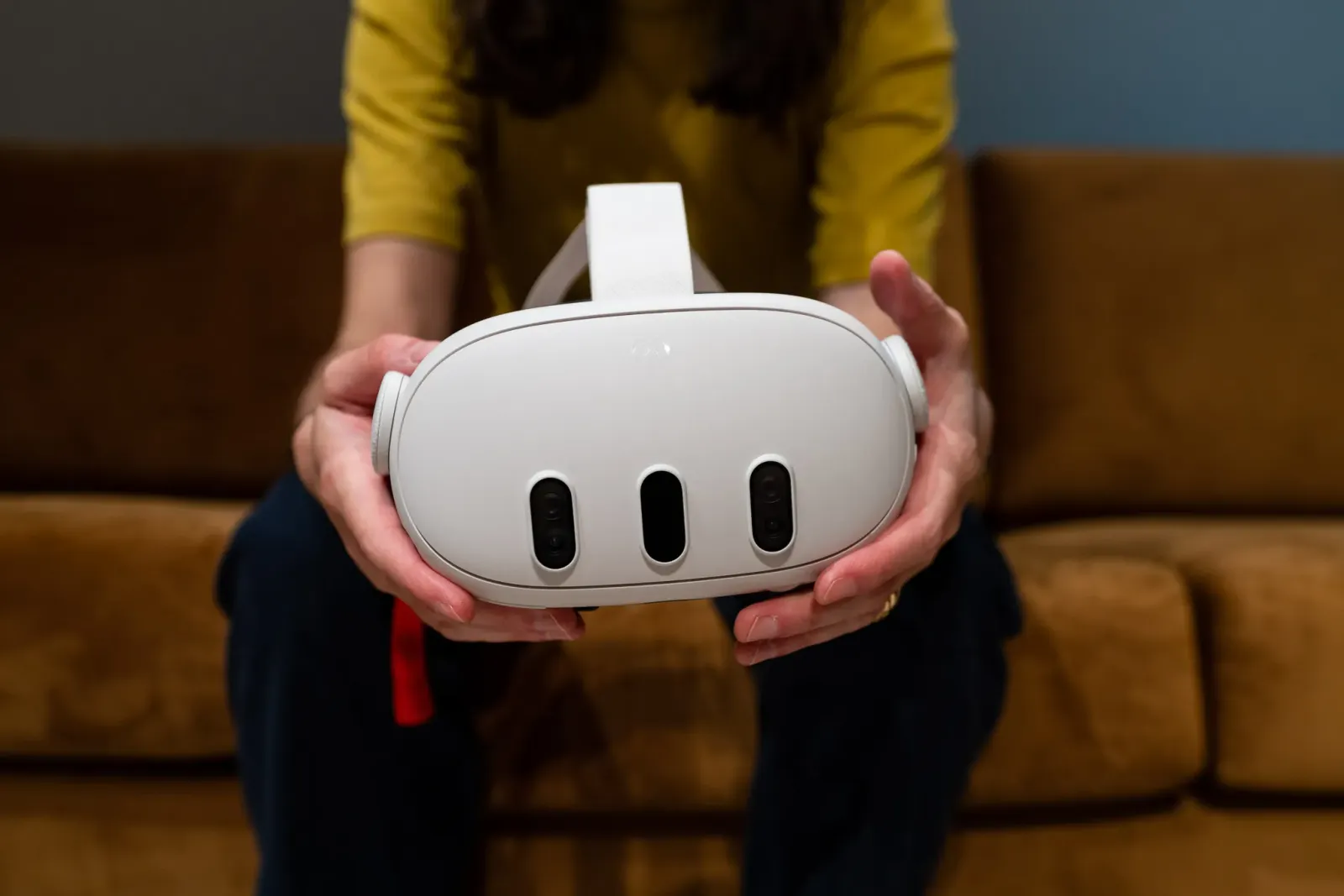
Meta announced that more than 150 3D movies are now available to buy or rent in its TV app on the Quest 3 and Quest 3S, with titles including Avatar, Spider-Man: Far From Home, Jurassic World Rebirth, Wicked: For Good, and a Billie Eilish concert film co-directed by Eilish and James Cameron. The move turns Meta's headsets into a transactional content storefront and a fresh distribution window for studios, making catalog licensing terms and VR attach rates the numbers to watch.
Meta is now selling 3D movies. The company announced today that more than 150 3D films are available to buy or rent inside its TV app on the Quest 3 and Quest 3S headsets, turning a device best known for games and fitness into a storefront for Hollywood's back catalog. The lineup includes Avatar, Spider-Man: Far From Home, Jurassic World Rebirth, Wicked: For Good, and a Billie Eilish concert film co-directed by Eilish and James Cameron. That last title is the tell. A pop star and the filmmaker most associated with the modern 3D boom are shipping a concert film straight into a headset, not into a theater.
Meta is not simply dumping files into a folder. It is rolling out a Theater view alongside a new Quest update, which the company says "provides a big screen and dims your surroundings to create a cozy, personal cinema experience." Translated: the headset blacks out the room around you and hangs a virtual screen in front of your face, the closest thing to a private screening room that requires no projector, no wall, and no ticket. Meta says the library will "keep growing." The strategic read is straightforward. Meta has spent years selling headsets on the promise of what you could do inside them. Now it is selling the content itself, one rental at a time.
For context, 3D has been the entertainment industry's most reliable boom-and-bust cycle for well over a decade. Avatar made the format a global event in 2009, and studios spent years chasing that premium ticket with 3D releases and, briefly, 3D televisions. The TVs flopped. The reasons were simple: the glasses were uncomfortable, the content was thin, and few people wanted to wear special eyewear in their own living room to watch something they could already see in two dimensions. A headset sidesteps the first problem by design, because you are already wearing it. The second problem, the content, is exactly what Meta is trying to solve with 150-plus titles and a promise that the catalog will keep growing.
The commercial mechanics matter more than the catalog itself. Buy or rent means Meta is running a transactional store, not a subscription service. That is a meaningfully different business. Subscription streaming trained a generation to expect everything for one monthly fee, and digital rentals have historically been a smaller, more transactional market. But rentals have one advantage that subscriptions do not: a price attached to a specific title. For studios, that turns 3D masters sitting unused in vaults into inventory again. For Meta, every purchase is a small reason to keep the headset charged and on the shelf rather than in a drawer.
The pitch also puts Meta in direct competition with the biggest screen in the house. Theater view is explicitly designed to dim your surroundings, which is an admission about who the real rival is. It is not another headset. It is your couch, your television, and the phone already in your hand. Meta's argument is that a virtual screen can be bigger and more immersive than the physical one you own, and that 3D is the one thing a flat panel cannot fake. That is a real differentiator, and it is also why the format keeps getting resurrected: it is the only visual experience a normal TV genuinely cannot replicate.
The Billie Eilish concert film may be the most revealing item on the list. Concert films have become a genuine theatrical category in recent years, and putting one inside a headset tests whether audiences will pay for a live-music experience they can watch from the couch. Cameron's involvement matters too. He has been the format's most persistent advocate, and attaching his name to a VR distribution channel signals that the people who make 3D content see the headset as a legitimate window rather than a novelty.
For operators and investors, the interesting question is not whether 150 movies is a lot. It is whether a content store changes the economics of a hardware business. Device makers have historically struggled to convert a headset sale into an ongoing relationship with the customer. A library with buy and rent buttons is an attempt to do exactly that, and it gives Meta a reason to keep licensing deals flowing. Watch the catalog growth rate, the pricing, and whether studios start treating VR as a first-run window rather than an afterthought.
None of this guarantees that 3D finally sticks. The format has disappointed before, and a headset is still a headset. But Meta just made its clearest bet yet that the way to sell VR is to sell what you watch in it. The next few quarters will show whether people press rent.
This story's Key Insights and Take-aways are locked.
Create a free account to unlock Executive Actions for one credit.
Register to UnlockAlways free for Executives Club members. Join the Club
More in Entertainment

GTA 6 banks $3.8bn in one day, torching every launch record
One game just out-earned every video game launch and every single-day film box office haul in history, and the fallout lands on every media CEO's forecast.

GTA VI Racked Up $3.79 Billion in a Single Day, Topping Every Film Ever
A 13-year wait produced a $3.79 billion day, more than any movie has made in its entire run, and it resets the launch math for every studio, streamer, and brand chasing the same attention.

GTA 6 sells 32.5M pre-sales and $3.79B day one, torches 13-year record
Rockstar's sequel didn't just beat Grand Theft Auto V's 13-year-old benchmark; it reset what a launch can be, with 32.5 million pre-sale copies and $3.79 billion in a single day.