
Meta prices Muse Charm at $300 as Zuckerberg races the December clock
The $300 screen gadget that taps Meta's Muse AI agent is a bet that people will pay to skip their phone - and it has to ship by December.
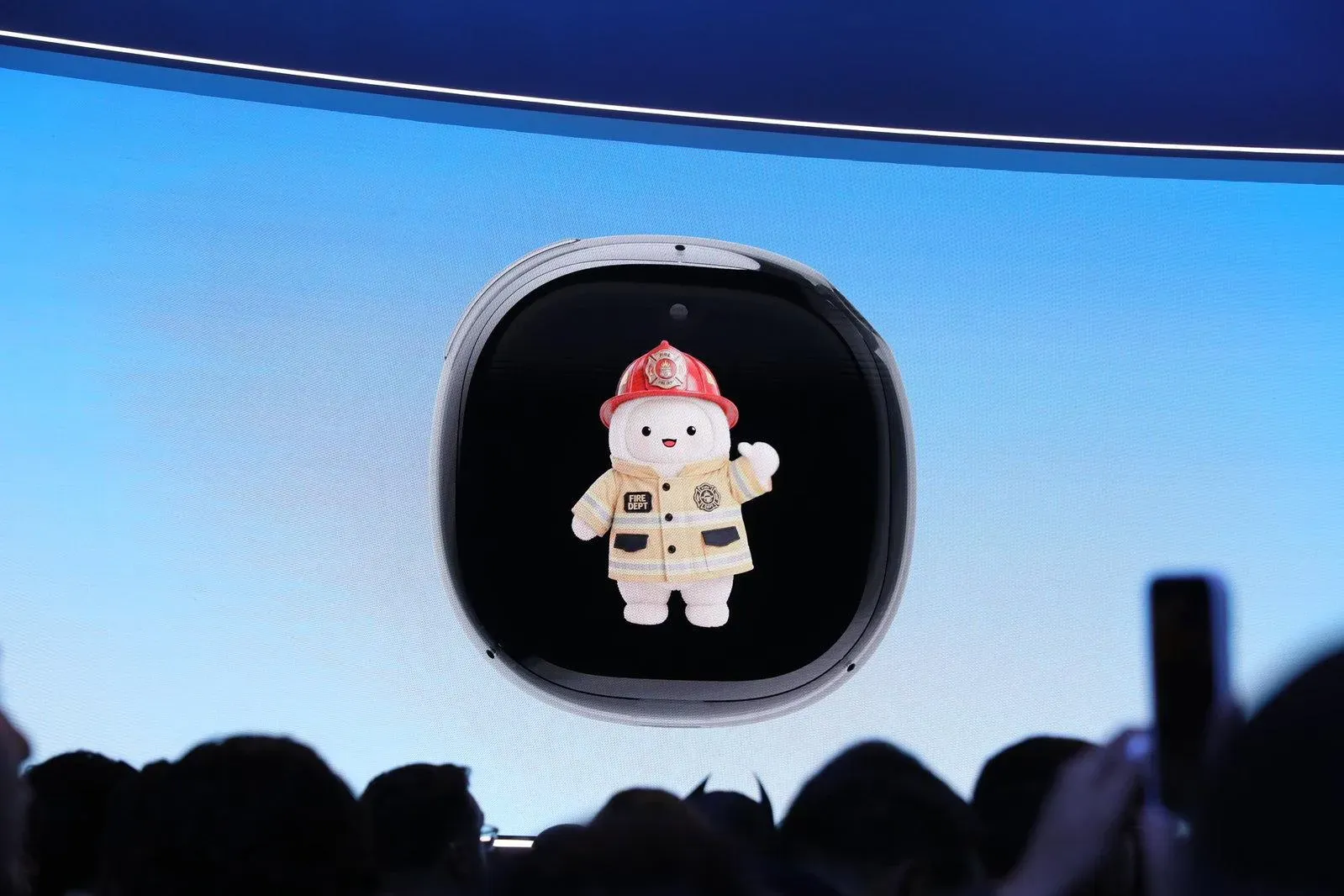
Meta plans to price its Muse Charm, the screen-equipped gadget for chatting with its Muse AI agent, at $300, according to The Information, with CEO Mark Zuckerberg targeting a December holiday ship date. The number signals Meta intends to sell hardware on its own economics rather than subsidize an install base, a test that will shape how every consumer platform prices the AI interface layer.
Meta plans to charge $300 for the Muse Charm, the screen-equipped gadget that lets you chat with the company's Muse AI agent, according to The Information. CEO Mark Zuckerberg unveiled the device earlier this year and said Meta expected to ship it "in time for the holidays in December." He did not give a price at the time. Now the number is on the table, and it is not a stocking stuffer.
The pitch is friction removal. Zuckerberg said Meta had "packed the whole Muse experience" into the Charm, including real-time voice and avatar technology. The device has a fingerprint sensor, and a tap is enough to start talking to a Muse AI agent without unlocking a phone or opening an app. That single design choice is the entire thesis. The moment you have to reach for your phone, unlock it, and hunt for an app, the assistant loses. Meta is betting people will pay real money to skip those three steps.
$300 is a deliberate number. It is serious money for a single-purpose device, and it lands in the awkward zone where a buyer could instead put it toward a phone, a pair of smart glasses, or nothing at all. Historically, Meta has priced its Quest headsets aggressively to build an install base, accepting thin or negative hardware margins to get there. A $300 accessory with a screen and a fingerprint sensor reads differently. This looks like a product expected to stand on its own economics rather than a loss leader handed out to seed a platform.
The category has a graveyard. The last wave of standalone AI gadgets, from the Humane AI Pin to the Rabbit R1, launched with loud demos and then hit the same wall: the phone in your pocket already does most of it, and does it better. The failure mode is rarely the hardware. It is the habit. Consumers do not typically add a device, they replace one. Meta's counterargument is that the Muse agent is not a generic chatbot but a persistent companion with a voice and an avatar, and that the Charm is the fastest door into it.
Meta's real advantage is distribution. It already runs the apps where billions of people spend their attention, and it has spent years and enormous sums on avatar and mixed-reality research through Reality Labs. The Charm converts that research into a physical touchpoint and, more importantly, makes the Muse agent the default interface rather than one app among dozens. The December deadline matters more than it sounds. Holiday shipping means tooling, component orders, and retail plans are effectively locked now, months before launch. A slip past December pushes the device into a January lull where consumer hardware tends to go to die.
There is also a security and privacy frame. A fingerprint sensor that unlocks an AI agent without a phone is convenient, and convenience is exactly where regulators and security researchers look first. An always-available assistant that listens, remembers, and identifies you biometrically raises immediate questions about where that data lives and who can reach it. Meta has been under sustained scrutiny in the US and Europe over data practices, and a new class of always-on hardware gives those arguments a fresh surface to attach to.
The competitive backdrop is crowded. Rivals from OpenAI to Apple are chasing the same ambient assistant idea, and the race is not really about who has the best model. It is about who owns the moment a person decides to ask for something. Whoever holds that moment holds the default, and defaults are worth more than features. A $300 price tag is Meta's way of testing whether it can buy that moment outright instead of renting it through someone else's operating system.
For executives watching, the price is the tell. It says Meta believes the Muse agent is compelling enough to sell hardware on its own merits, not as a giveaway bundled into something else. If that works, the interface layer for AI gets repriced and every consumer platform has to answer for its own friction. If it does not, Meta absorbs another hardware write-down and the standalone AI gadget earns one more entry in the graveyard. Either way, the December ship date is the deadline that decides which story gets told.
This story's Key Insights and Take-aways are locked.
Create a free account to unlock Executive Actions for one credit.
Register to UnlockAlways free for Executives Club members. Join the Club
More in Technology

Anthropic mathematician claims Claude helped crack the Riemann hypothesis
If the proof holds, AI has toppled math's most famous open problem; if it does not, it is a case study in announcing breakthroughs before anyone verifies them.

AI's $4 Trillion Wipeout Erases Nasdaq's Gains for the Year
A brutal week took roughly $4 trillion off the AI sector and left the Nasdaq flat for the year, and the damage ran the full length of the supply chain.

Anthropic mathematician says AI proved the Riemann hypothesis. Verification will take time.
A single unverified claim from inside Anthropic now sits against more than 160 years of open mathematics, and the gap between asserting a proof and surviving peer review is the entire story.