
Miliband: wider EU deal does not hinge on EU student fees
He says the agreement is not conditional on lowering fees for EU students in Britain, after Brussels sources suggested the bloc could withhold the wider deal until it happened.
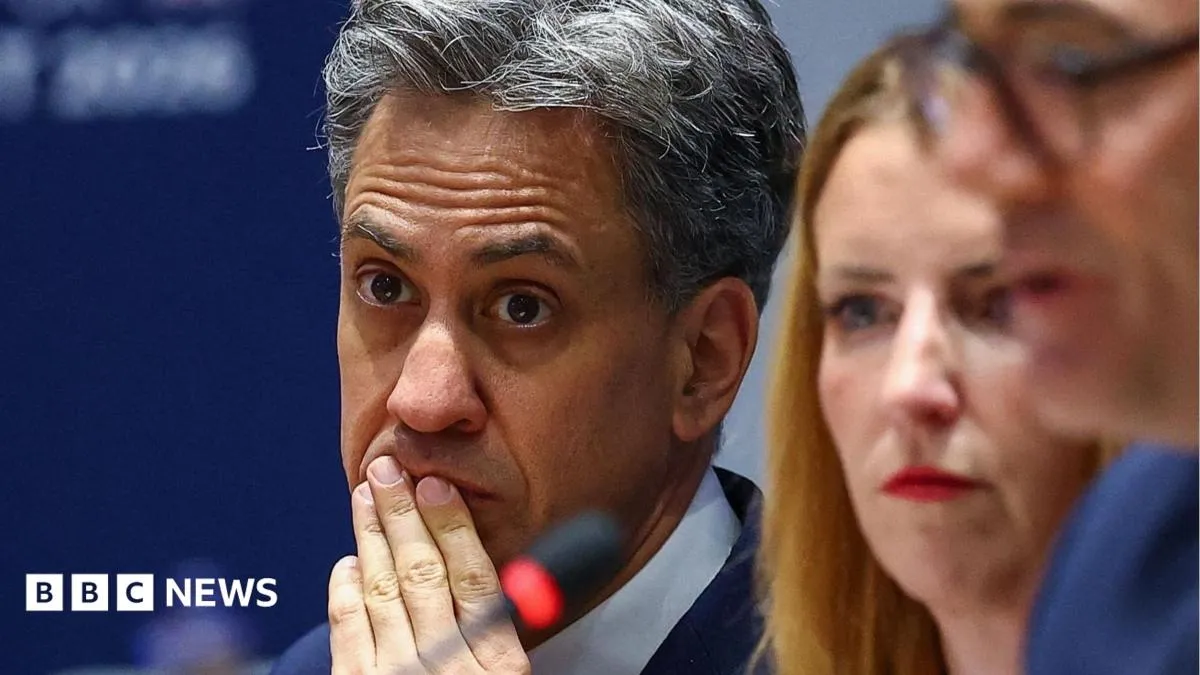
Miliband has said a wider UK-EU deal is not dependent on an agreement over tuition fees for EU students in Britain, contradicting Brussels sources who had suggested the bloc might not apply the wider deal until those fees were lowered. The divergence matters because it decides whether fees are a real condition of the agreement or leverage the UK has just publicly refused to pay.
Miliband has publicly rejected the idea that a wider UK-EU deal hinges on tuition fees, pushing back on a linkage that Brussels sources had previously floated. The deal, he said, is not dependent on an agreement over fees. That single line is aimed squarely at the suggestion, attributed to Brussels sources, that the bloc might not apply the wider deal until fees were lowered for EU students studying in Britain.
Read that against the original signal and the shape of the standoff becomes clear. Brussels sources had suggested the wider deal might be withheld until the fees question was settled. Miliband now says the two are not joined. Only one of those positions can be operative, and the gap between them is where the negotiation actually lives. If the link is real, the UK is being asked to pay for the wider deal with a domestic education subsidy. If it is not, the fees demand is leverage that has just been publicly defused.
For context, EU-level agreements are typically negotiated as single undertakings rather than a la carte menus. The European Commission negotiates on behalf of member states, nothing is agreed until everything is agreed, and ratification is a package vote. That structure is why linkage is a standard tool in Brussels. A demand on tuition fees, though, is unusual in kind, because education is a national competence rather than a shared EU policy. It is a political ask dressed up as a technical one, which is precisely why it can be attached to, or detached from, a wider deal without either side conceding a formal principle.
The background is a change in fee status. Historically, EU students in Britain enjoyed the same fee treatment as domestic students, with tuition typically capped at the home rate. After Brexit, that treatment largely ended, and EU students have generally been charged at international rates, which are substantially higher. That shift has been a persistent grievance in Brussels, and it is the reason a fees demand could be attached to a wider deal at all. It is also why the grievance will not vanish just because a minister says the deal does not depend on it.
For UK universities, the fees question is not abstract. The sector's funding model leans on higher international fees to cross-subsidise domestic teaching and research, and EU recruitment has typically softened since the fee-status change. Cutting fees for EU students without replacement funding would push the shortfall onto institutions already managing tight budgets. Holding fees where they are keeps the Brussels grievance alive. Either way, someone absorbs the cost: the Treasury, the universities, or the students themselves.
Domestically, the politics are close to radioactive. Tuition fees are devolved, which means England, Scotland, Wales and Northern Ireland do not move in lockstep, and any UK-wide concession to Brussels would have to be squared with four different funding regimes. In England in particular, fees carry years of political scar tissue. A government that lowers fees for EU students while domestic students keep paying is exposed to an obvious attack line, and a government that refuses is exposed to the counter-argument that it stalled a wider deal over a relatively small line item.
So watch the sequencing, not the rhetoric. Three things will tell you whether Miliband's line holds. First, whether the Commission formally decouples the wider deal from fees, or simply stops briefing the linkage. Second, whether the fees question reappears during ratification, when member states get their hands on the package and can attach conditions of their own. Third, whether the UK's own position shifts, since a statement that a deal is not dependent on something is not the same as a promise never to discuss it.
The strategic read for anyone with exposure to the outcome is this: linkage is a pricing mechanism, and Miliband has just tried to reset the price. Universities should plan on the assumption that EU student fee status stays contested for the life of the negotiation, because even if the wider deal is formally decoupled, the underlying grievance does not disappear. Businesses and investors waiting on the broader agreement should treat the decoupling claim as the base case, but not a guarantee. And boards with education exposure should stress-test both outcomes, because the difference between the deal moving and the deal waiting for fees is the difference between a timetable and a hostage situation.
This story's Key Insights and Take-aways are locked.
Create a free account to unlock Executive Actions for one credit.
Register to UnlockAlways free for Executives Club members. Join the Club
More in Politics
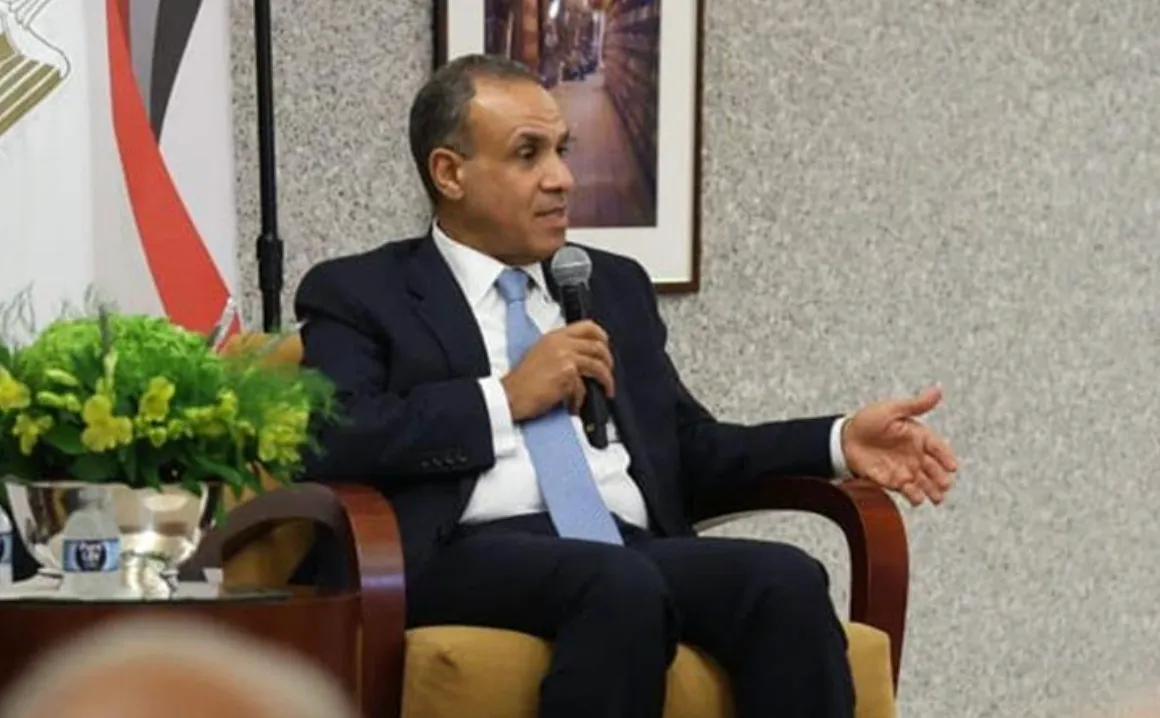
Egypt's foreign minister: Hamas must hand over weapons for Gaza phase two
Badr Abdelatty tells Asharq Al-Awsat that Cairo is pressing Palestinian factions to implement weapons understandings, and that phase two of Trump's Gaza plan hinges on every party, Israel included, meeting its commitments.

Emilija Morrison escaped Neet life. Her new job is just as precarious
A Glasgow graduate with an NCTJ diploma welcomes the government's youth jobs plans, but warns that a paycheque without security is not an exit from Neet life.
Ministers lift gagging clauses at UK data watchdog ahead of culture probe
Staff at the Information Commission can now describe their workplace without contractual silence, and ministers are due to publish the review's terms next week.