
Moon dust, 3D-printed into LEGO-like bricks, could build bases without Earth cargo
The blocks still need strengthening, but the experiment points to a future where lunar bases are built from what is already up there, not shipped from Earth.
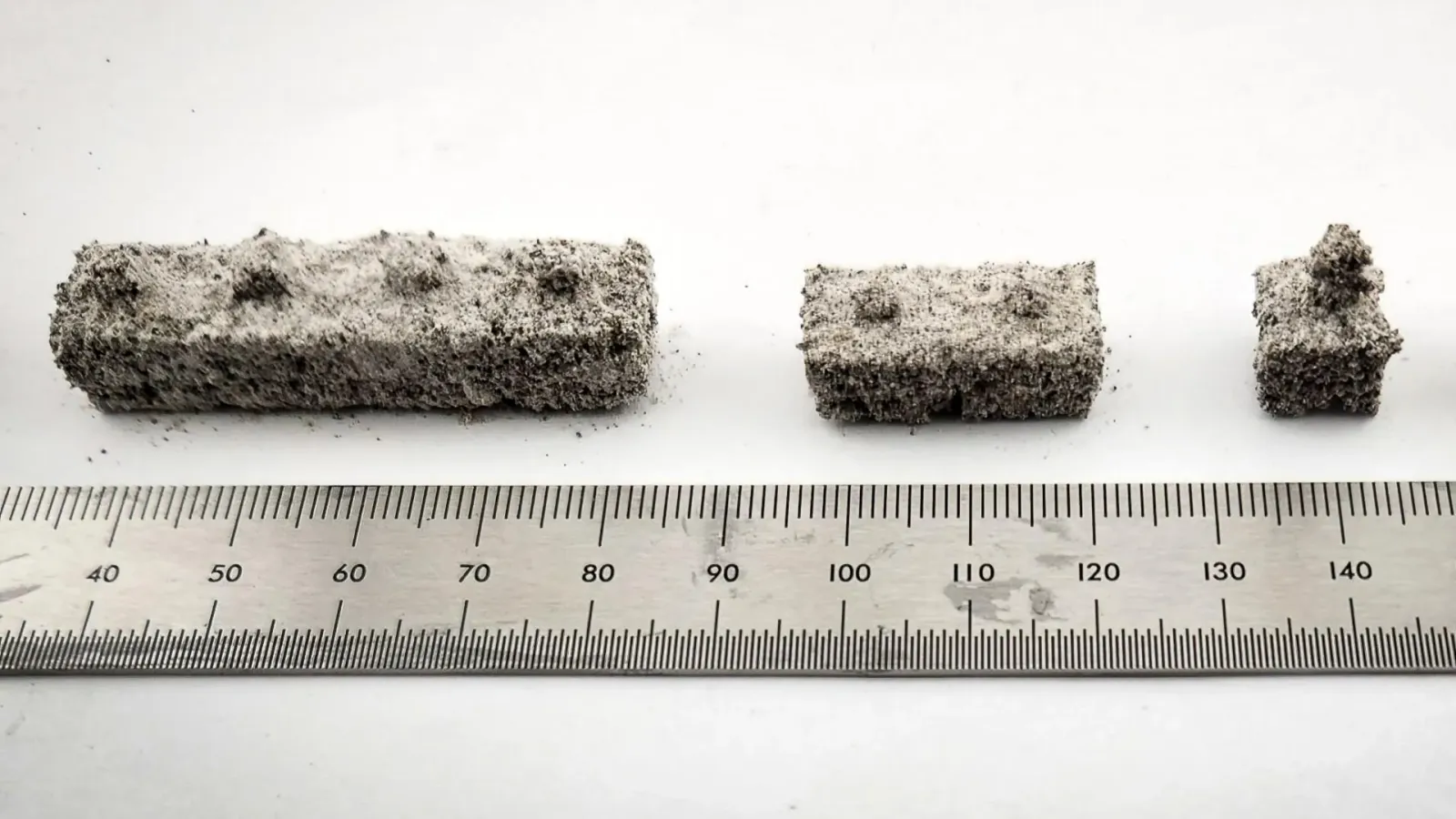
Scientists have found a way to 3D-print Moon dust into LEGO-like bricks, an early step toward building lunar bases out of materials already on the Moon. The experimental blocks still need to be strengthened, but the result reframes the economics of off-Earth construction for space agencies, launch providers, and materials firms: the rocket may carry the printer, not the building.
Scientists have found a way to 3D-print Moon dust into LEGO-like bricks, a result that points at something much bigger than a neat lab trick: the possibility of building lunar bases out of material that is already up there. The experimental blocks still need to be strengthened before anyone should picture a finished habitat, but the direction of travel is clear. Instead of shipping every wall, beam, and panel from Earth, future crews could manufacture structure on site from the ground under their boots.
That matters because mass is the tax on everything humans do in space. Historically, every kilogram of hardware headed to the lunar surface has to be launched off Earth first, and launch capacity, not imagination, has been the binding constraint on what gets built. A habitat assembled from local material would flip the equation: the rocket carries the printer and the people, not the building. For anyone who tracks launch economics, that is the difference between a resupply mission and a construction site.
The raw material is lunar regolith, the fine, sharp, glassy dust that covers the Moon. It is abrasive, it clings electrostatically to suits and seals, and it has historically been treated as an enemy of equipment rather than a building supply. Turning it into a structural product is a category change. The 3D-printing approach matters because it needs no molds, no mortar, and no giant factory floor; a printer can lay down material in the shape you need, which is exactly the constraint you face when your job site is roughly 384,000 kilometers away.
The LEGO comparison is not just a press-release flourish. Interlocking bricks are modular, stackable, and repairable, which is how you build when you cannot weld a monolithic dome into place. Modular units can be printed in batches, tested, swapped out when they fail, and assembled by robots or by crews with limited time outside. The catch is the one the researchers themselves flag: the blocks still need to be strengthened. A brick that interlocks beautifully but crumbles under load is a prototype, not a foundation.
For context, 3D-printed construction has been creeping into Earth-bound projects for years, typically using concrete extruded layer by layer. The appeal is the same everywhere: fewer forms, less waste, faster builds, and the ability to work in places where labor and logistics are hard. The Moon version strips out the concrete, because you cannot ship cement, and replaces it with the only abundant material on site.
The second-order effects are where this gets interesting for anyone outside a materials lab. In-situ resource utilization, the industry term for making what you need where you are, is the quiet thesis behind a lot of lunar planning. If regolith can be printed into structure, then the value of a lunar mission shifts from what it carries to what it can make. That pulls in construction and materials companies, robotics firms, and the launch providers whose business model assumes everything goes up in one piece.
The distance between a lab bench and the lunar surface is real. The Moon offers vacuum, wild temperature swings between sunlit and shadowed ground, radiation, micrometeorite strikes, and dust that gets into everything. A process that works in a controlled chamber typically has to be re-proven for those conditions. Strengthening the blocks is the first hurdle; surviving the environment is the second.
There is also a governance layer that tends to arrive after the engineering. The 1967 Outer Space Treaty, the framework most space-faring nations operate under, bars national appropriation of celestial bodies, but it says far less about who owns what you extract and manufacture up there. Historically, legal clarity has lagged technical capability in space, and lunar construction would test that gap directly. Companies weighing investment in off-Earth manufacturing will want to know not just whether the bricks hold, but who owns the wall.
For now, the honest read is that this is an early but genuinely useful result. The claim is not that lunar bases are solved; it is that the material problem has a plausible answer that does not require Earth. Watch two things: whether the blocks get strong enough to bear structural load, and whether anyone moves the process out of the lab and into a vacuum chamber that looks more like the Moon. If both happen, the economics of building off Earth change, and the companies positioned to build there change with them.
This story's Key Insights and Take-aways are locked.
Create a free account to unlock Executive Actions for one credit.
Register to UnlockAlways free for Executives Club members. Join the Club
More in Science

Anthropic's I.P.O. Made Rank-and-File Researchers Worth Tens of Millions
Researchers who joined just a few years ago are now worth tens of millions, and the windfall resets the pay benchmark for every private A.I. lab still paying in paper.

Sea Lion Culling Strategy Fails: New Model Says Killing Them Won't Save Salmon
The latest research from AAAS overturn a long-held conservation assumption, forcing policymakers to rethink critical resource allocation in marine ecosystems.

Microplastics do more than pile up: they react with water to damage cells
Scientists have found that plastic particles can generate highly reactive molecules in water, a mechanism that could explain links to heart attacks, strokes, and neurological disorders.