
Mudryk Accuses Ukraine Legend Shevchenko of Lying About His Drugs Test
A doping case has become a public war between a Chelsea winger and the man running Ukrainian football, and the reputational bill lands long before any tribunal rules.
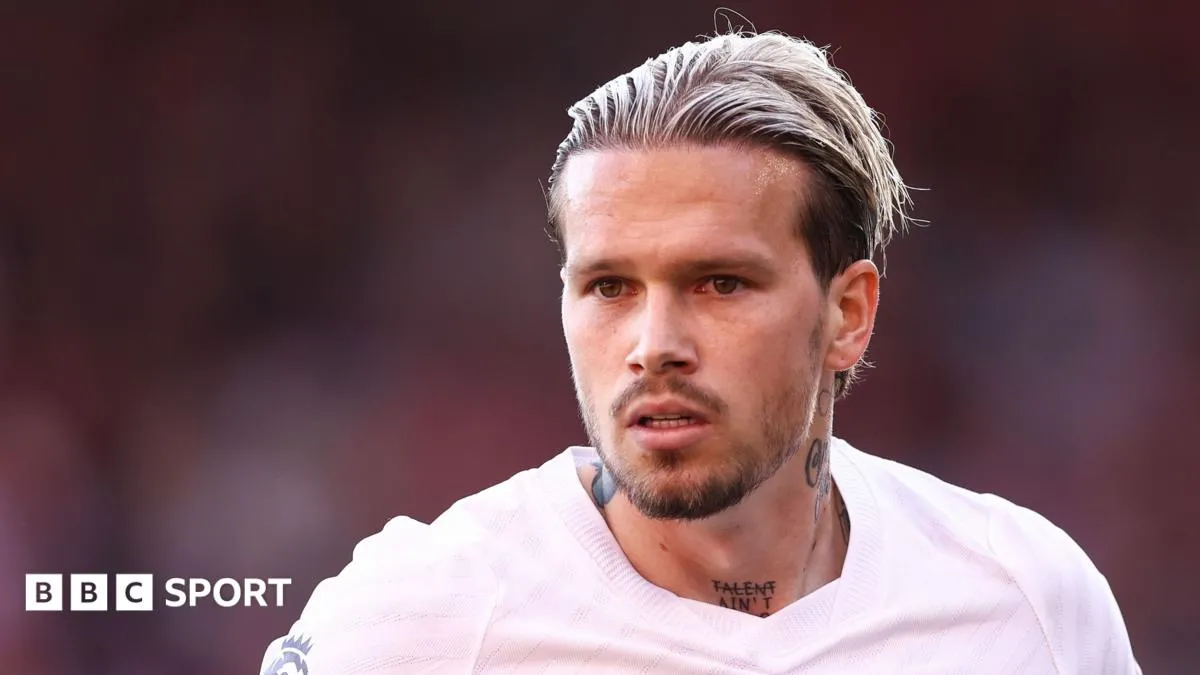
Mykhailo Mudryk has accused Ukraine legend Andriy Shevchenko of lying about the circumstances surrounding the winger's positive drugs test, as his dispute with the country's football federation continues. For executives, it is a case study in what happens when the regulator, the adjudicator and the national icon are the same institution, and the commercial damage is priced before any verdict arrives.
Mykhailo Mudryk has accused Andriy Shevchenko of lying about the circumstances surrounding the winger's positive drugs test, BBC Sport reports, a claim that turns a doping case into an open confrontation between a current international and the most decorated figure in Ukrainian football. The accusation lands as Mudryk's dispute with the country's football federation continues, which means the player and the governing body handling his case are already fighting on more than one front. The report does not spell out the specific statement Mudryk is contesting. What it does establish is the posture: he is not waiting quietly for a tribunal to rule. He is publicly calling a national icon a liar, and he is doing it while his own case is still live.
That is a rare move, and the reason is structural. Shevchenko is not a pundit or a former teammate with an opinion. He is Ukraine's most celebrated footballer, a Ballon d'Or winner who spent his peak years at AC Milan and Chelsea, and he now leads the country's football association. When the person running the federation is also the person the public trusts to speak about the sport, a player's accusation does not stay inside a hearing room. It becomes a national argument about who is telling the truth, and it forces every sponsor, broadcaster and teammate to pick a lane or pretend not to notice.
For context on how these cases normally run: a positive test typically triggers a provisional suspension, analysis of a B sample, a formal hearing, and the possibility of an appeal to the Court of Arbitration for Sport. National federations and national anti-doping organisations share jurisdiction, while the World Anti-Doping Agency sets the code that both must follow. Timelines stretch across months, sometimes years. During that window an athlete cannot play, cannot be transferred cleanly, and cannot fully defend himself without risking that his words become part of the record. Reputation is the only asset still trading.
That is what makes the accusation against Shevchenko so consequential. Athletes are almost always advised to say nothing, on the theory that a quiet case is a shorter case. Mudryk has gone the other way, and the calculation is not irrational. If he believes the public narrative around his test has already damaged him, silence looks less like discipline and more like surrender. The risk is that a public fight with his own federation hardens the institution he ultimately needs to persuade.
The commercial exposure is real and it is measurable. Mudryk plays his club football at Chelsea, where a suspension removes him from the pitch, the marketing material and the transfer market at the same time. Image rights deals, boot and apparel contracts, and national team selection all sit downstream of an unresolved doping case. Sponsors typically reprice reputational risk faster than any tribunal issues a ruling, which means the financial damage often lands before the legal verdict does. A feud with the federation adds a second variable: it makes the case about trust, not just about a sample.
There is also legal risk in the volume. Public statements made while proceedings are live can complicate a defence, invite defamation exposure, and shape how a panel reads an athlete's cooperation. Federations, for their part, are not neutral narrators; they have their own reputations to protect and their own institutional incentives. When the federation president is a national hero, every comment from the governing body carries the weight of that legacy, and every rebuttal from the player reads as an attack on it.
For executives and boards watching this, the lesson is about counterparty design. A crisis is far harder to manage when the regulator, the judge and the national icon are the same person or the same institution. Companies in regulated industries face a version of this constantly: the body that approves your licence is also the body that explains your failure to the public. The playbook is to separate the legal track from the communications track, staff them with different people, and decide in advance who speaks and when. Mudryk's case shows what happens when those tracks collapse into one.
What to watch next is not the headline, it is the calendar. Whether the dispute with the federation resolves quietly or escalates into formal proceedings will determine how long Mudryk is off the pitch and how much of his market value survives the wait. Shevchenko's response, or lack of one, will shape whether this stays a player-versus-administration story or becomes something larger inside Ukrainian football. Either way, the case has already produced the outcome nobody in a doping dispute wants: a verdict in the court of public opinion, delivered long before the tribunal sits.
This story's Key Insights and Take-aways are locked.
Create a free account to unlock Executive Actions for one credit.
Register to UnlockAlways free for Executives Club members. Join the Club
More in Entertainment

GTA 6 banks $3.8bn in one day, torching every launch record
One game just out-earned every video game launch and every single-day film box office haul in history, and the fallout lands on every media CEO's forecast.

GTA VI Racked Up $3.79 Billion in a Single Day, Topping Every Film Ever
A 13-year wait produced a $3.79 billion day, more than any movie has made in its entire run, and it resets the launch math for every studio, streamer, and brand chasing the same attention.

GTA 6 sells 32.5M pre-sales and $3.79B day one, torches 13-year record
Rockstar's sequel didn't just beat Grand Theft Auto V's 13-year-old benchmark; it reset what a launch can be, with 32.5 million pre-sale copies and $3.79 billion in a single day.