
Nasa-backed scientists grew potatoes in simulated lunar soil for a moon base
A new report says prolonged lunar exploration depends on growing food up there, and the potato just cleared its first test in the closest thing to lunar dirt.
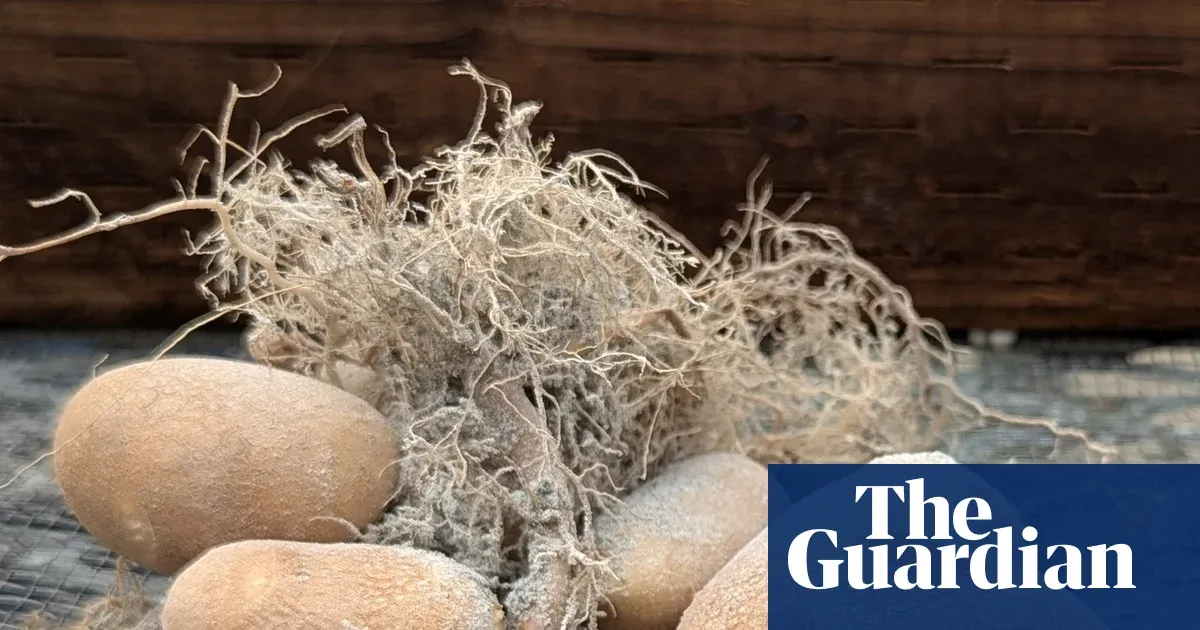
Scientists on a Nasa-backed project successfully cultivated potatoes in simulated lunar soil and concluded in a new report that the crop is an ideal candidate for farming on the moon. For anyone planning long-duration lunar missions, that moves food production from an afterthought to a core life support requirement, with direct consequences for resupply cost, mission risk and the commercial logic of a permanent base.
The first item on the moon base menu is a potato. Scientists on a project backed by Nasa say they have successfully cultivated potatoes in simulated lunar soil, and the new report behind the work makes a bigger argument than a neat lab result: prolonged lunar exploration will depend on life support systems capable of producing food there. Read that again, because it reframes the whole moon effort. Getting to the lunar surface is a transportation problem. Staying there is a food problem, and food is heavy.
That is why the potato result matters more than it sounds. Every kilogram of food flown from Earth has to be paid for in propellant, launch cadence and landing risk, and it arrives with an expiration date. If a crew can grow part of its own diet, a base stops being a camping trip tethered to a supply line and starts looking like a settlement. The report puts food production in the same category as air and water: not a comfort, a requirement. And it names the potato as an ideal candidate for the job.
Why the potato? For context, the crop is grown on every continent on Earth and is prized by agricultural planners for three unglamorous reasons: it produces a lot of calories per unit of land, it stores well without refrigeration, and it delivers useful nutrition, including carbohydrates, vitamin C and potassium, from a single plant. It is also forgiving. That combination is what makes it attractive when the growth chamber is small and the next resupply rocket is far away. The scientists' verdict that it fits a lunar farm is the finding; the agronomy behind the appeal is the context.
The harder half of the story is the soil. Lunar regolith, the dust and broken rock covering the moon, is not soil in the farming sense. It carries no organic matter, no microbial life and none of the biology that makes terrestrial ground fertile. The simulated lunar soil used in the experiment is a terrestrial stand-in built to approximate the real material, which is a reasonable way to test a hypothesis without a delivery address on the moon. It is also a caveat. Simulant is an approximation, and this is a successful step, not proof that a farm would work in actual regolith under actual lunar conditions.
Anyone who saw The Martian already has a mental picture of this: an astronaut turning a hostile surface into a potato patch. The film is fiction, but the instinct is sound, and the gap between the two is the work. A lunar farm still has to solve water, nutrients, light and power, and it has to do so across long lunar nights and brutal temperature swings, inside a sealed environment where every input is accounted for. One successful cultivation does not solve any of that. But each result shrinks the list of unknowns, and this one removes a real one: the question of whether a food crop can establish itself in a lunar soil analog at all.
The second-order effects are where this gets strategically interesting. A base that grows food needs fewer resupply missions, which lowers cost and, more importantly, lowers the consequence of a failed launch. It can stay staffed longer. It can support more people. Closed-loop life support, the term for systems that recycle air, water and now food, shifts from research project to capability, and capabilities of that kind tend to spill sideways. Controlled-environment agriculture developed for space has fed back into greenhouse growing, vertical farming and food production in water-scarce regions on Earth.
For anyone watching the moon, the message is that the race is quietly becoming an agriculture competition as much as an aerospace one. Space agencies have to prove they can keep humans alive up there, not just land them. Commercial lunar players need a reason for a base to exist that outlasts a photo opportunity, and a working farm is a durable one. Food and agtech investors get an early look at a technology stack, sealed growing environments, soil substitutes, nutrient recycling, that has a handful of customers in orbit and a far larger market on the ground. The potato did not win a contract. What it did was clear a technical hurdle that every serious lunar plan eventually runs into, and that is a small spud with a large implication: the moon base of the future needs farmers, not just astronauts.
This story's Key Insights and Take-aways are locked.
Create a free account to unlock Executive Actions for one credit.
Register to UnlockAlways free for Executives Club members. Join the Club
More in Science

Anthropic's I.P.O. Made Rank-and-File Researchers Worth Tens of Millions
Researchers who joined just a few years ago are now worth tens of millions, and the windfall resets the pay benchmark for every private A.I. lab still paying in paper.

Sea Lion Culling Strategy Fails: New Model Says Killing Them Won't Save Salmon
The latest research from AAAS overturn a long-held conservation assumption, forcing policymakers to rethink critical resource allocation in marine ecosystems.

Microplastics do more than pile up: they react with water to damage cells
Scientists have found that plastic particles can generate highly reactive molecules in water, a mechanism that could explain links to heart attacks, strokes, and neurological disorders.