
Nathan Fielder's Elizabeth Holmes film has a twist it dares you to spoil
A Guardian review calls the Fielder and Oppenheim docu-hybrid 'thrillingly reckless' and says its mid-film reversal is the reason spoiler-averse viewers should bail early.
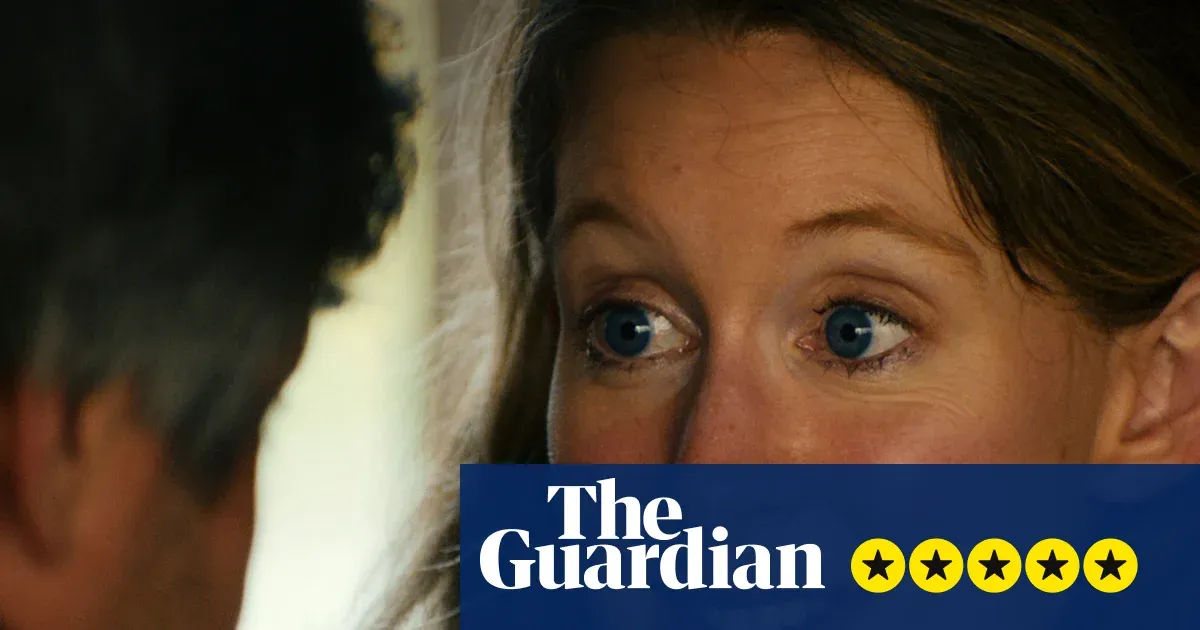
Nathan Fielder and Lance Oppenheim have made You Can See Everything, a docu-hybrid about convicted Theranos fraudster Elizabeth Holmes that The Guardian review calls 'thrillingly reckless' and 'deliciously irresponsible.' The film's mid-film twist and its close-range use of Holmes turn a familiar fraud story into a live test of how boards, founders, and audiences respond when narrative control becomes the product.
The twist is real, and The Guardian's review is already warning readers to bail before the halfway mark if they want to keep it. In You Can See Everything, co-directors Nathan Fielder and Lance Oppenheim train an intense close-range lens on Elizabeth Holmes, the convicted fraudster behind Theranos, and the result is what the review calls 'thrillingly reckless, deliciously irresponsible and as gripping as any thriller.' The film is a situationist docu-hybrid, not a conventional recap, and its central provocation is that Holmes, a subject already carved up by books, podcasts and courtroom coverage, can still be made to feel dangerous, strange and newly unreadable. The review calls it 'much more unhinged' than a thriller, and that is the point: the documentary's method is not to explain Holmes from a safe distance but to put her back in a room with a presenter, Fielder, who is described as the 'Aleister Crowley of modern documentary satire.'
The Theranos backstory is familiar because the claims were so audacious. The review reminds readers that Holmes's US biotech firm, run jointly with her then partner Sunny Balwani, 'in 2003 notoriously claimed to have invented a little box that could diagnose all manner of illnesses from a single drop of blood.' That promise did not sell itself. It was pumped by 'corporate prestige' and by 'credulous board members including George Schultz and Henry Kissinger.' The gap between the box's promise and the evidence is the original sin of the story, but the film's interest is in the performance around that gap: the charisma, the borrowed authority, the willingness of powerful people to repeat a claim they could not personally verify. Holmes is a convicted fraudster, and the review treats her not as a case study in evil but as a live specimen of narrative power.
What makes the film review-worthy beyond the Theranos rerun is Fielder's method. The review describes him as the 'hilarious dark master of turning truth into fiction and back again,' which is a useful way to understand the docu-hybrid form. Fielder does not stand outside the story with a clipboard; he gets close enough to become part of the experiment. That is why the review calls the film 'thrillingly reckless' and 'deliciously irresponsible.' For a business audience, the discomfort is the value. Most corporate postmortems arrive after the reputational damage is done and the language has been cleaned by lawyers. This one puts the machinery of persuasion on screen while it is still warm, and asks the viewer to notice how easily a compelling founder can turn a board, a reporter or an audience into an amplifier.
The review's biggest structural warning is the twist at around the halfway mark. It does not spoil what happens, and readers who want the shock intact are told to stop reading. That choice matters because the film's architecture mirrors the thing it studies. A fraud is often less a single lie than a sequence: a claim, a credential, a board name, a press story, a repeat. The reveal lands halfway because the first half has to earn the viewer's trust before the film can test it. For executives, the parallel is uncomfortable but useful. Any organization that manages a narrative has a midpoint problem: the longer a story runs without independent verification, the more expensive the eventual reversal becomes. The review promises an 'extraordinary twist,' and the promise is not just entertainment. It is a reminder that sequencing is a governance issue.
The board names in the Theranos story are the part that should still make operators flinch. George Schultz and Henry Kissinger are not bit players in the review's telling; they are evidence of how institutional prestige can be converted into credibility for a product that has not been proven. The review calls them 'credulous board members,' and the adjective is doing real work. Credulity is not the same as corruption. It can look like curiosity, loyalty to a charismatic founder, or simple deference to other impressive people in the room. That is why the Theranos lesson keeps resurfacing: the failure is not only that a founder lied. It is that the surrounding system found the lie useful, flattering or too awkward to interrogate.
Fielder's presence changes the temperature. The review calls Holmes's encounter with him a possible 'predatory-platonic love match,' which is a strange phrase and exactly the kind of phrase that captures the film's tone. The documentary is not a neutral audit. It is a confrontation between two people who understand that reality is editable. That makes the film less useful as a timeline and more useful as a stress test. If a convicted founder can still command a room, still shape the frame, still make an interviewer part of the act, then the lesson for boards is not simply 'do better diligence.' It is 'design for charisma.' Assume the most persuasive person in the room will be the least eager to be verified.
The cultural timing is part of the pull. Theranos has been retold so often that the fraud can start to feel like a settled historical event, complete with a moral and a cautionary slide. The Guardian review argues that this film makes it feel unhinged again. That is a real achievement and a warning. When a story becomes too familiar, audiences think they have learned the lesson; in practice they have learned the plot. The film's close-range study forces a different question: what would I have done in the room, with those names, that claim and that founder? For founders and investors, that question is more valuable than another recap of the headline. It turns a spectator story into a mirror.
The strategic stakes for peers are straightforward. Founders sell narrative before they sell product, and boards buy confidence before they buy evidence. The Theranos story, as the review frames it, is a case study in what happens when those two habits meet a person who is willing to keep performing. Fielder and Oppenheim do not resolve the story into a clean compliance lesson. They make it feel like a thriller because the underlying mechanics are thrilling: trust, access, prestige and the possibility of a reveal. The film's final value to executives is not that it explains Holmes. It is that it shows how easily the people around her became part of the show.
This story's Key Insights and Take-aways are locked.
Create a free account to unlock Executive Actions for one credit.
Register to UnlockAlways free for Executives Club members. Join the Club
More in Entertainment

GTA 6 banks $3.8bn in one day, torching every launch record
One game just out-earned every video game launch and every single-day film box office haul in history, and the fallout lands on every media CEO's forecast.

GTA VI Racked Up $3.79 Billion in a Single Day, Topping Every Film Ever
A 13-year wait produced a $3.79 billion day, more than any movie has made in its entire run, and it resets the launch math for every studio, streamer, and brand chasing the same attention.

GTA 6 sells 32.5M pre-sales and $3.79B day one, torches 13-year record
Rockstar's sequel didn't just beat Grand Theft Auto V's 13-year-old benchmark; it reset what a launch can be, with 32.5 million pre-sale copies and $3.79 billion in a single day.