
Nathan Fielder's Lost 2008 Election Doc Surfaces on YouTube After 18 Years
A documentary that had been missing for years is suddenly free to watch, a reminder that old catalogs can outlive the companies that shelve them.
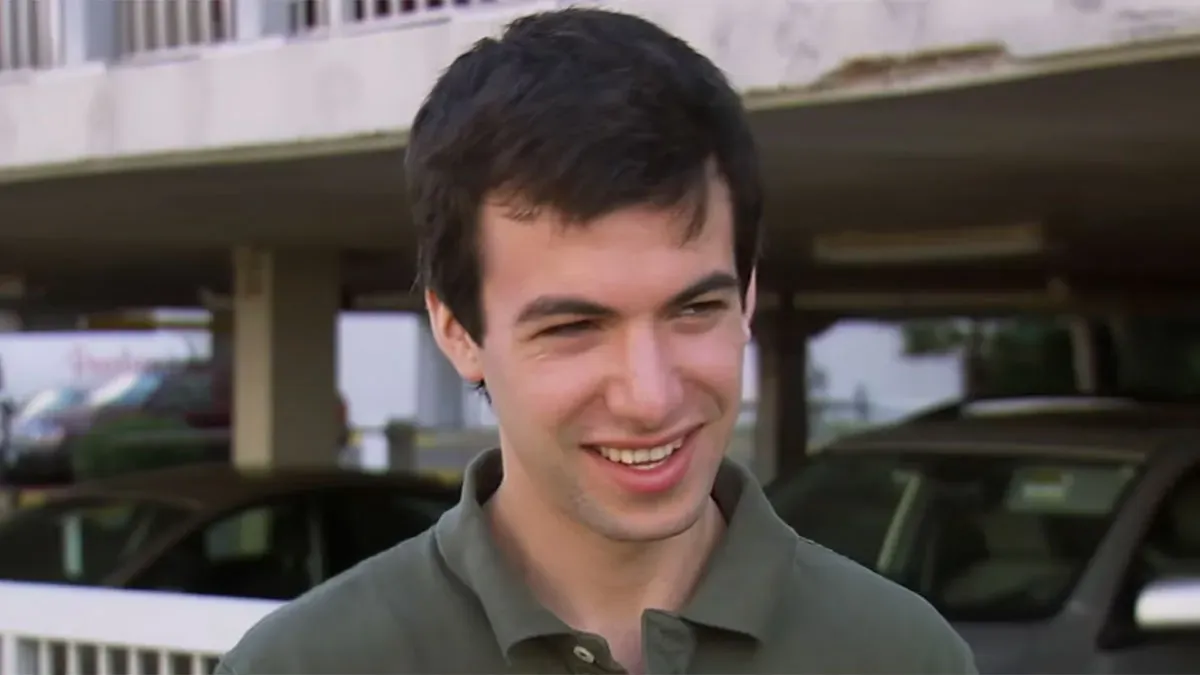
Comedian and documentarian Nathan Fielder's early project, 'Nathan Fielder: Love and Cameras in America,' tied to the 2008 election, has been made available for streaming on YouTube 18 years after it was first made. For media and talent executives, the quiet reappearance of a long-lost title shows how early work becomes durable IP whether or not anyone bothers to archive it.
Eighteen years after it was first made, 'Nathan Fielder: Love and Cameras in America' is finally watchable again, or perhaps for the first time. The long-lost documentary, tied to the 2008 election, has been made available for streaming on YouTube. There was no splashy re-release campaign and no platform bidding war. The film simply surfaced, ending a stretch of years in which one of Nathan Fielder's earliest projects existed mostly as a rumor, a title fans had heard about but could not actually watch. That is the news: a piece of the pre-fame record has been returned to the public, and it happened on YouTube rather than behind a subscription wall.
It matters because of who Fielder became afterward. As Consequence's Liz Shannon Miller reported, the filmmaker had been working on his signature blend of comedy and documentary for years, well before his recent success with 'You Can See Everything,' and well before his American breakthrough, the Comedy Central series 'Nathan for You.' In other words, the newly available film is a look at the method before the audience arrived. For anyone who studies how creative careers get built, that is the real value of a lost title resurfacing: it shows the raw material, not the polished product.
The mechanics of how things get lost are worth understanding, because they are rarely dramatic. Historically, early work from comedians, filmmakers, and creators tends to sit on hard drives, in unlabeled tapes, or inside the vaults of whichever production company happened to own it at the time. Rights fragment. Contacts go stale. The people who made the thing get famous for something else, and nobody has an obvious financial reason to spend money finding, clearing, and restoring a decade-old curiosity. So it stays gone, not because anyone decided to bury it, but because no one decided to save it.
That makes the YouTube arrival a small case study in distribution economics. Streaming platforms typically chase new releases and exclusive catalog titles, because that is what drives subscriber acquisition and retention. A single decades-old documentary, made when its subject was unknown, does not fit that model. YouTube does, in a different way: the cost of making something available is low, the potential audience is global, and the payoff comes through attention rather than through a monthly fee. For creators sitting on dormant work, that calculation is increasingly the whole argument.
For executives, the sharper question is who benefits when a career's early chapter reappears. The subject gains narrative depth at the exact moment a personal brand is worth the most. Fans get a completion of the record. And whoever holds the underlying rights gets a free lesson in the difference between owning something and monetizing it. A title that generates no revenue is not worthless if it can be reactivated the moment its creator becomes culturally relevant again. Timing, not the asset, is often what was missing.
The broader context is that talent catalogs have quietly become a real class of intellectual property. Studios and streamers have spent recent years paying up for libraries built decades ago, because proven titles carry lower risk than untested bets. Independent creators are starting to internalize the same logic, treating their back catalog as an asset to be inventoried rather than forgotten. The obstacle is rarely demand. It is paperwork, rights clarity, and the simple habit of keeping track of what you made.
Fielder's case lands at an interesting moment. A comedian whose entire craft depends on the blurry border between documentary and performance now has an early, unfiltered example of that craft available to anyone with an internet connection. The film is no longer lost. What remains to be seen is how many other creators are sitting on the same kind of asset without knowing it, and how many organizations will only discover what they own after somebody else puts it online first.
The strategic takeaway is unglamorous but real. Archives are not nostalgia projects. They are inventory, and inventory gets audited. Companies that have cycled through ownership changes, and individuals whose early work predates their fame, are both exposed to the same risk: a valuable asset that nobody has the rights, the files, or the will to revive. The cheapest time to solve that problem is before the audience shows up asking for it.
This story's Key Insights and Take-aways are locked.
Create a free account to unlock Executive Actions for one credit.
Register to UnlockAlways free for Executives Club members. Join the Club
More in Entertainment

GTA 6 banks $3.8bn in one day, torching every launch record
One game just out-earned every video game launch and every single-day film box office haul in history, and the fallout lands on every media CEO's forecast.

GTA VI Racked Up $3.79 Billion in a Single Day, Topping Every Film Ever
A 13-year wait produced a $3.79 billion day, more than any movie has made in its entire run, and it resets the launch math for every studio, streamer, and brand chasing the same attention.

GTA 6 sells 32.5M pre-sales and $3.79B day one, torches 13-year record
Rockstar's sequel didn't just beat Grand Theft Auto V's 13-year-old benchmark; it reset what a launch can be, with 32.5 million pre-sale copies and $3.79 billion in a single day.