
Nature analysis: AI's hallucinated references and other bad habits fade in 16 months
A new analysis finds many undesirable LLM behaviours dissipate after about 16 months, a timeline that lands inside a standard enterprise contract and forces buyers to reprice model risk.
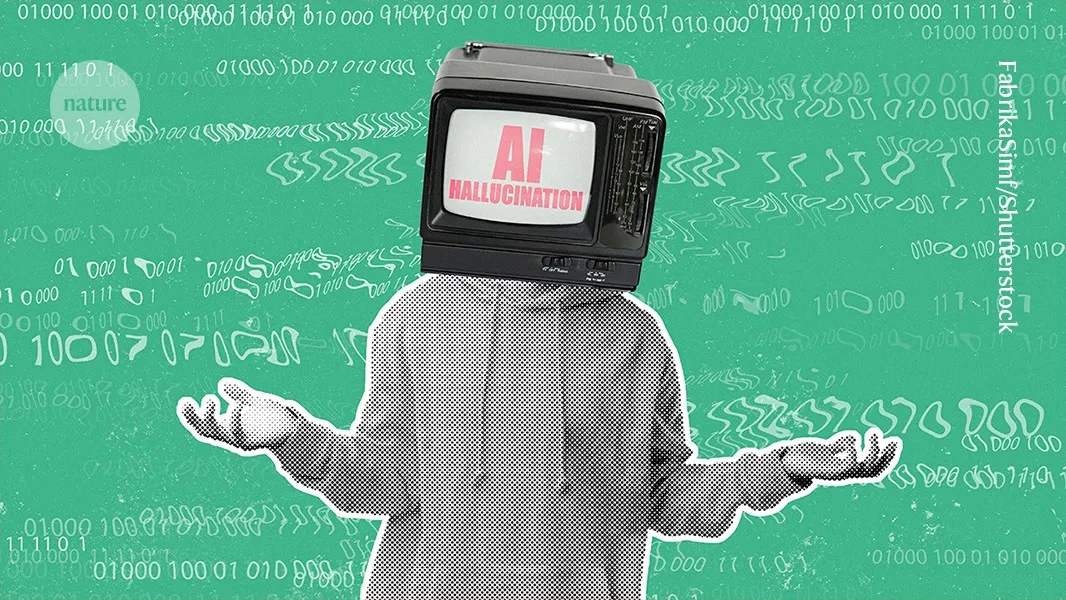
An analysis published in Nature on 19 November 2026 finds that many undesirable large language model behaviours, hallucinated references among them, dissipate after about 16 months. For decision-makers, that 16-month clock reframes model flaws as depreciating assets, changing how procurement, evaluation and vendor-switching decisions should be timed.
Sixteen months. That is roughly how long the worst habits of a large language model tend to last, according to an analysis published in Nature on 19 November 2026. The finding is blunt: many undesirable LLM behaviours dissipate after about 16 months. Hallucinated references, the fabricated citations that have historically tripped up lawyers, academics and analysts, sit squarely in that category of bad habit that appears to fade rather than calcify.
Why that specific failure mode matters is worth spelling out. A hallucinated reference is not an obvious error. It arrives formatted correctly, with a plausible author, a plausible journal, a plausible year, and sometimes a plausible-looking identifier. It survives a skim. It survives a copy-paste into a draft. It only dies when someone actually tries to retrieve the source and finds nothing there. For anyone using a model to draft research, legal filings, due diligence memos or grant applications, that is the most expensive kind of mistake: cheap to make, costly to discover, and reputationally radioactive when it surfaces. The Nature analysis says the behaviour is on a clock.
Sixteen months is not just a research curiosity. It is a business number. It is roughly the length of a typical enterprise software contract, a full budget cycle, and the gap between one annual planning offsite and the next. It sits comfortably inside the horizon most boards actually plan against. Which means the finding lands directly on a question executives have been quietly asking since generative AI hit the mainstream: do we buy now and accept the flaws, or wait for the technology to clean itself up? The analysis suggests the second option has a measurable expiry date, and it is shorter than most procurement teams assume.
The obvious caveat is mechanism. A finding that behaviours dissipate after about 16 months does not, on its face, tell you why. The improvement could come from retraining, from better post-training and instruction tuning, from retrieval and verification layers bolted on top of the model, or from the wider ecosystem of tools that has grown up around these systems. For an operator, the cause matters less than the direction. If the trend holds, the flaws you are engineering around today are depreciating assets, and the workarounds you are paying for have a shelf life.
That is uncomfortable news for a specific slice of the startup economy. A meaningful cohort of companies has been built on selling fixes for exactly these failure modes: hallucination detectors, citation verifiers, guardrail layers, output-auditing tools. Those products solve a real problem today. But if the underlying behaviour fades on a 16-month horizon, the moat fades with it. The durable version of those businesses is not detection, it is accountability: audit trails, provenance, liability transfer, the things a regulated buyer needs regardless of how good the model gets. Founders in that space should be asking whether they are selling a patch or a permanent control.
Regulators, meanwhile, have been building risk-based regimes for general-purpose AI models, with duties that typically revolve around documentation, evaluation and post-market monitoring. Those frameworks generally assume that model behaviour is something you assess at a point in time and then attest to. A 16-month dissipation curve complicates that assumption. A compliance snapshot taken at deployment describes a system that may look materially different a year and a half later, in either direction. The practical implication is that continuous evaluation, not annual attestation, becomes the defensible posture, and that the evaluation function stops being a launch gate and starts being an operating expense.
There is a real risk of over-reading the result. An average is not a guarantee. Some undesirable behaviours may persist well beyond 16 months, and new capabilities have historically arrived with new failure modes attached. A model already sitting in production does not improve on its own; the clock only runs if you actually move to a newer version, which means upgrade discipline is what converts the finding into an advantage. Teams that freeze a model version for stability reasons are, in effect, opting out of the improvement curve entirely.
The strategic read for peers is straightforward, even if the execution is not. Shorten evaluation cycles from annual to quarterly so you notice dissipation rather than assume it. Price model risk as something that depreciates, not something you capitalise once. Treat every workaround you build as temporary scaffolding with a removal date attached. And resist the temptation to build a permanent moat on a temporary flaw. The bad habits are fading. The question is whether your roadmap is moving at the same speed.
This story's Key Insights and Take-aways are locked.
Create a free account to unlock Executive Actions for one credit.
Register to UnlockAlways free for Executives Club members. Join the Club
More in Science

Anthropic's I.P.O. Made Rank-and-File Researchers Worth Tens of Millions
Researchers who joined just a few years ago are now worth tens of millions, and the windfall resets the pay benchmark for every private A.I. lab still paying in paper.

Sea Lion Culling Strategy Fails: New Model Says Killing Them Won't Save Salmon
The latest research from AAAS overturn a long-held conservation assumption, forcing policymakers to rethink critical resource allocation in marine ecosystems.

Microplastics do more than pile up: they react with water to damage cells
Scientists have found that plastic particles can generate highly reactive molecules in water, a mechanism that could explain links to heart attacks, strokes, and neurological disorders.