
Neanderthal gene shrinks a brain region and cuts schizophrenia risk 10%
A variant inherited from our extinct cousins, found in five Neanderthal genomes, trims the occipital lobe by 0.85 cubic centimeters per copy with no measurable hit to intelligence.
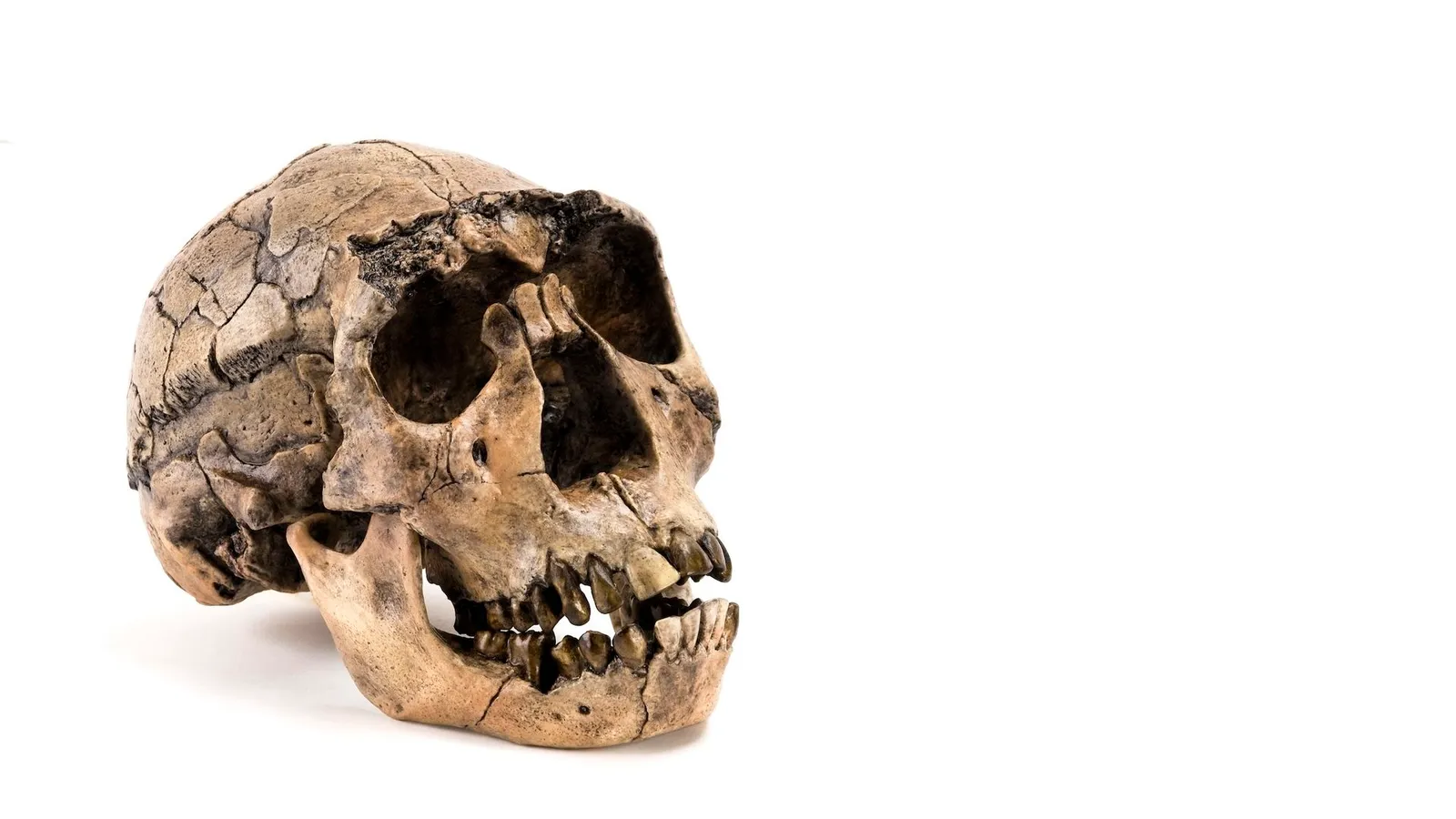
Hugo Zeberg and Svante Pääbo of the Max Planck Institute for Evolutionary Anthropology report in PNAS that a Neanderthal-inherited DAAM1 variant shrinks the occipital lobe and is linked to a nearly 10% lower chance of schizophrenia with two copies. For anyone funding or reading neuro-psychiatric research, the finding reframes archaic DNA as a live variable in modern brain biology rather than evolutionary trivia.
Two copies of a gene variant inherited from Neanderthals are linked to a nearly 10% drop in the chances of developing schizophrenia, according to a study published Nov. 16 in the journal PNAS. The same variant, tied to the DAAM1 gene, trims the occipital lobe, the brain's visual processing center, by roughly 0.05 cubic inches (0.85 cubic centimeters) per copy a person carries. And here is the part that should stop you: it appears to do all of that without any measurable effect on intelligence. The work comes from Hugo Zeberg, an evolutionary geneticist at the Max Planck Institute for Evolutionary Anthropology in Germany, and his colleague Svante Pääbo.
For context, Neanderthals were among the closest relatives of modern humans before going extinct around 40,000 years ago, and more than a decade of research has shown the two groups once interbred. Most people not of sub-Saharan ancestry living today carry about 2% Neanderthal ancestry. That makes this finding less of a curiosity and more of a live input into how modern brains are built. The variant the team identified was found only in modern humans outside Africa and turned up in five Neanderthal genomes. Zeberg put the takeaway plainly: "Genetic differences between Neanderthals and modern humans still influence our brains today."
The result runs against expectation. Neanderthal skulls were larger and more elongated than modern humans', and their occipital lobe, the smallest of the brain's four lobes, sitting at the back of the skull, was relatively larger than it is in us. So a Neanderthal variant that shrinks that region is the opposite of what experts expected, Tony Capra, an evolutionary geneticist at the University of California, San Francisco, who was not involved in the research, told Live Science. Capra added an important caveat: this single gene variant "does not reflect the full set of variations that might have been present in Neanderthals that might have affected the shape and size of their brain structures."
The occipital lobe houses the visual cortex, which helps process signals from the eyes. That detail matters because schizophrenia symptoms can include altered perceptions of reality, such as visual hallucinations and problems with processing visual signals. It is "tempting to speculate" that the variant's effect on schizophrenia risk runs through the visual cortex, Zeberg said, but there is currently no evidence for such a link. To get there, the researchers analyzed modern-human genomes for genetic variants related to occipital lobe size that were also likely inherited from Neanderthals, then leaned on a 2019 study that linked DAAM1 to brain development.
Zeberg's own summary is the cleanest version of the finding: "A Neanderthal variant can have a relatively strong effect on brain anatomy without affecting intelligence, while also reducing schizophrenia risk." That sentence is doing a lot of work. It separates anatomy from ability, a distinction that has historically been blurred in popular accounts of brain size, and it points to a genetic lever that shifts disease risk without touching cognition. For a field that has spent decades arguing about what brain size does and does not predict, this is a tidy natural experiment.
Capra said future research along these lines could analyze how other Neanderthal genetic variants influenced modern humans, "to see if they had a consistent effect on us." Looking into Neanderthal variants that are missing from modern-human genomes could "show us what makes us modern humans as opposed to them," he added. That is the larger research agenda: not just cataloging what we inherited, but reading the gaps, the variants Neanderthals carried that we did not, as a map of what changed.
For anyone outside a lab, the practical stakes are about how you read headlines like this one. The study identifies an association, not a treatment, and it does not propose a therapy or a screening test. The article is informational only and is not meant to offer medical advice. What it does deliver is a sharper picture of the genome as an archive: a variant that survived tens of thousands of years, shows up in people living today, and quietly shapes both the size of a brain region and the odds of a serious psychiatric condition.
The strategic question for researchers and the people who fund them is what else is sitting in that archive. If one archaic variant can move schizophrenia risk by nearly 10% while leaving intelligence untouched, the rest of the Neanderthal contribution to the modern genome is not background noise. It is a set of variables that medicine has only started to read.
This story's Key Insights and Take-aways are locked.
Create a free account to unlock Executive Actions for one credit.
Register to UnlockAlways free for Executives Club members. Join the Club
More in Science

Anthropic's I.P.O. Made Rank-and-File Researchers Worth Tens of Millions
Researchers who joined just a few years ago are now worth tens of millions, and the windfall resets the pay benchmark for every private A.I. lab still paying in paper.

Sea Lion Culling Strategy Fails: New Model Says Killing Them Won't Save Salmon
The latest research from AAAS overturn a long-held conservation assumption, forcing policymakers to rethink critical resource allocation in marine ecosystems.

Microplastics do more than pile up: they react with water to damage cells
Scientists have found that plastic particles can generate highly reactive molecules in water, a mechanism that could explain links to heart attacks, strokes, and neurological disorders.