
Netflix Renews Tokyo Swindlers for 2027, Reuniting Go Ayano and Hitoshi One
The Japanese real estate crime hit gets a second season and a 2027 slot, with its original star-director trio intact, signaling Netflix is buying continuity rather than rebuilding a proven franchise.
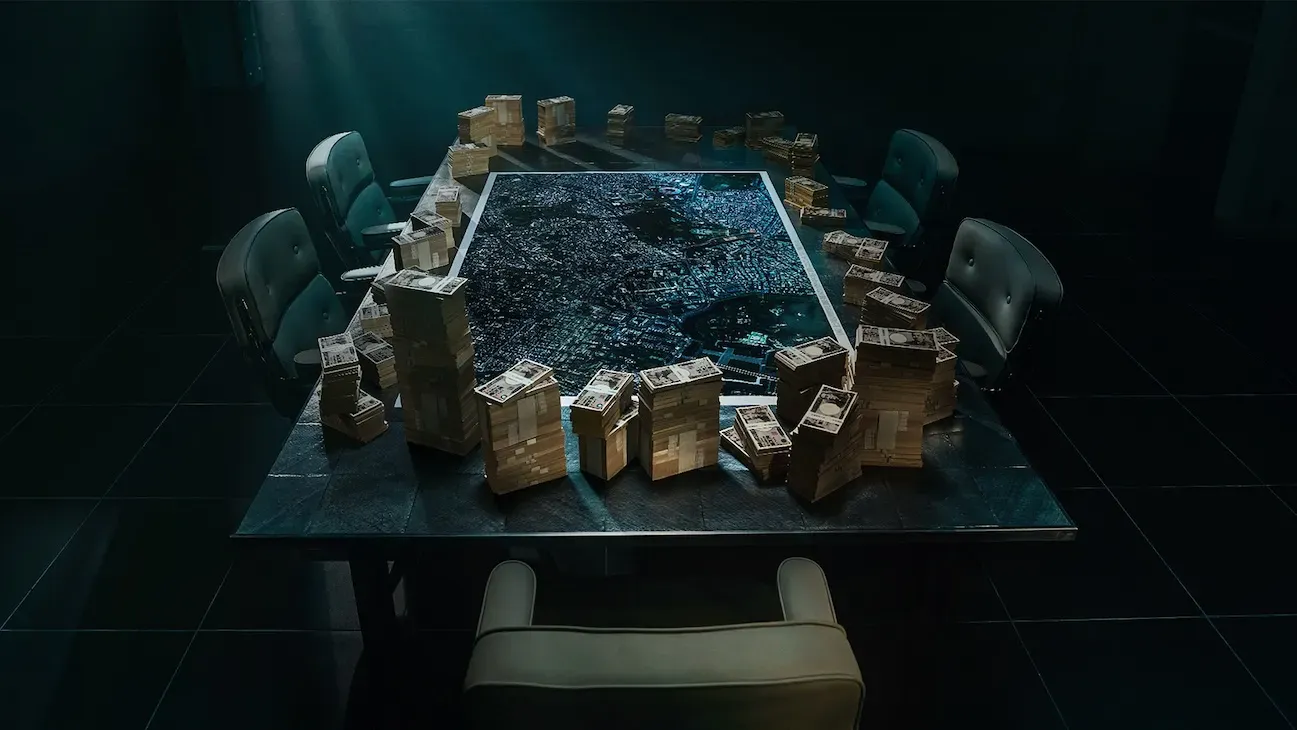
Netflix has renewed its Japanese real estate crime series Tokyo Swindlers for a second season, returning in 2027 with stars Go Ayano and Etsushi Toyokawa and writer-director Hitoshi One all back in place. For media executives, the move is a case study in protecting a franchise by keeping its creative core, and a signal about how long the streaming giant is willing to wait for a locally made hit to pay off globally.
Netflix has renewed Tokyo Swindlers for a second season, and the streamer is not rebuilding the thing that worked. The Japanese real estate crime series will return in 2027, with stars Go Ayano and Etsushi Toyokawa back on screen and writer-director Hitoshi One back behind the camera, according to The Hollywood Reporter. That is the entire announcement, and it is also the point. In a business where a hit show's second season often arrives with a new showrunner, a reshuffled cast, or a quiet pivot in tone, Netflix is keeping the band together.
For anyone who has watched a promising international series lose its identity between seasons, the trio's return is the headline inside the headline. One wrote and directed the first season. Ayano and Toyokawa starred in it. Reuniting all three means the creative DNA that turned the show into a hit stays intact rather than being reconstructed by committee. Netflix is buying continuity, and continuity is the scarcest asset in streaming.
The 2027 return date deserves a second look. Streaming renewals typically deliver a second season 12 to 24 months after the announcement, so a 2027 window implies a production and post-production runway that runs longer than the standard turnaround. That kind of lead time is normal for shoots that depend heavily on real locations and craft, and a real estate crime story is location-dependent by nature. It also hands Netflix a known quantity to schedule against, which matters when you are programming a global service across dozens of markets and need tentpoles you can actually date.
Why Japan, and why this show? Netflix has spent years building a slate of locally produced originals across Asia, on the theory that a story made for one market can travel if it is specific enough to feel true. Crime is the genre that travels best. Con artists, forged documents, and the gap between what a property is worth and what someone claims it is worth need no translation. Real estate fraud is a universal anxiety dressed in local detail, which is precisely the combination that turns a domestic hit into an international one.
The subject matter also lands on a live nerve. Property markets, valuations, and who gets to claim ownership of what are perennial arguments in every major city, and stories about people who game those rules tend to age well because the underlying incentive never disappears. A show built on that tension has a longer shelf life than one built on a single news cycle.
Renewals are also signaling devices. A pickup tells the creative community which kinds of shows get a second life, and it tells subscribers which titles are worth starting. For a service competing on the depth of its library rather than a single tentpole, a confirmed season two is a retention tool as much as a programming decision. It converts a finished season into an ongoing commitment, which is a different product entirely.
The talent math matters just as much. Ayano and Toyokawa are the reason the series has a face, and One is the reason it has a voice. In an era when stars attach to projects rather than studios, locking a proven trio is a form of risk management. It lowers the odds of a sophomore slump, gives marketing a familiar image to sell, and tells other Japanese creators that Netflix will keep its commitments to the people who deliver. For context, the streaming industry has spent the past several years learning that audiences punish inconsistency, and the fastest way to create inconsistency is to change the people in charge of the story.
There is a competitive read here too. Every major streamer is chasing the same prize: a locally made show that becomes a global franchise without losing the texture that made it local. The winners so far have been the platforms that resisted the urge to sand down a hit for a broader audience. Renewing Tokyo Swindlers with its original creative team is a bet that viewers came for the specificity, not in spite of it.
For executives at rival platforms and studios, the lesson is not 'make a Japanese crime show.' It is that the second season is where franchises are won or lost, and the cheapest way to protect one is to keep the people who built it. Cast and creator churn is usually framed as a scheduling necessity. It is also, frequently, the decision that quietly resets a show's value to zero.
What to watch next: whether Netflix dates the season publicly, whether the 2027 window holds, and whether the second act pushes the show into markets the first season never reached. The renewal is confirmed. The reunion is confirmed. Everything else is the part the industry will be reading for.
This story's Key Insights and Take-aways are locked.
Create a free account to unlock Executive Actions for one credit.
Register to UnlockAlways free for Executives Club members. Join the Club
More in Entertainment

GTA 6 banks $3.8bn in one day, torching every launch record
One game just out-earned every video game launch and every single-day film box office haul in history, and the fallout lands on every media CEO's forecast.

GTA VI Racked Up $3.79 Billion in a Single Day, Topping Every Film Ever
A 13-year wait produced a $3.79 billion day, more than any movie has made in its entire run, and it resets the launch math for every studio, streamer, and brand chasing the same attention.

GTA 6 sells 32.5M pre-sales and $3.79B day one, torches 13-year record
Rockstar's sequel didn't just beat Grand Theft Auto V's 13-year-old benchmark; it reset what a launch can be, with 32.5 million pre-sale copies and $3.79 billion in a single day.