
Netflix Revives Tarantino's Cliff Booth, With Fincher Directing and Pitt Back
The Hollywood Reporter calls the late-1970s spinoff a 'cool cocktail,' but the real test is whether a beloved character can survive a change of director.
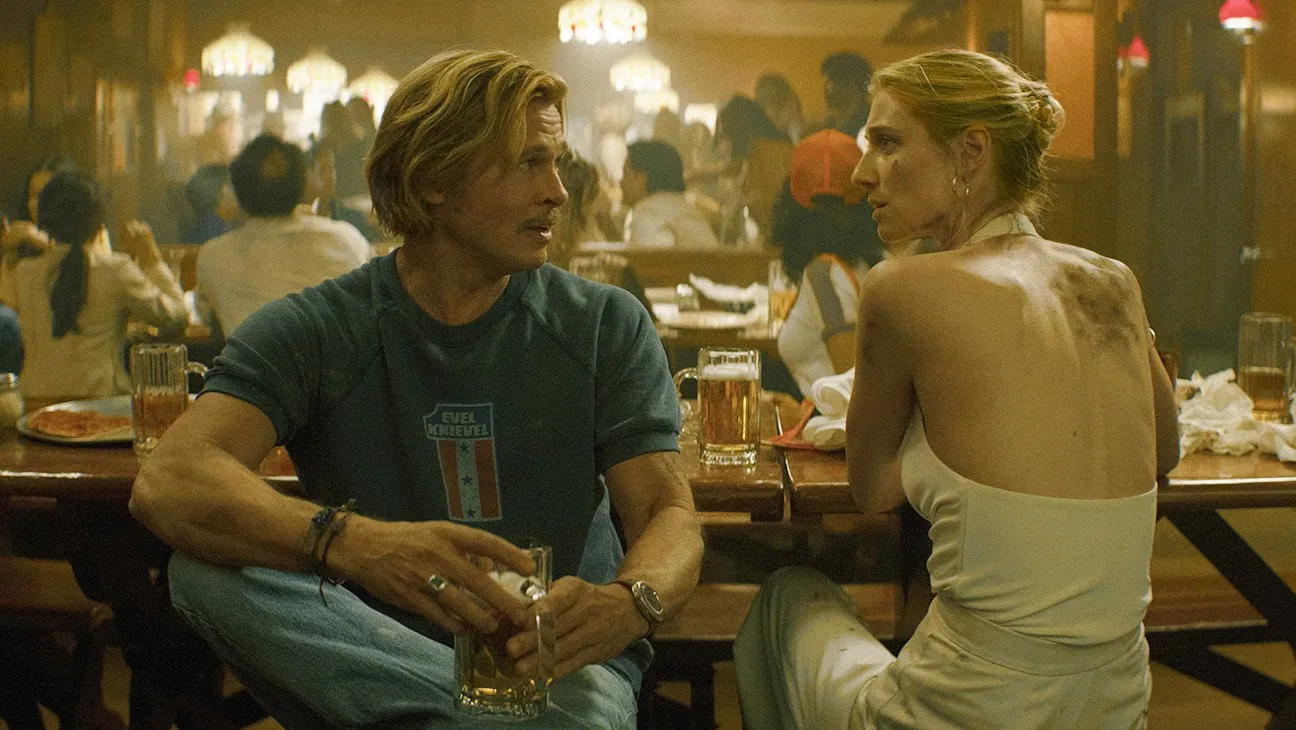
Brad Pitt returns as stuntman Cliff Booth in Netflix's 'The Further Mis-Adventures of Cliff Booth,' with David Fincher directing, Quentin Tarantino still in the mix, and Elizabeth Debicki, Scott Caan, Carla Gugino and Yahya Abdul-Mateen II also starring. For platform and studio executives, the film is a live test of whether a supporting character from existing IP can carry a title once its original director has handed over the keys.
Netflix has done the thing Hollywood spent years insisting it would not: put Cliff Booth back on screen with someone other than Quentin Tarantino directing him. In 'The Further Mis-Adventures of Cliff Booth,' Brad Pitt returns as the stuntman he first played in 'Once Upon a Time in Hollywood,' this time with David Fincher in the director's chair and Tarantino still part of the mix. The Hollywood Reporter's review states the package plainly in its own headline, crediting Pitt, Fincher and Tarantino with mixing 'a cool cocktail' in what it calls a 'free-flowing spinoff.' Elizabeth Debicki, Scott Caan, Carla Gugino and Yahya Abdul-Mateen II also star. The setting is late-1970s Los Angeles, the same industry-adjacent, sun-bleached world the 2019 original mined.
That headline is the payoff: three of the biggest names in modern American film, one beloved supporting character, and a platform willing to spend to keep subscribers from cancelling. Pitt won an Academy Award for playing Booth, a man who exists in the seams of the business, the guy who takes the punch so the star does not have to. Reviving him as a lead is a bet that audiences will follow a supporting player out of the margins, and a second bet that they will accept a different filmmaker's hand on a character someone else built.
Strip away the auteur chatter and this is a content-spend decision. Spinoffs are the cheapest new content a streamer can buy. The audience arrives with context, the marketing writes itself, and casting conversations start from a known quantity rather than a blank page. For a platform under pressure to show that its content budget produces retention, a title with a built-in audience is a lower-risk line item than an original concept that has to be discovered from zero. That arithmetic is why revivals, prequels and side-quels have become a default move across streaming, and why a character who once existed to service a bigger star now carries a film of his own.
The real risk sits in the handoff. Booth is inseparable from the voice that wrote him, and audiences are unusually good at detecting when a signature has been swapped out. A review that leads with 'free-flowing' is signaling something specific: that the film does not feel labored or overly reverent, which is the classic failure mode when a beloved property changes hands. Fincher and Tarantino sit close to opposite ends of the craft, one with a reputation for control and repetition, the other for digression and talk. If that contrast reads as a cocktail rather than a collision, the spinoff model gets a significant proof point.
The supporting cast is the insurance policy. Debicki, Caan, Gugino and Abdul-Mateen II are not filler names. Each carries recognition across film, prestige television and franchise work, which matters when a single title has to perform in dozens of markets at once. Deep ensembles also spread the promotional load, so marketing can lean on different faces in different territories instead of betting everything on one star's drawing power. Netflix ends up with a film that looks expensive without depending on a single performance to hold it up.
The late-1970s Los Angeles setting is its own line item. Period production means vintage cars, wardrobe and locations dressed back four decades, which typically pushes budgets above contemporary stories. What it buys is texture that reads as premium on screen, a nostalgic lane that travels well internationally, and material that awards bodies have historically been friendly toward. It also gives the film a visual identity distinct from the original's, which matters when the entire point is to prove this is not a rehash.
Zoom out and the spinoff is a test case for a broader strategy. Platforms have spent a decade converting libraries into universes: sequels, prequels, revivals, and now side stories built around characters who were never the point. The upside is a pipeline that never starts from nothing. The downside is creative dependency. Every successful handoff invites another, and every one raises the price of the underlying rights and the leverage of the talent holding them.
For executives watching this one, the questions are practical. Does the film hold subscribers past the first weekend, or does curiosity burn off after the opening? Do the reviews convert into word of mouth, or does the trade-press framing stay inside the industry? And does the director change become a template, meaning characters can outlive the filmmakers who created them? Answer those, and you have a read on where the next decade of content spend is headed. Netflix is not just releasing a movie here. It is testing whether a supporting character can be an asset on its own.
This story's Key Insights and Take-aways are locked.
Create a free account to unlock Executive Actions for one credit.
Register to UnlockAlways free for Executives Club members. Join the Club
More in Entertainment

GTA 6 banks $3.8bn in one day, torching every launch record
One game just out-earned every video game launch and every single-day film box office haul in history, and the fallout lands on every media CEO's forecast.

GTA VI Racked Up $3.79 Billion in a Single Day, Topping Every Film Ever
A 13-year wait produced a $3.79 billion day, more than any movie has made in its entire run, and it resets the launch math for every studio, streamer, and brand chasing the same attention.

GTA 6 sells 32.5M pre-sales and $3.79B day one, torches 13-year record
Rockstar's sequel didn't just beat Grand Theft Auto V's 13-year-old benchmark; it reset what a launch can be, with 32.5 million pre-sale copies and $3.79 billion in a single day.