

Netflix's Cliff Booth Hit by AI Claims as Fincher Says He Doesn't Fear Unknown
The Brad Pitt sequel is the latest Netflix film accused of generative AI use, putting A-list directors' tech choices and Netflix's $600 million InterPositive bet under a fresh spotlight.
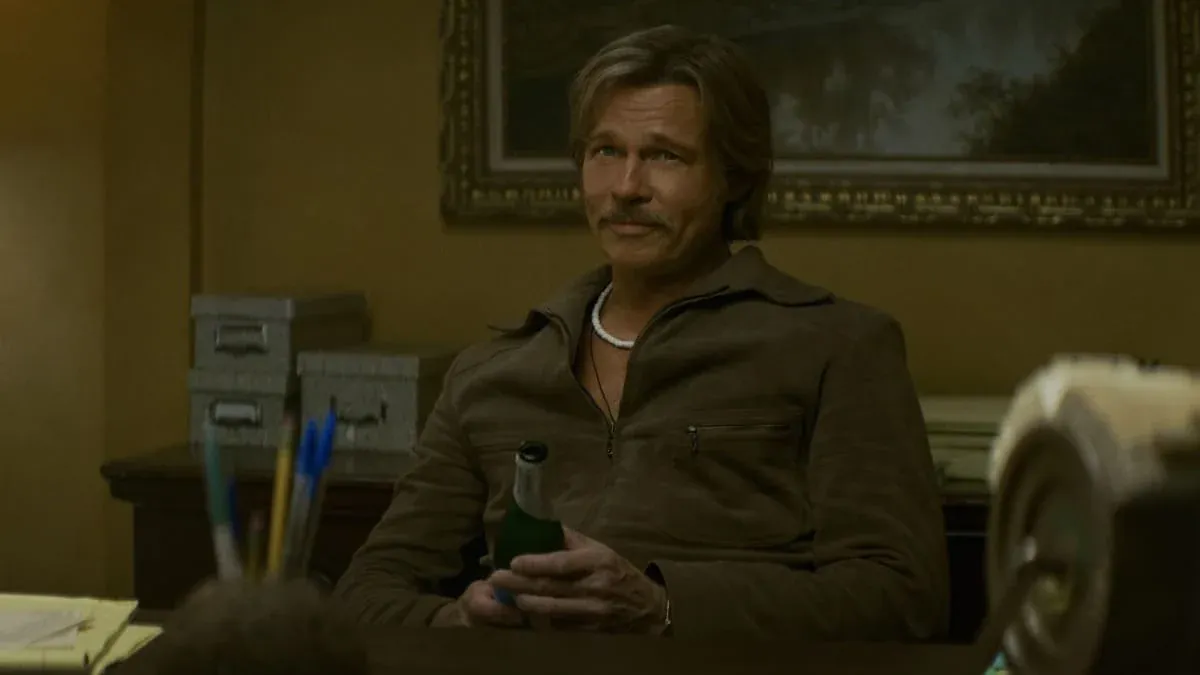
David Fincher's Netflix sequel The Further Mis-Adventures Of Cliff Booth is facing generative AI accusations from early viewers and critics, the latest A-list film to do so after Animals, Ink, and 14th. For executives, the blowback shows that AI use in premium film can become a reputational and creative-credit issue even when the director is openly receptive to the technology.
David Fincher's new Netflix movie, The Further Mis-Adventures Of Cliff Booth, is facing accusations of generative AI use from early viewers and critics. The film is a sequel to Once Upon A Time... In Hollywood, written by Quentin Tarantino and starring Brad Pitt, who reprises his Oscar-winning role as the psychotic stuntman. Cliff does his own stunts; David Fincher may not. The A.V. Club has reached out to Netflix for comment. The movie is the latest Netflix title to face this kind of charge, following in the footsteps of Ink, Animals, and 14th.
Fincher's own comments are not calming the noise. In a Los Angeles Times interview published yesterday, the director admitted an openness to working with AI, saying, "I'm not a Luddite, so I don't fear the unknown." He continued: "Is everyone satisfied that we have figured this art form out enough that what we really need to do is go back to celluloid? How long have people painted? 40,000 years? We're talking about a thing that's a hundred years old and everyone's going, 'Stop. Pencils down. No more iterating. It's not necessary to have at your fingertips the ability to change the color of that person's eyes.' Well, it exists. Should we not use it?" The obvious counter, as the source notes, is how far should we go before we're no longer iterating and just allowing the computer to iterate for us. Fincher, who got his start at ILM on Return Of The Jedi and Indiana Jones And The Temple Of Doom, has long been an early adopter of new technology, like Steven Soderbergh, who also used AI in a John Lennon documentary earlier this year. Soderbergh's results were lambasted at Cannes, and it's unclear when the movie will ever be made available. In today's parlance, it made so little cultural impact that John Lennon: The Last Interview doesn't even have a Wikipedia page.
Cliff Booth may have a release date, two of them, theatrical and streaming, separated by a month, but it is facing the same critiques as Soderbergh's documentary. Per Kotaku, indie filmmaker and influencer Patrick Tomasso posted on X, "I walked out of Cliff Booth completely gutted" because "what could have been a really great sequel is overshadowed by some of the most blatant and egregious AI use I've ever seen in a studio film." Similarly, Next Best Picture dinged the movie for "noticeably distracting... use of generative AI in key moments of the film, which is nothing but an eyesore," and the film credits a "generative consultant." A Bloomberg piece from March reported Ben Affleck's AI "ethical" company, InterPositive, for which Netflix paid $600 million, helped produce "an upcoming film starring Brad Pitt." Last month, Netflix announced that as many as 300 productions used the technology, an announcement that coincided with news that no one opens Netflix anymore.
But it's not just cheapo true crime documentaries using AI. Cliff Booth is one of many films from A-list directors taking heat for offloading artistic integrity to large language models. Earlier this year, Oscar-winning filmmakers Affleck and Danny Boyle admitted to using the technology for their respective new releases, Animals and Ink. So, too, did Academy Award nominee Ava DuVernay, who defended using AI to animate photographs in her new documentary about the 14th Amendment, 14th. "We actually animated some photos that are in the public domain, and from what we've been hearing from people, it does bring people closer to that time in history, which was our goal," DuVernay said in October. "So people have to see it and check it out for themselves and make their decisions about how they feel." Boyle used it for a similar effect in Ink and confirmed, "There's about 30 seconds of it in our movie where we animate a couple of old photographs." Considering Booth also reportedly uses the tech to animate fake issues of TV Guide, there is some sinister irony in Netflix movies specifically using AI to gussy up otherwise analog tech.
The stakes for executives are not abstract. Generative AI has moved from a back-end production tool to a front-facing reputational risk. When audiences and critics believe a film has used the technology in key moments, the conversation can shift from the story on screen to the process behind it. That is a problem for directors who trade on craft, for studios that sell premium talent, and for platforms that need subscribers to feel they are getting something human and handmade. Netflix's $600 million bet on InterPositive and its disclosure that as many as 300 productions used the technology show how deeply the company is already invested. But the Cliff Booth backlash shows the cost side of that ledger: if the tool becomes the story, the efficiency gain can be erased by the trust loss.
There is no regulator in this story. The enforcement mechanism is audience reaction, critic reviews, and talent relationships. That makes the risk harder to manage than a compliance checklist. A studio can disclose a "generative consultant" in the credits, as Cliff Booth does, and still face accusations that the disclosure does not match the experience. A director can argue that AI is just another iteration, as Fincher does, and still watch the argument become a distraction from the film. For boards and senior leaders, the lesson is that creative AI adoption needs a communications plan, a credit policy, and a clear line between tools that assist artists and tools that replace or alter their work in ways viewers can detect.
Peers in similar roles should watch how this plays out. A-list directors including Affleck, Boyle, and DuVernay have already made their own AI choices public, and each has faced a different version of the same question: did the technology serve the story, or did it become the story? Fincher's answer is that the technology exists and should be used. The counter is that existence is not the same as necessity. Cliff Booth will test which argument the market accepts. Its release dates are set, but the AI debate has already arrived. The film's reception will shape how the next wave of premium projects handles generative tools, credits, and the fragile trust between a director, a platform, and an audience that wants to believe the magic is real.
This story's Key Insights and Take-aways are locked.
Create a free account to unlock Executive Actions for one credit.
Register to UnlockAlways free for Executives Club members. Join the Club
More in Entertainment

GTA 6 banks $3.8bn in one day, torching every launch record
One game just out-earned every video game launch and every single-day film box office haul in history, and the fallout lands on every media CEO's forecast.

GTA VI Racked Up $3.79 Billion in a Single Day, Topping Every Film Ever
A 13-year wait produced a $3.79 billion day, more than any movie has made in its entire run, and it resets the launch math for every studio, streamer, and brand chasing the same attention.

GTA 6 sells 32.5M pre-sales and $3.79B day one, torches 13-year record
Rockstar's sequel didn't just beat Grand Theft Auto V's 13-year-old benchmark; it reset what a launch can be, with 32.5 million pre-sale copies and $3.79 billion in a single day.