
Netflix's squid horror 'Below' was filmed inside a working marine science lab
Memorial University biologist Annie Mercier advised Netflix's 'Below' in 2025, coaching Mackenzie Davis and steering its ancient cephalopod toward real biology.
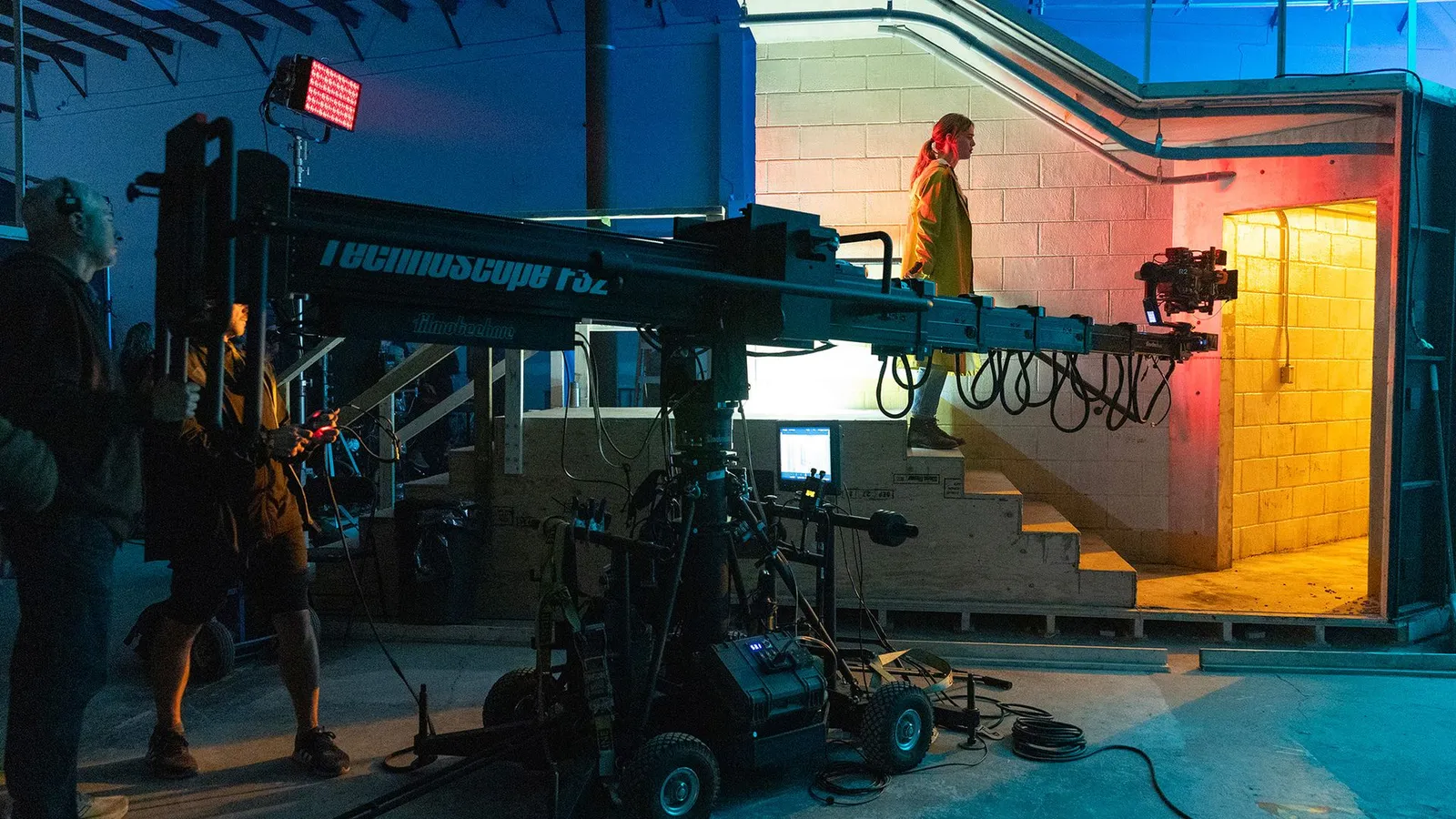
Marine biologist Annie Mercier of Memorial University in Newfoundland and Labrador served as science adviser on Netflix's 'Below' in 2025, with her Ocean Sciences Centre lab used as a filming location. For executives in media and research alike, the arrangement shows how early expert input buys credibility that audiences and press actually notice.
The Ocean Sciences Centre in Newfoundland is a working research facility, not a backlot. In 2025, it became both. Annie Mercier, a marine biologist in the Department of Ocean Sciences at Memorial University in Newfoundland and Labrador, was brought on as a science adviser for Netflix's new series 'Below' just before the streamer began shooting, and her lab was used as a filming location. She also met with actor Mackenzie Davis, who plays the research scientist Dr. Fonda Howander, to help shape the character.
The show itself is a coastal horror story with a science spine. An ancient, squid-like creature called 'Mudder' threatens a small Newfoundland community, arriving around the same time as a mysterious iceberg that starts causing dangerous hallucinations in the town's residents. It blends marine science, horror and environmental themes, and it leans on a real local obsession: Newfoundland's long-standing connection to the giant squid, Architeuthis dux, with first sightings going back to the 1870s.
Mercier's route in was unglamorous and very academic. Early in 2025, as the production was finalizing scripts, she heard that director Jesse Mckeown was looking for a scientific adviser, preferably someone based in Newfoundland. The tip came through Memorial University's communications team, which mentioned the series would feature an ancient cephalopod. Mercier is not a cephalopod specialist, and she says so plainly. What she has is a broad marine biology background, a lab at the Ocean Sciences Centre, and a research program built around strange creatures and curiosity-driven work. She had also consulted on documentaries and television before, including work with the BBC helping explain video sequences, plus fiction series back in Quebec, and she writes popular articles and books for general audiences. That combination, science plus translation, got her the job.
The advising ran in two phases. First came the scripts, sent securely at regular intervals and in sequence, starting with episode one. Mercier and the team held preliminary discussions to define what kind of feedback they wanted; the answer was essentially everything that came to mind, with a focus on the science. That covered the squid, but also how the show portrayed scientific work and the scientist doing it, plus climate change, icebergs, ocean currents and other elements. She went through every script and flagged details, sometimes as small as the timing of an event, and pointed out things like marine animal migrations that ran a little different from reality. Feedback went back in writing, sometimes with links to additional information, and occasionally triggered a follow-up meeting or a remote conversation.
When filming started, Mckeown wanted Mercier behind the scenes. Scheduling was the hard part: the production was shooting on three or more sets around Newfoundland and she had a day job. She eventually visited on a Saturday, when the crew was filming at the Ocean Sciences Centre. She spent time in the control room, met Davis, and watched the machine at work.
Her notes on Mudder were specific. The creature's eye is very large, which tracks: existing giant squids have one of the biggest eyes in the animal kingdom, if not the biggest. She pushed back on movement. Movies love muscular arms reaching far out of the water, but cephalopods are mollusks. In the water they have real strength; outside it, they have no bones anchoring muscles to support that kind of motion. She pointed the team to the very few cephalopods that do leave the water, including an octopus found on certain reefs, and sent images showing how fluidly it moves. She also mentioned the scars such creatures can leave when interacting with sperm whales. And she flagged a hard limit: cephalopods in the ocean have no way to detect prey on shore. They cannot see it or sense it.
Mercier had fears going in. She hoped the show would not go the route of arms shooting out of the water and a giant squid leaping onto a boat, the '20,000 Leagues Under the Sea' version that also shows up in 1800s drawings. Reading the scripts, she saw a production trying to stay close to reality. The creature is framed as an ancient, social cephalopod, more squid than octopus but with some octopus-like behaviors, which is where fiction takes over. She was glad the show kept it mysterious rather than showing too much. She also acknowledged the commercial reality: audiences expect fearsome interactions, and a show that skips them entirely disappoints people.
One thing she did not advise on: the hallucinogenic properties of the creature's mucus. 'No, we didn't specifically exchange information about that,' she said. Her broader point is that toxins are common across marine animals, not just cephalopods. The bigger takeaway is about how fiction gets made now. Genre shows increasingly hire working scientists as a credibility layer, and the exchange runs both ways: the production gets grounded detail, and the researcher gets a lab that doubles as a set, a public audience, and a reminder that Newfoundland's giant squid lore is not invented. It is documented in remains, sightings and encounters going back well over a century. For anyone building a story on top of real science, the lesson from 'Below' is unglamorous but useful: bring the expert in early, hand them the whole script, and let them tell you which parts are load-bearing.
This story's Key Insights and Take-aways are locked.
Create a free account to unlock Executive Actions for one credit.
Register to UnlockAlways free for Executives Club members. Join the Club
More in Science

AI that nails brain-activity tests may be solving them the wrong way
A new discovery suggests strong neural-prediction scores do not prove a model works like the brain, a warning for labs, neurotech investors, and anyone selling brain-like AI.
Scientists Want to Test Whether a Clock Can Run on Two Flows of Time
An atomic-clock experiment has been proposed to catch a never-observed quantum effect, a result that would redraw the boundary between time and gravity.

A star swallowed another star. Webb caught the aftermath in 47 days
Astronomers watched a small star spiral into a giant 18,000 times brighter than the Sun in Andromeda, and Webb's 47-day follow-up is rewriting how stellar mergers get studied.