
Netflix's The Altruists Opens With Bankman-Fried Seconds From Arrest
Graham Moore's eight-episode FTX drama rewinds from the arrest to 2016, tracing the $8 billion of customer money that funded Alameda and asking whether the mission was ever the point.
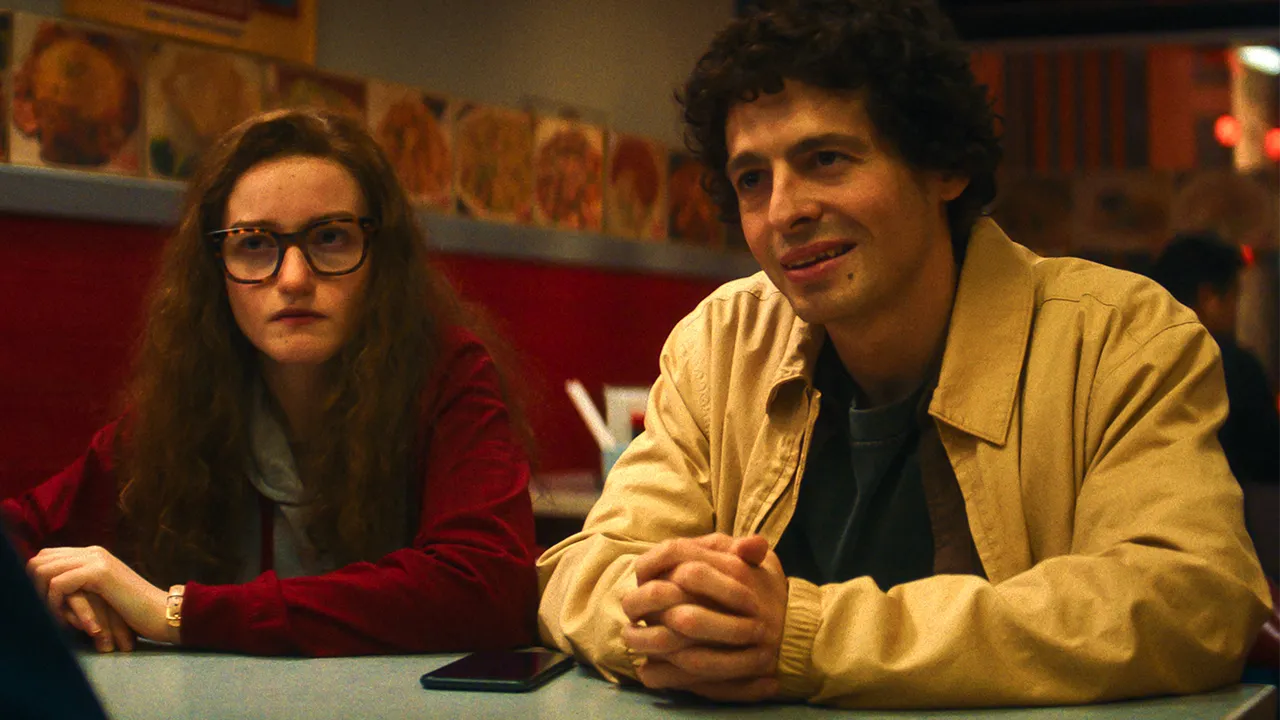
Netflix's The Altruists, created by Oscar winner Graham Moore from New York Magazine reporting, dramatizes the rise and fall of Sam Bankman-Fried and Caroline Ellison, whose FTX and Alameda Research filed for bankruptcy in 2022 after Alameda funded trades with $8 billion of FTX customer money. For operators and boards, the series is a case study in how mission-driven language, disclosed-but-unexamined affiliations, and founder relationships inside a corporate structure can defer scrutiny until the money is gone.
Netflix's The Altruists opens at the end. Anthony Boyle's Sam Bankman-Fried sits seconds from arrest, audio news clips about the FTX and Alameda Research bankruptcy playing over him, while he screens a call from Caroline Ellison, played by an unrecognizable Julia Garner. He has not yet decided whether to answer when the eight-episode series cuts back to 2016, where a younger Bankman-Fried practices human reactions in a mirror during his early days at the quant trading firm Jane Street. That is where he met Ellison. Created by Graham Moore, who won the adapted screenplay Oscar in 2015 for The Imitation Game, and based on reporting by New York Magazine, the show is now streaming on Netflix.
The $8 billion at the center of it gets confirmed early and never leaves the frame. When FTX and Alameda filed for bankruptcy in 2022, the collapse revealed that the two companies founded by Bankman-Fried, once hailed as "the J.P. Morgan of crypto," and his math whiz business partner and on-off girlfriend were not merely closely affiliated. Alameda had been funding trades with FTX customers' money to the tune of $8 billion. The Altruists does not treat that number as a heist. It treats it as the price of a relationship, casting the pair as the Bonnie and Clyde of crypto, two people who knew how to draw the worst out of each other.
The structure is the argument. The Altruists jumps across timelines, bouncing between the rosy early days and the tension-wracked lead-up to the collapse, and the parallel edits make the cost legible: how much of their souls Bankman-Fried and Ellison sold to keep their companies afloat. They were up to risky, sketchy stuff from the beginning, the show suggests, but it was in service of effective altruism, the philosophical movement popular in tech spaces that, as the series describes it, boils down to making as much money as possible to give away to charitable causes. As the director for the Center of Effective Altruism told New York Magazine in 2022: "There has not been a bad actor in history who hasn't been able to couch their conduct behind some meaningful and generally positive ideology." That issue's cover featured a Bankman-Fried portrait with the line "The Virtue Was the Con."
The scope stays deliberately narrow. Rather than chase every connection, decision, and detail, the series mostly ignores the outside media curiosity and keeps its lens on the two of them. The trade-off: viewers lose the sheer scale of FTX at its peak, which floats in the background only through yachts and swanky houses in the Bahamas. For context, Bankman-Fried was publicly hailed as a visionary, the "next Warren Buffet" who would democratize money, cruising through meetings while playing League of Legends, invited to the Met Gala, building relationships with politicians and celebrities. The Altruists depicts him less flatteringly: a socially awkward dork whose best ideas seem to have come from other people. Ellison gets comparable treatment, rendered as a straight-shooter into smutty Harry Potter fan fiction, LARPing, and polyamory.
Boyle and Garner carry it. Both do an affected character voice that is perfectly grating, and Garner, who played a different scammer, Anna Delvey, in Netflix's Inventing Anna, is the highlight, sinking into the role until the prosthetics read as natural extensions of her face. The script's one major flaw has no elegant workaround: the show still has to explain finance and economic concepts to a Netflix audience, so it drops two very smart characters into conversations where one raises a concept such as a prisoner's dilemma, the other rebukes them with "I know what it is," and the first explains it anyway. Jargon-spouting a la Industry was apparently not the goal.
Context matters here, because this is a genre now. 2022 was a banner year for true-story TV about tech CEOs behaving badly: The Dropout, WeCrashed, Inventing Anna, Super Pumped. It was also the year FTX and Alameda filed for bankruptcy. 2026 brings another slate: You Can See Everything, The Social Reckoning, Musk, Artificial, with FTX back in the mix via The Altruists. The pattern is the point. The window between a corporate collapse and its prestige-TV adaptation now spans just a few years, and the reputational record of a failed company is increasingly written by writers' rooms alongside regulators and courts.
For executives and boards, the lessons are less about crypto than about the infrastructure of trust. FTX's collapse rested on an affiliation that was known but not understood, a founder whose personal relationships sat inside the corporate structure, and a mission story that made hard questions feel impolite. The Altruists makes that legible in eight hours; directors get the same signal in a diligence memo. Every cycle produces its own "next Warren Buffet." The useful question is not whether the ideology is sincere. It is who is holding the customer's money while the ideology is being funded, and who inside the company is empowered to ask.
This story's Key Insights and Take-aways are locked.
Create a free account to unlock Executive Actions for one credit.
Register to UnlockAlways free for Executives Club members. Join the Club
More in Entertainment

GTA 6 banks $3.8bn in one day, torching every launch record
One game just out-earned every video game launch and every single-day film box office haul in history, and the fallout lands on every media CEO's forecast.

GTA VI Racked Up $3.79 Billion in a Single Day, Topping Every Film Ever
A 13-year wait produced a $3.79 billion day, more than any movie has made in its entire run, and it resets the launch math for every studio, streamer, and brand chasing the same attention.

GTA 6 sells 32.5M pre-sales and $3.79B day one, torches 13-year record
Rockstar's sequel didn't just beat Grand Theft Auto V's 13-year-old benchmark; it reset what a launch can be, with 32.5 million pre-sale copies and $3.79 billion in a single day.