
NFL suspends Puka Nacua three games while he's already injured
The Rams receiver drew a personal-conduct ban on top of an injury absence, a reminder that league discipline runs on its own clock and that rosters, contracts and sponsors absorb the cost.
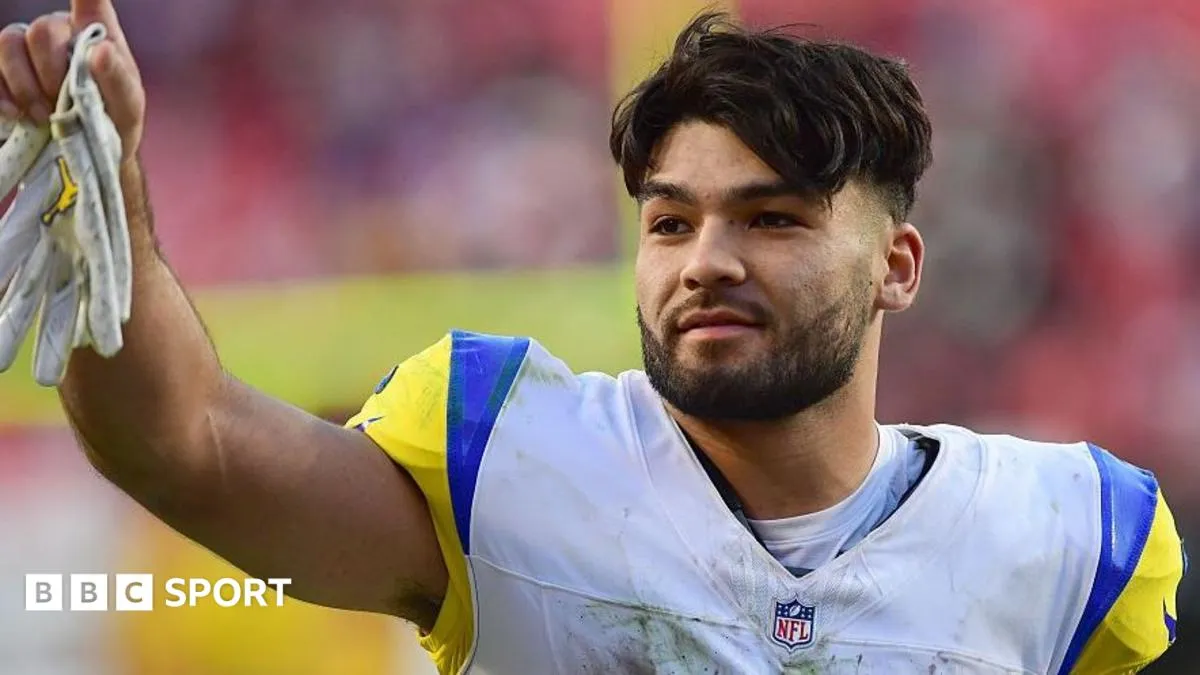
Los Angeles Rams wide receiver Puka Nacua has been suspended three games for violating the NFL's personal conduct policy, a ban that follows an assault lawsuit and lands while he was already out injured. For executives, the episode is a case study in how league discipline, injury timelines and commercial exposure run on three separate clocks that rarely sync.
Puka Nacua has been handed a three-game suspension for violating the NFL's personal conduct policy, and the detail that makes it notable is this: the Los Angeles Rams wide receiver was already out injured. The ban did not remove a healthy starter from a game plan. It stacked a conduct penalty on top of a medical absence, two separate clocks the Rams do not control and cannot align. The suspension follows an assault lawsuit, which places a civil matter and a league disciplinary process on parallel tracks, each moving at its own speed, each with its own standard of proof. For a team built around a young, high-volume pass catcher, that is a roster problem and a reputational one arriving in the same package.
Start with what the personal conduct policy actually is, because it is not a courtroom. It is a contractual grant of authority that lets the league discipline players for behavior it deems damaging to the game, and it operates independently of criminal or civil proceedings. Historically, that means a player can be suspended without any charge being filed, and equally can avoid suspension even where a case is pending. The policy is deliberately broad and deliberately discretionary, which is why the length of a ban is often the most scrutinized number in the announcement. A three-game suspension is not the maximum the policy allows by any measure, but it is long enough to matter: in a 17-game regular season, three games is roughly 18% of the schedule.
For context on how these bans typically work, personal conduct suspensions of this length are generally served without pay, with game checks forfeited. The injury layer complicates the accounting rather than erasing it. A player on a medical absence and a player on a suspension occupy different administrative categories, and teams historically get no salary relief from a ban landing during a stretch a player was already going to miss. That is the quiet financial asymmetry: the player loses games either way, but the club loses the ability to treat the absence as a clean injury-list story it can plan around publicly. If the medical timeline and the suspension overlap, the practical cost to the team's depth chart is smaller than the headline suggests, while the reputational cost is exactly the same.
On the football side, the Rams now plan against uncertainty twice over. Front offices typically build receiver rooms with the assumption that at least one starter misses time, and contingency planning is standard: cross-training, snap redistribution, heavier use of tight ends and backs in the passing game, and a harder look at the practice squad. What a suspension adds is a fixed, known duration. Three games is a date on the calendar, which is more than a soft-tissue injury usually offers. The harder question for a general manager is sequencing, because the injured weeks and the suspended weeks only help the team if they run concurrently rather than back to back.
The commercial layer deserves equal attention. A young receiver on a rookie-scale deal is one of the most valuable assets a franchise holds, and that value is a function of availability as much as talent. Sponsorship and endorsement arrangements typically include morality and conduct clauses, and brands price in headline risk, which is exactly what an assault lawsuit plus a league suspension generates. None of this is unique to the Rams, but the combination is unusually clean as a teaching case: a civil claim, an independent league investigation, a suspension, and an injury, all landing on the same player in the same news cycle.
The legal framing matters for anyone who owns conduct risk on a balance sheet. Civil suits and league discipline answer to different standards. A civil claim is resolved on a balance of probabilities; a league investigation answers to the commissioner's judgment under the collective bargaining agreement. That gap is why the two processes can produce results that look inconsistent to the public and perfectly consistent to the lawyers. It is also why communications strategy around these matters so often fails: the company wants to speak with one voice, while the litigation team, the league office, and the player's representatives are each speaking to a different audience with a different objective.
Look at the contract question next, because it is where boards actually feel these events. Player contracts commonly contain guarantees that can be voided by conduct-related suspensions, and signing bonuses can be subject to recovery depending on language and jurisdiction. The Rams have not signaled any intention to pursue that route, and nothing in the report suggests they will. But the existence of those clauses is the reason discipline has a balance-sheet line item, not just a sports-page one. A three-game ban on a player earning starter money is small in absolute terms. Repeated over a career, or applied to a max-value extension, it becomes a real valuation input.
The strategic stakes for peers in similar roles are straightforward. Discipline risk is asset risk. Any organization whose core value sits in a small number of highly paid, highly visible individuals, whether that is a receiver, a founder, or a fund manager, is exposed to the same structure: a behavior clause, a discretionary decision-maker, and a penalty that arrives on someone else's schedule. The way to manage it is not to predict the outcome. It is to already know the answer to three questions before the news breaks. Who decides? What does the contract allow us to do? And what is our public position if the timelines collide?
What to watch from here is timing and volume. The report does not spell out the duration of the injury absence, so the key unknown is whether the three suspended games are effectively absorbed by weeks the receiver was going to miss anyway. If they are, the on-field impact compresses and the story becomes almost entirely about reputation and process. If they are not, the Rams lose a starter for real games in a season where margins are thin. Either way, the league has made its call, the player's side has its own avenues, and the team has a depth chart to redraw.
This story's Key Insights and Take-aways are locked.
Create a free account to unlock Executive Actions for one credit.
Register to UnlockAlways free for Executives Club members. Join the Club
More in Entertainment

GTA 6 banks $3.8bn in one day, torching every launch record
One game just out-earned every video game launch and every single-day film box office haul in history, and the fallout lands on every media CEO's forecast.

GTA VI Racked Up $3.79 Billion in a Single Day, Topping Every Film Ever
A 13-year wait produced a $3.79 billion day, more than any movie has made in its entire run, and it resets the launch math for every studio, streamer, and brand chasing the same attention.

GTA 6 sells 32.5M pre-sales and $3.79B day one, torches 13-year record
Rockstar's sequel didn't just beat Grand Theft Auto V's 13-year-old benchmark; it reset what a launch can be, with 32.5 million pre-sale copies and $3.79 billion in a single day.