
Noah Wyle and FIGS Turn $2 Million Into $200 Million of Erased Medical Debt
Two $1 million pledges, a 100-to-1 debt-buying multiplier, and 150,000 Americans: why a scrubs brand and a TV doctor call this half philanthropy, half protest.
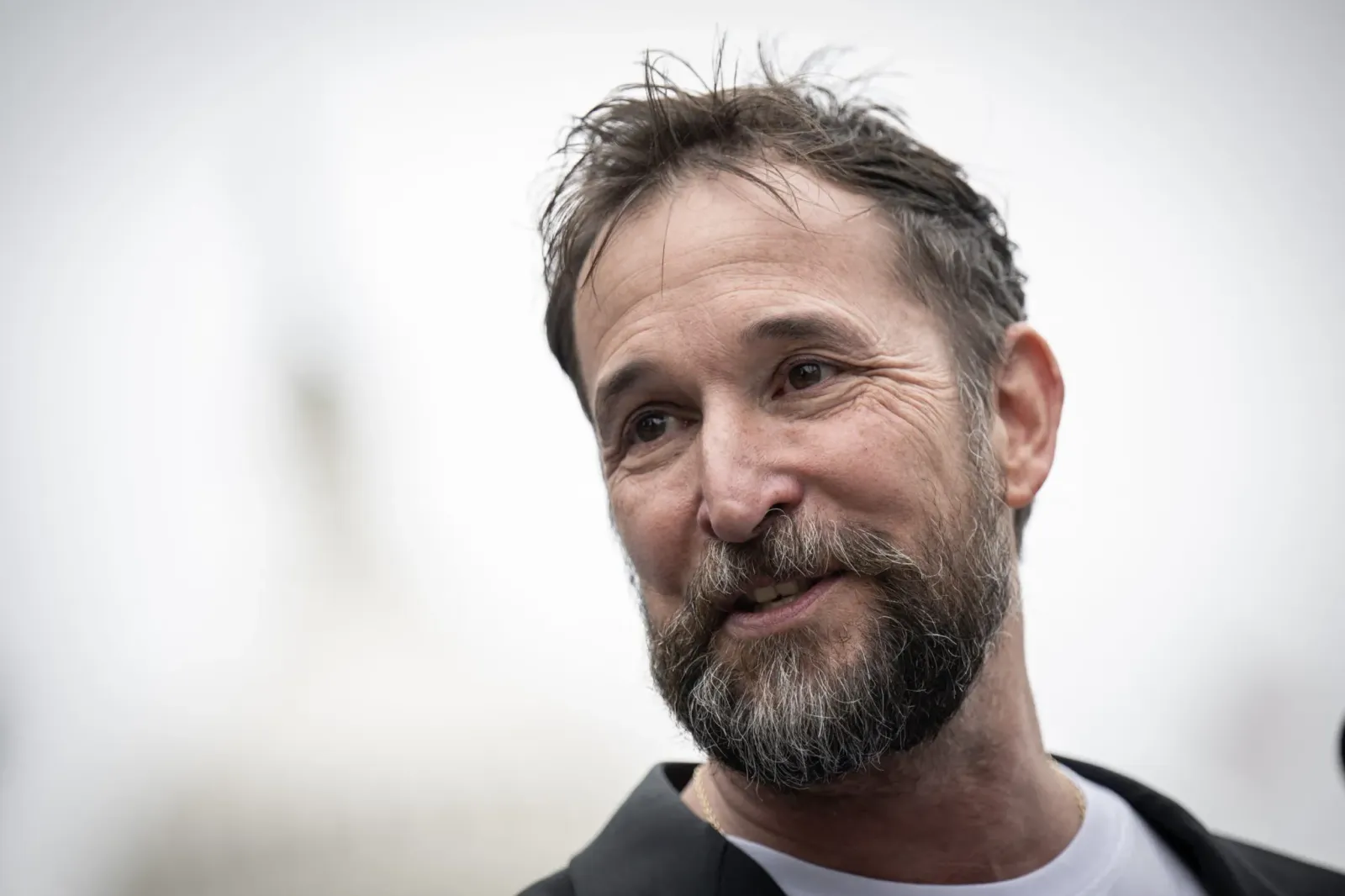
Actor Noah Wyle and publicly traded scrubs maker FIGS are each donating $1 million over three years to nonprofit Undue Medical Debt, a commitment projected to erase at least $200 million in U.S. medical debt for more than 150,000 people. For executives, the story is the leverage: $2 million in capital converted into $200 million in relief through a secondary debt market that prices patient obligations at roughly a penny on the dollar.
Noah Wyle spent decades playing a doctor on television. Now he is paying off other people's medical bills. The actor, who starred in ER and currently leads The Pitt, is teaming with FIGS, the publicly traded scrubs maker, and the nonprofit Undue Medical Debt on a three-year commitment to wipe out at least $200 million in U.S. medical debt for more than 150,000 Americans. Wyle and FIGS will each donate $1 million over that span. The first round of relief is set to land in time for the upcoming holidays.
The arithmetic is the story. Undue Medical Debt erases, on average, $100 of qualifying medical debt for every $1 donated, because it buys portfolios of delinquent patient accounts in bulk from hospitals and other creditors at steep discounts to face value. That multiplier turns $2 million of corporate and celebrity capital into $200 million of relief, a 100-to-1 ratio that almost no traditional charitable vehicle can match. It is the closest thing philanthropy has to a lever.
The need is not abstract. Americans owe at least $220 billion in medical debt, according to a 2024 KFF-Peterson analysis of federal survey data, and insurance offers less protection than many assume. A new Urban Institute study backed by the Robert Wood Johnson Foundation found more than one-quarter of U.S. adults said they or a family member owed medical debt at the end of 2025, including 26% of those with health coverage. Hospitals were the most common creditor. Separately, a Commonwealth Fund survey released in September found roughly one in three working-age adults with private insurance are paying off medical bills over time, with some pulling from savings or spending less on food and rent to keep up.
Wyle's on-screen work has already dramatized that math. In one episode of The Pitt, a construction worker who already owes $100,000 in medical bills lands in the ER with serious diabetes complications after rationing his insulin because he cannot afford it. "In my countless interactions with healthcare professionals over the decades, one thing that stays with me is how they try to do everything right for a patient while the system makes it harder than it should be," Wyle said in a statement. "Medical debt follows people home, creates long-term devastation, and changes the whole experience of care."
Allison Sesso, CEO and president of Undue Medical Debt, framed the stakes in trust terms: "Trust is the bedrock of the relationship between patients and clinicians like nurses, pharmacists and doctors and that trust is increasingly undermined by the burden, and even fear, of medical debt."
FIGS is not a neutral party here. The company is publicly traded, cofounded by CEO Trina Spear, and reported third-quarter revenue of $190.7 million earlier this month, up nearly 26% from a year earlier. Its customers are the nurses, doctors, and pharmacists at the center of this story. Wyle serves as FIGS' global brand ambassador, has joined the company on Capitol Hill to push for policies supporting health care workers, and wore the brand's first black-tie scrubs to the Emmys last year. The debt campaign builds on FIGS' and Wyle's broader "Healthcare is Human" advocacy work, which focuses on the systemic pressures that make it harder for health care workers to care for their patients.
Over the same three years, Wyle, FIGS, and Undue Medical Debt will develop and share practical resources for health care professionals to help patients navigate affordability. That is the piece built to outlast the headline. Wyle told CNN the effort is "an act of half philanthropy, and half protest, to underscore what the need is, and see if we can't get our arms around some better solutions." The protest half is the point. $200 million of relief is life-changing for 150,000 people, but it is a rounding error against $220 billion, and the campaign is designed to make that gap visible.
For executives watching, the playbook has three moving parts: a low-cost, high-leverage donation vehicle; a brand whose customers live inside the problem; and a spokesperson with genuine credibility in the category. The risk is equally clear. One-off relief campaigns invite the question of what happens in year four, and a company that sells scrubs to hospitals is now publicly aligned with a critique of how those hospitals collect from patients. The strategic test is whether FIGS converts a holiday-season gesture into a durable position on affordability, or whether the $200 million becomes a press release with an expiration date.
This story's Key Insights and Take-aways are locked.
Create a free account to unlock Executive Actions for one credit.
Register to UnlockAlways free for Executives Club members. Join the Club
More in Business

S&P 500 Enters Correction, Down 10% From Its High on AI Worries
The index's slide past the 10 percent line is a symbolic verdict on investor mood, and the AI trade that powered the rally is now the thing testing it.

Dow and S&P 500 enter correction as Nasdaq logs worst week since 2020
All 11 S&P 500 sectors fell more than 1% in the same week for the first time since April 2025, a breadth signal that matters more than any single index level.

Chip stocks lose $2.3 trillion in a week, worst run in 25 years
A $2.3 trillion weekly wipeout in semiconductors is forcing every board with an AI story to ask whether it owns a thesis or just a crowded trade.