
Nolan Refuses 'Odyssey' Director's Cut as $1.8B Hit Returns to 1,000 Theaters
Nolan says the deleted scenes stay in the wastebasket while Universal sends his $1.8 billion Imax record-holder back to 1,000 screens on Dec. 11, one weekend before two rival tentpoles land.
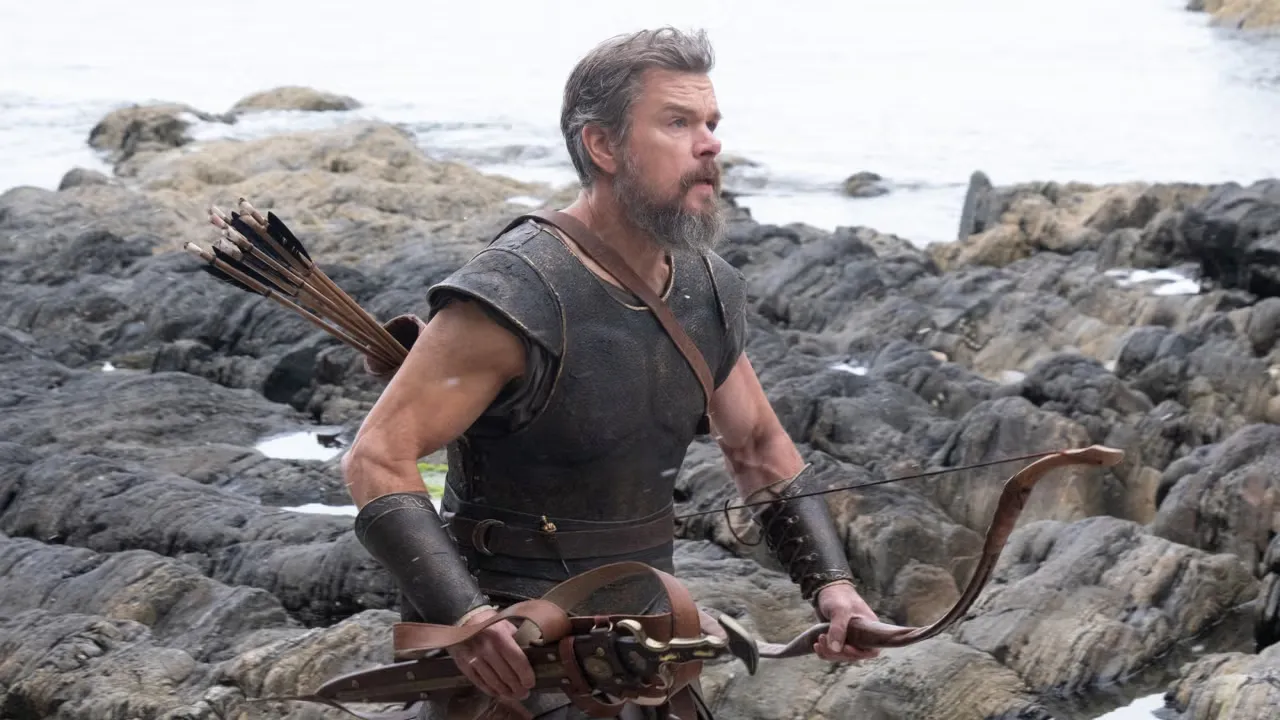
Christopher Nolan told The Independent he does not believe in director's cuts and will not release an alternate version of 'The Odyssey,' which has become the highest-grossing film in Universal Pictures history at $1.8 billion globally. The refusal, paired with a 1,000-theater Imax re-release starting Dec. 11, shows how final-cut discipline can function as a scarcity and pricing strategy rather than a forfeited home-entertainment revenue stream.
Christopher Nolan has one message for anyone holding out hope for an extended cut of 'The Odyssey': it does not exist, and it never will. In a new interview with The Independent, the writer-director rejected the idea outright, saying 'there's a lot of deleted scenes scrumpled up in the wastebasket that no one will ever see.' His reasoning is blunt. 'I don't really believe in director's cuts,' Nolan said. 'I want to stand by the film that goes out.'
That stance lands at an unusual moment, because 'The Odyssey' is not finished with theaters. After becoming the highest-grossing film in Universal Pictures history, the epic returns to 1,000 theaters across the U.S. and Canada for a limited run starting Dec. 11, with screenings in Imax and Imax 70mm. Those premium formats are where the film has already made a record $550 million of its $1.8 billion global gross. The re-release lands the weekend before the much anticipated openings of 'Avengers: Doomsday' and 'Dune: Part Three.'
Nolan's argument is as much about production economics as artistic pride. 'As a writer-director, I try to do a lot of that weeding out,' he said. 'There aren't many scenes that were shot. On a film like this, to spend a day shooting something on top of a mountain or in the rain or on a boat or whatever that isn't gonna be in the film, I would really rather not do that.' Translation: on a production of this scale, every shooting day is a line item with a crew, a location, permits, insurance, and weather risk attached. Nolan says he would rather not spend it on footage destined for a bin. He also framed the final cut as a fight, not a formality: it is his job 'to fight for the cut of the movie right 'till it goes into theaters,' he said. 'That's what I've always done.'
The Imax detail is the commercial heart of the story. 'The Odyssey' is the first film shot entirely with Imax cameras, and the format has behaved less like a premium upcharge and more like a separate revenue engine: $550 million of the $1.8 billion global haul came from Imax and Imax 70mm screens. For context, exhibitors typically charge a premium for large-format tickets, and a director who shoots natively for that canvas gives theaters a reason to keep the biggest auditoriums booked. That is also why the Dec. 11 run is built around those formats rather than a generic re-release.
The record book matters here too. 'The Odyssey' now stands as Nolan's highest-grossing film ever, even after inflation adjustment, topping the unadjusted $1.08 billion total of 'The Dark Knight Rises.' And it is the biggest film in Universal's history. For a studio, that combination, a franchise-scale gross attached to an original, director-driven epic, is the rarest asset in the portfolio.
Then there is the calendar. Dropping a 1,000-screen re-release the weekend before 'Avengers: Doomsday' and 'Dune: Part Three' arrive looks like counter-programming with a purpose. The two incoming tentpoles will soak up screens, marketing oxygen, and audience attention. A proven, format-specific title with a built-in Imax footprint gives exhibitors something to sell in the gap, and gives Universal a chance to squeeze more from a film already in the record books without spending like a new release.
For executives watching, the Nolan case is a reminder that the director's cut is a monetization lever most studios would pull without hesitation: an extended edition, a streaming exclusive, a collector's reissue, a theatrical encore. Nolan is declining the first three and taking the fourth. The bet is that scarcity protects the brand. A film that exists in exactly one version is a film audiences can only see one way, in a theater, which is a version of the argument exhibitors have been making for years. Whether that discipline is replicable is the open question. Few filmmakers carry the leverage to say no to a studio's home-entertainment team, and fewer still have a $1.8 billion gross to back the refusal.
The practical takeaway for peers: the window between theatrical and everything else is a strategic choice, not a default. Nolan's position is that the cut in theaters is the product, full stop, and that the deleted scenes stay in the wastebasket. With 1,000 screens and Imax 70mm prints on Dec. 11, audiences get one more chance to test that theory at the box office.
This story's Key Insights and Take-aways are locked.
Create a free account to unlock Executive Actions for one credit.
Register to UnlockAlways free for Executives Club members. Join the Club
More in Entertainment

GTA 6 banks $3.8bn in one day, torching every launch record
One game just out-earned every video game launch and every single-day film box office haul in history, and the fallout lands on every media CEO's forecast.

GTA VI Racked Up $3.79 Billion in a Single Day, Topping Every Film Ever
A 13-year wait produced a $3.79 billion day, more than any movie has made in its entire run, and it resets the launch math for every studio, streamer, and brand chasing the same attention.

GTA 6 sells 32.5M pre-sales and $3.79B day one, torches 13-year record
Rockstar's sequel didn't just beat Grand Theft Auto V's 13-year-old benchmark; it reset what a launch can be, with 32.5 million pre-sale copies and $3.79 billion in a single day.