
Nolan's $1.8B Odyssey lands on DVD with zero deleted scenes, on purpose
The highest-grossing R-rated film ever just hit home video with no extras, and Nolan says the footage is in the wastebasket, a deliberate bet on scarcity over the bonus-disc economy.
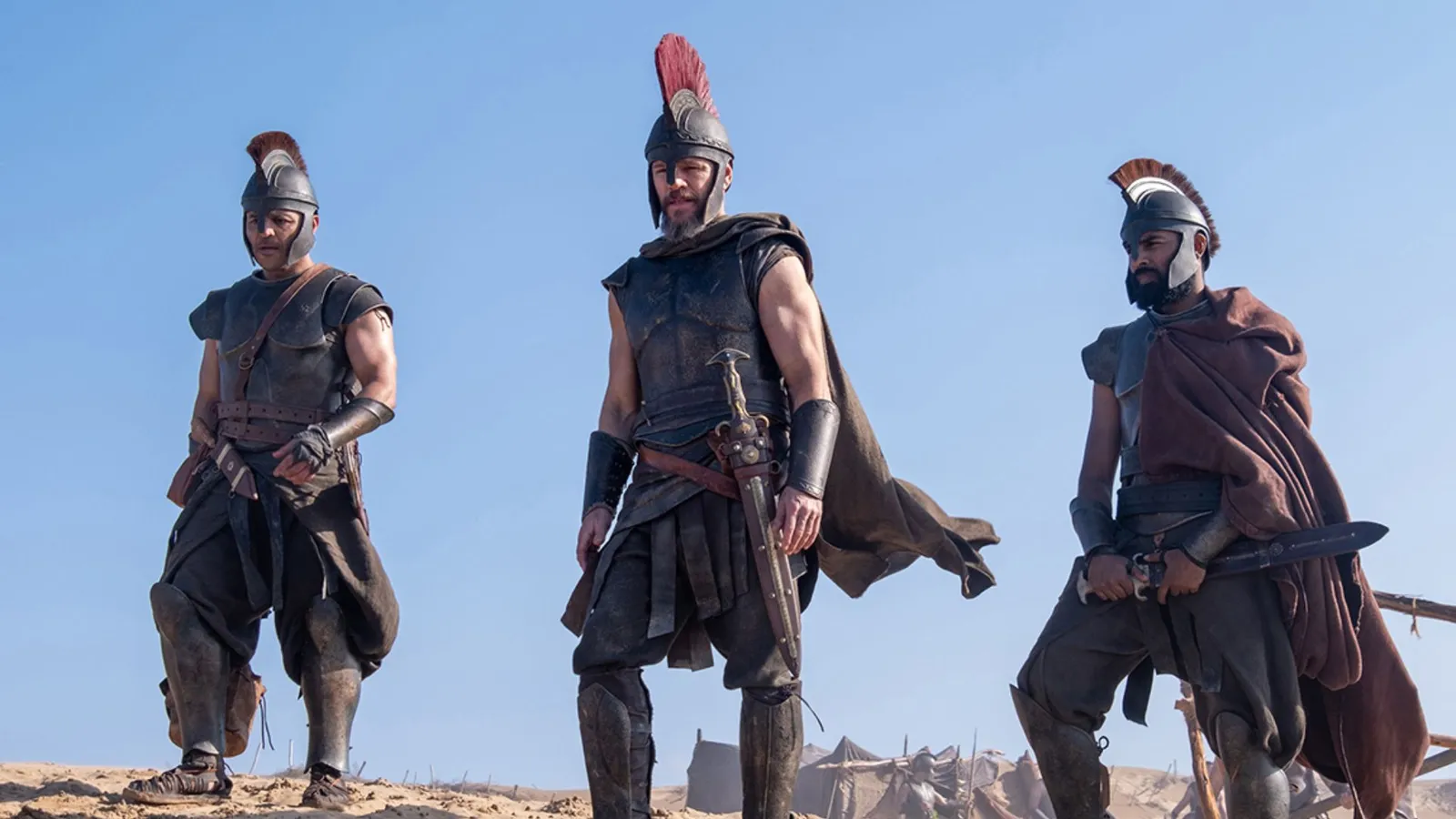
Christopher Nolan told The Independent that deleted scenes from The Odyssey, now the highest-grossing R-rated movie of all time at over $1.8 billion, will never be released because he does not believe in director's cuts. For executives, the move is a live test of whether the bonus-content economy and multi-window theatrical strategy still hold when a director with maximum leverage refuses the standard playbook.
Christopher Nolan's The Odyssey has crossed $1.8 billion at the global box office, making it the highest-grossing R-rated movie of all time, and this week it finally arrived on premium VOD, 4K, and DVD. The one thing it did not arrive with: deleted scenes. Nolan confirmed to The Independent that the footage exists and that audiences will never see it. "There's a lot of deleted scenes scrumpled up in the wastebasket that no one will ever see," he said. "I don't really believe in director's cuts. I want to stand by the film that goes out."
That is not a throwaway line from a filmmaker with nothing left to sell. It is a pricing decision. The director's cut, the extended edition, the deleted-scenes reel: these are the standard second and third bites at the same apple, the reason a fan buys the disc after buying the ticket. Nolan is declining that revenue on purpose, and he is doing it on the biggest possible stage, on a nearly three-hour film that just set an all-time record for its rating.
The theatrical run behind that number was itself a scarcity machine. The Odyssey opened on July 17 and stayed on premium large format screens until September 30. It got another release in October. A final IMAX 70mm run is set for December. That is four separate theatrical windows for one film, a cadence that treats the cinema not as a launchpad for streaming but as a product in its own right. The home release this week does not end the run; it runs alongside it. For exhibitors, that is the whole ballgame: a title that keeps pulling people back into a room they could have skipped.
Nolan's reasoning is unusually operational for an artist. "As a writer-director, I try to do a lot of that weeding out," he told The Independent. "There aren't many scenes that were shot." Then the line that should interest anyone who signs off on a budget: "On a film like this, to spend a day shooting something on top of a mountain or in the rain or on a boat or whatever that isn't gonna be in the film, I would really rather not do that." A shooting day on a mountain, in rain, or on water is among the most expensive inventory in production. Nolan is describing a discipline that treats every one of those days as capital that must survive to the final cut.
Something is lost, and it is worth naming. GamesRadar+ notes that a Nolan-style director's cut of The Odyssey could plausibly run four, or even four and a half, hours, and that the outlet would still buy a ticket to see it. That is the trade: the archive stays closed, and the mystique stays intact. Fans who wanted the extra footage get nothing. What they get instead is a single, defended object, which is a different kind of product.
The wider home-entertainment machine has spent two decades training audiences to expect the bonus disc. Studios use deleted scenes as marketing beats, as press-cycle filler, as the reason a collector upgrades from streaming to a physical copy. Nolan's refusal is a live test of whether that expectation is load-bearing or just habit. If a $1.8 billion title can ship with no extras and still move units, the argument that extras drive physical media purchases gets weaker. If it cannot, the studios learn the opposite, and the deleted-scene economy survives on the strength of one director's exception.
For executives, the more transferable lesson is about windowing and scarcity. The Odyssey is not being milked; it is being rationed. Four theatrical windows, a premium format finale in December, and a home release that adds no new content means the only way to see more of this film is to go back to a theater. That is the opposite of the streaming-era default, where everything is available everywhere and the marginal title competes on convenience. Nolan is betting that scarcity, not abundance, is what makes a nearly three-hour R-rated epic worth $1.8 billion.
The test case is already running. The December IMAX 70mm release will show whether audiences will pay again for a film they can now watch at home, and the sales numbers on this week's VOD, 4K, and DVD release will show whether the missing extras cost anything at all. Either way, the precedent is set: a director with enough leverage can refuse the standard monetization playbook and still win the record books. The question for everyone else is whether that leverage is transferable, or whether it belongs to Nolan alone.
This story's Key Insights and Take-aways are locked.
Create a free account to unlock Executive Actions for one credit.
Register to UnlockAlways free for Executives Club members. Join the Club
More in Entertainment

GTA 6 banks $3.8bn in one day, torching every launch record
One game just out-earned every video game launch and every single-day film box office haul in history, and the fallout lands on every media CEO's forecast.

GTA VI Racked Up $3.79 Billion in a Single Day, Topping Every Film Ever
A 13-year wait produced a $3.79 billion day, more than any movie has made in its entire run, and it resets the launch math for every studio, streamer, and brand chasing the same attention.

GTA 6 sells 32.5M pre-sales and $3.79B day one, torches 13-year record
Rockstar's sequel didn't just beat Grand Theft Auto V's 13-year-old benchmark; it reset what a launch can be, with 32.5 million pre-sale copies and $3.79 billion in a single day.