
Nolan Tossed The Odyssey's Deleted Scenes: 'No One Will Ever See' Them
The director says his unused footage is 'scrumpled up in the wastebasket' and staying there, a small call with a sharp signal for a business that tries to monetize every frame it shoots.
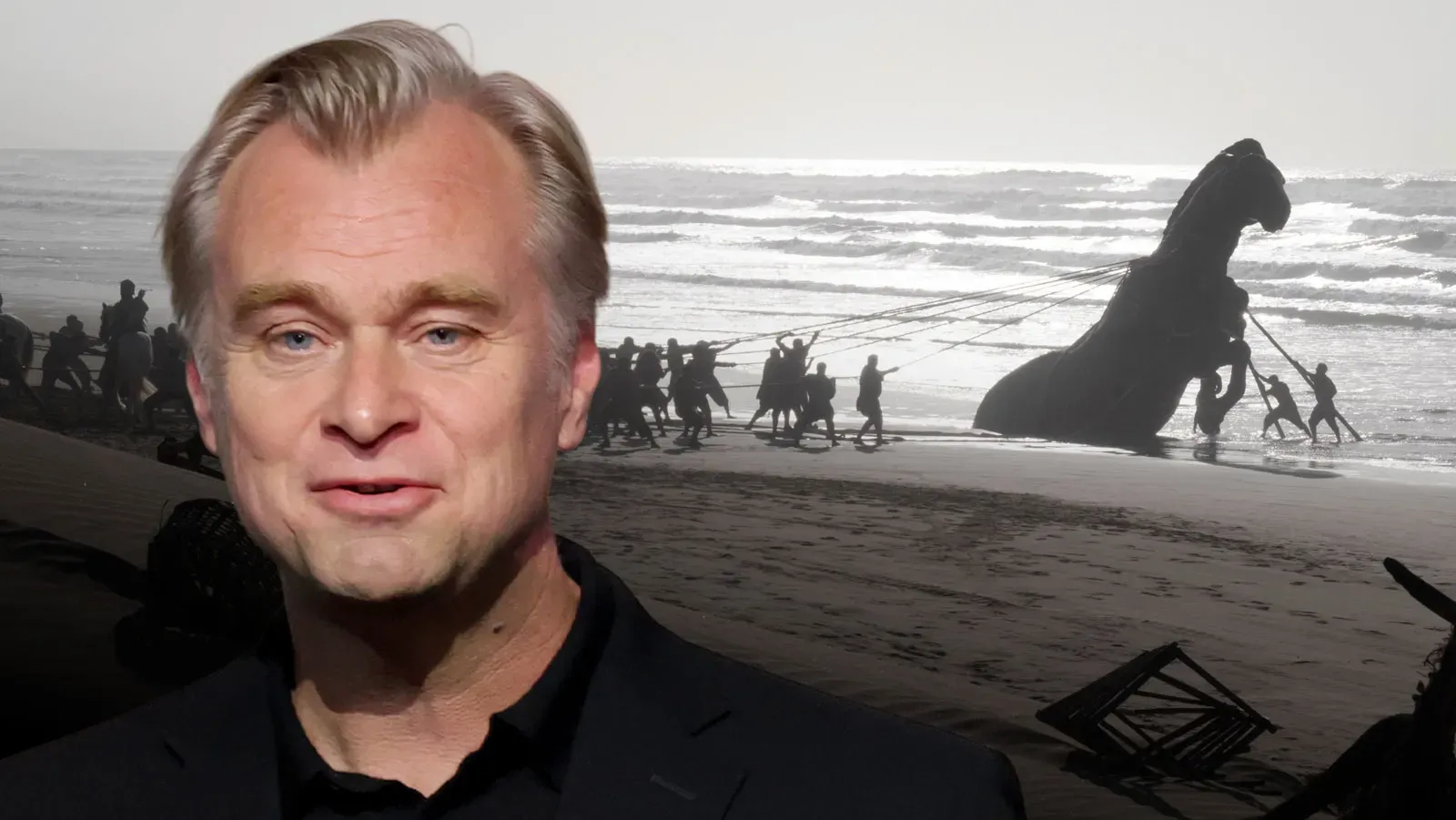
Christopher Nolan confirmed in a new interview that his epic The Odyssey has many deleted scenes and that no one will ever get to see them, because he does not believe in director's cuts of his own work. For an industry that treats alternate cuts and deleted footage as cheap streaming and re-release inventory, the stance is a reminder that the most defensible asset in film is sometimes the version you refuse to sell.
Christopher Nolan has a message for anyone quietly waiting on a longer version of The Odyssey: it does not exist, and it is not coming. In a new interview, the director confirmed that his epic has plenty of deleted scenes and that no one will ever get a chance to see them. Where they ended up is not a metaphor. As Nolan put it, there is "a lot of deleted scenes scrumpled up in the wastebasket." Not shelved for a tenth-anniversary edition. Not cleaned up for a streaming extras tab. Binned.
The reason is not a shortage of material. It is philosophy. Nolan said plainly that he does not believe in a director's cut of his work, which means that for him the film that reaches audiences is the only film. The cut is the movie. Everything left over is process, and process is not a product. That sounds like an artistic aside. It is actually a decision with money attached to it, because the modern studio playbook assumes every frame shot has a second life somewhere down the line.
For context, the director's cut has become one of the most reliable second acts in Hollywood. Ridley Scott returned to Blade Runner more than once, with a Final Cut that is now the version most people mean when they talk about the film. Francis Ford Coppola went back to Apocalypse Now for Redux. Zack Snyder's reworked Justice League turned years of fan campaigning into a genuine release event. Historically, the alternate cut has served as both a creative corrective and a marketing asset, a way to re-open a title years after its opening weekend with almost no new production spend.
That is the machine Nolan is declining to feed. Deleted scenes are among the cheapest content a studio owns: already shot, already paid for, and endlessly recyclable across streaming libraries, physical media extras, anniversary re-releases and franchise retrospectives. They are the filler that keeps a catalog title looking fresh in a recommendation feed. A filmmaker who documents his unused footage in a wastebasket is, in effect, forfeiting a small slice of downstream value on purpose.
There is a practical logic underneath the romance, and it is worth spelling out. Deleted scenes are rarely finished scenes. Effects work is often incomplete, sound is unmixed, and the performances are shaped for a rhythm that no longer exists once the surrounding material is gone. Finishing those scenes for public consumption costs real money, and what comes out the other end is usually a curiosity rather than a film. For a director who treats the theatrical cut as the finished object, releasing the scraps is not generosity. It is dilution.
Nolan can afford the position, and that is the part his peers should notice. He is among the few filmmakers whose name functions as the marketing campaign, which gives him unusual leverage over how his work is packaged and sold. The stance is a luxury good. A first-time director angling for a franchise assignment, or a mid-career filmmaker whose last two films underperformed, rarely gets to declare that the wastebasket is final. For them, alternate footage is bargaining power, and the refusal to release it is a decision made by someone else.
So the real story here is not a few missing scenes. It is the asymmetry of creative control in a business that has spent a decade turning every asset into inventory. The stakes for the executives who negotiate these deals are concrete. Talent agreements increasingly address whether alternate versions can be assembled, who owns unused footage, and how a director's name can be attached to a re-release. Ambiguity in those clauses is cheap to write and expensive to unwind later, especially when the filmmaker turns out to be the reason the film sold in the first place. Archives are also a liability dressed as an asset: footage that is stored but never finished earns nothing and costs rent.
And there is a quieter commercial point. Scarcity has value. A film with exactly one version is a definitive artifact, and definitive artifacts are the ones audiences return to, argue about, and pay to see projected properly. By refusing to open the vault, Nolan keeps his theatrical cut as the only object in circulation. Whether or not that is the right call for every filmmaker, it is a useful question for every board that owns intellectual property: what is the cost of releasing everything, and what is the value of keeping something back?
This story's Key Insights and Take-aways are locked.
Create a free account to unlock Executive Actions for one credit.
Register to UnlockAlways free for Executives Club members. Join the Club
More in Entertainment

GTA 6 banks $3.8bn in one day, torching every launch record
One game just out-earned every video game launch and every single-day film box office haul in history, and the fallout lands on every media CEO's forecast.

GTA VI Racked Up $3.79 Billion in a Single Day, Topping Every Film Ever
A 13-year wait produced a $3.79 billion day, more than any movie has made in its entire run, and it resets the launch math for every studio, streamer, and brand chasing the same attention.

GTA 6 sells 32.5M pre-sales and $3.79B day one, torches 13-year record
Rockstar's sequel didn't just beat Grand Theft Auto V's 13-year-old benchmark; it reset what a launch can be, with 32.5 million pre-sale copies and $3.79 billion in a single day.