
Only one spacecraft has ever orbited Mercury. BepiColombo is next
A joint European-Japanese probe is about to become just the second craft in history to orbit the sun's closest planet, and the data it sends back will test how rocky worlds form everywhere.
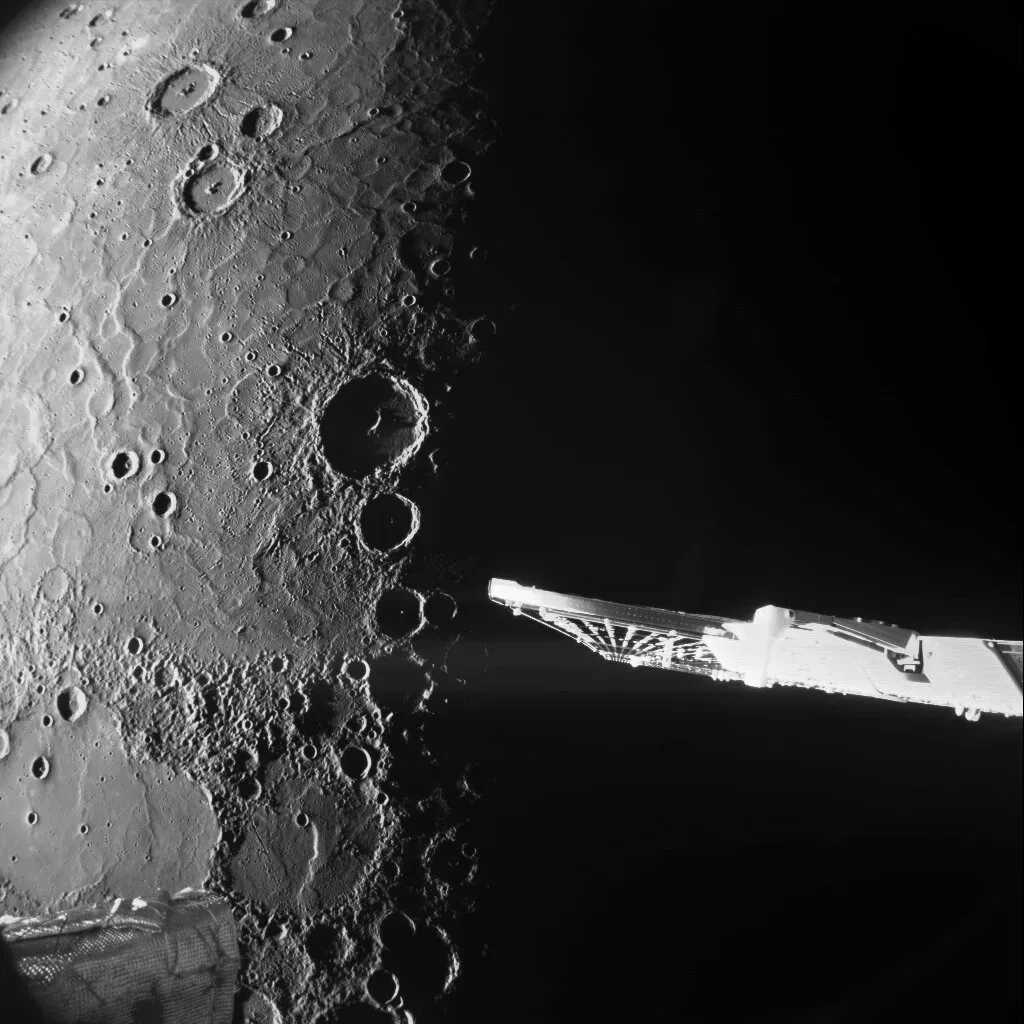
BepiColombo, a joint mission of the European Space Agency and Japan's JAXA, is about to become only the second spacecraft in history to orbit Mercury, a decade after NASA's MESSENGER ended its mission there. For decision-makers, it is a live case study in coalition-funded, multi-decade R&D, where the payoff is a data archive that outlives both the hardware and the budget cycles that built it.
BepiColombo, a joint mission of the European Space Agency and the Japan Aerospace Exploration Agency, is about to become only the second spacecraft in history to orbit Mercury. The first was NASA's MESSENGER, which circled the planet from 2011 until it ran out of fuel and slammed into the surface in 2015. In the decade since, one of the four rocky planets in our solar system has had no robotic witness at all. That is about to change, and the gap it fills is bigger than it sounds.
Mercury is a mystery, and not in a poetic sense. It is the smallest planet, the closest to the sun, and the one planetary scientists hold the least data on. It has almost no atmosphere to slow a spacecraft down, so getting into orbit there is brutally hard. It sits deep inside the sun's gravity well, which means a probe cannot simply fly straight at it; it has to brake, and braking in space takes years. MESSENGER spent nearly seven years getting there. BepiColombo has spent even longer.
For context, the mission is named after Giuseppe "Bepi" Colombo, the Italian scientist whose orbital calculations helped NASA's Mariner 10 thread a series of gravity assists past Mercury in the mid-1970s. Mariner 10 flew by three times and photographed roughly half the planet. MESSENGER mapped the whole thing. BepiColombo is built to do what neither could: sit in orbit with two spacecraft at once, measuring the planet and its magnetic environment at the same time.
The hardware is a stack of three pieces. ESA built the Mercury Planetary Orbiter, which will map the surface. JAXA built the Mercury Magnetospheric Orbiter, nicknamed Mio, which will study the planet's magnetic field and the charged particles around it. A third element, the Mercury Transfer Module, has done the driving since launch in October 2018, using solar electric propulsion and a long series of flybys of Earth, Venus, and Mercury itself to bleed off speed.
That propulsion system is also where the schedule got complicated. Ion thrusters are efficient but weak, and when they underperformed, the arrival timeline slipped. The mission has been in a slow, patient spiral toward its destination ever since, and is not expected to reach orbit until 2026. The final approach is the part everyone is watching.
Why is any of this worth a headline? Because Mercury is a natural laboratory for questions that reach far beyond it. The planet has an iron core that is enormous relative to its size, a proportion no standard model of planet formation predicts cleanly. It has a magnetic field, which a planet that small and that slowly rotating should not really have. It has water ice hiding in permanently shadowed craters at its poles, on a world where daytime temperatures can climb past 400 degrees Celsius. And it is shrinking, its crust wrinkling into cliffs as the interior cools.
Every one of those oddities is a clue about how rocky planets form, including the thousands of rocky exoplanets astronomers keep finding around other stars. Mercury is the extreme case, and extreme cases are where theories break. That is the real payload.
There is a strategic layer too. BepiColombo is a reminder that the most ambitious science is now a coalition sport. Europe and Japan split the cost and the instruments; NASA flew its own mission first and shared the roadmap. No single agency could justify the full bill alone, and none of them gets the full answer alone. For anyone running a long-horizon research budget, that is the operating model: pool the risk, split the cost, and accept that the payoff arrives a decade after the approval.
The second-order effects are already visible. Missions like this train a generation of engineers in deep-space navigation, thermal control, and autonomous operations, skills that feed directly into commercial satellite work and, eventually, crewed exploration. The data itself is a public good: it will be mined by researchers for decades after the spacecraft dies, the same way MESSENGER's archive is still producing papers.
And there is a quieter lesson. BepiColombo was selected in the early 2000s, launched in 2018, and will not reach its destination until 2026. It survived budget cycles, political turnover, a thruster problem, and a pandemic. Very few organizations hold a bet that long. The ones that do tend to be the ones that end up with the data nobody else has.
When orbit insertion finally happens, BepiColombo will become the second spacecraft in history to orbit Mercury. It will also become the only one currently there, which is a strange thing to say about a planet roughly 36 million miles from the sun. The mystery has waited. It is about to get a much better set of eyes.
This story's Key Insights and Take-aways are locked.
Create a free account to unlock Executive Actions for one credit.
Register to UnlockAlways free for Executives Club members. Join the Club
More in Science

Anthropic's I.P.O. Made Rank-and-File Researchers Worth Tens of Millions
Researchers who joined just a few years ago are now worth tens of millions, and the windfall resets the pay benchmark for every private A.I. lab still paying in paper.

Sea Lion Culling Strategy Fails: New Model Says Killing Them Won't Save Salmon
The latest research from AAAS overturn a long-held conservation assumption, forcing policymakers to rethink critical resource allocation in marine ecosystems.

Microplastics do more than pile up: they react with water to damage cells
Scientists have found that plastic particles can generate highly reactive molecules in water, a mechanism that could explain links to heart attacks, strokes, and neurological disorders.