
Ozempic and Wegovy fail for some patients. Scientists blame a hidden body response
The same drug that melts weight off one patient barely moves the needle for another, and researchers are investigating whether the body's own energy-saving switch is the reason, a question that could split a blockbuster market into personalized protocols.
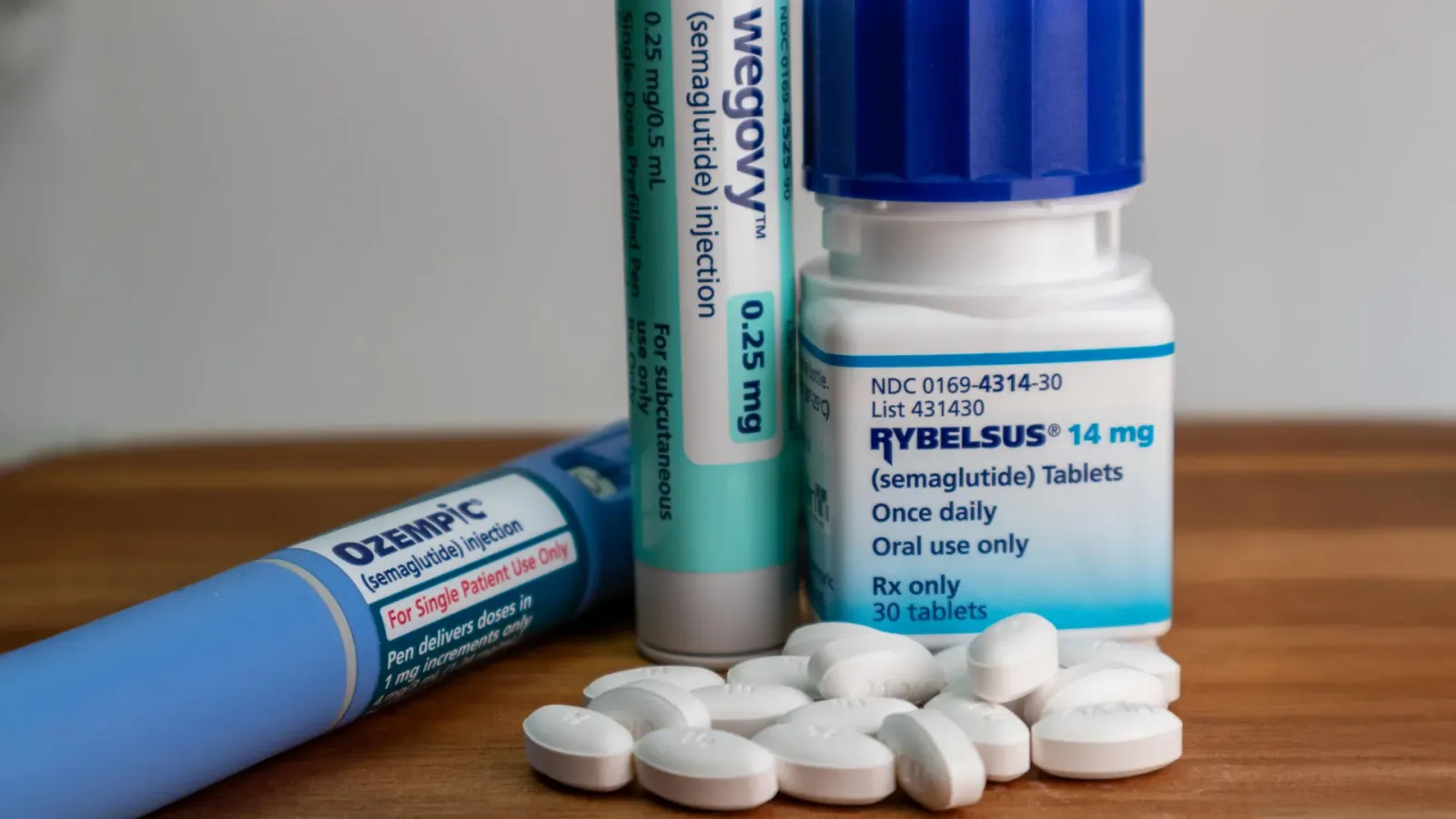
Scientists are investigating whether the body's hidden energy-saving response explains why GLP-1 drugs like Novo Nordisk's Ozempic and Wegovy produce dramatic weight loss for some patients and disappointing results for others. For decision-makers in pharma, payer coverage, and clinical care, the answer could fracture a single mass-market product into personalized protocols, changing who gets treated, what counts as success, and who pays.
Two patients. Same drug. Same dose. One loses a dramatic amount of weight. The other barely registers a change. That gap is the defining puzzle of the GLP-1 era, and scientists are now investigating whether the body's own hidden energy-saving response is what separates the two outcomes.
The hypothesis, as reported by ScienceDaily: when the body senses it is losing mass, it may quietly dial down how many calories it burns, a compensation mechanism that could blunt the effect of drugs like Ozempic and Wegovy. If that is right, the disappointing results some patients see are not a failure of willpower or a dosing error. They are biology fighting back. And the fix may be more effective, personalized weight-loss treatments rather than a bigger prescription.
For context, Ozempic and Wegovy are both Novo Nordisk products and belong to the GLP-1 class of drugs. They mimic a gut hormone that signals fullness to the brain and slows how quickly the stomach empties, which is why they curb appetite so effectively. But appetite is only one side of the ledger. Body weight is a balance of calories in and calories out, and these drugs reliably move only one side of it. That asymmetry is where the research question begins.
The other side is where the mystery lives. Historically, when people lose weight by any means, resting energy expenditure tends to fall, sometimes by more than the lost tissue alone would predict. The body, shaped by evolution to defend its reserves, treats weight loss as a threat and responds by spending less. Researchers are investigating whether that same hidden response is what separates the dramatic responders from the disappointed ones, and whether it can be measured before a prescription is written.
The commercial stakes are enormous. GLP-1s have become one of the most consequential product categories in modern pharma, and the business model rests on a simple promise: take the drug, lose the weight. A meaningful share of patients who do not get that result creates a problem that compounds. Doctors cannot currently predict in advance who will respond. Payers, already scrutinizing the cost of long-term treatment, have no clean way to distinguish a genuine non-responder from a patient who simply needs more time. Every disappointing result becomes another data point in the argument over who gets access and who pays. There is a regulatory dimension too. Approval pathways are built around average effects in large trials, which is precisely the metric that hides the split. A drug can clear every bar and still leave a substantial minority of patients without a meaningful result. As response prediction matures, pressure will build on trial design itself: enrolling patients who resemble the real-world population, reporting responder rates alongside averages, and giving regulators something more granular to weigh than one headline number.
That is why the phrase personalized weight-loss treatments matters more than it sounds. If the energy-saving response can be measured, it becomes a biomarker. A biomarker becomes a screening test. A screening test becomes a protocol: this patient gets the standard GLP-1, that patient gets the GLP-1 plus something aimed at the metabolic slowdown, and a third patient gets a different approach entirely. That is a fundamentally different product than a single injection sold to everyone, and a fundamentally different sales motion.
The second-order effects run wider than pharma. Employers and insurers covering these drugs are underwriting a benefit whose return is uneven and hard to forecast. Clinicians are managing patient expectations without a tool to set them. And the next wave of entrants, the companies racing to bring oral or longer-acting versions to market, will eventually have to answer the same question: does your drug work for the people the first generation left behind? A credible answer is a competitive moat. A vague one is a liability.
None of this is settled. The source is a research question, not a result, and the honest state of play is that scientists are investigating, not concluding. But the direction of the question is the story. The weight-loss market has spent years optimizing for potency, meaning how much weight the average patient loses. The next phase may optimize for prediction, meaning knowing in advance who will respond and why. For executives in the sector, the takeaway is blunt: the winner of the next round may not be the company with the strongest average result, but the one that can explain, and fix, the patients for whom the average never applied.
This story's Key Insights and Take-aways are locked.
Create a free account to unlock Executive Actions for one credit.
Register to UnlockAlways free for Executives Club members. Join the Club
More in Science

Anthropic's I.P.O. Made Rank-and-File Researchers Worth Tens of Millions
Researchers who joined just a few years ago are now worth tens of millions, and the windfall resets the pay benchmark for every private A.I. lab still paying in paper.

Sea Lion Culling Strategy Fails: New Model Says Killing Them Won't Save Salmon
The latest research from AAAS overturn a long-held conservation assumption, forcing policymakers to rethink critical resource allocation in marine ecosystems.

Microplastics do more than pile up: they react with water to damage cells
Scientists have found that plastic particles can generate highly reactive molecules in water, a mechanism that could explain links to heart attacks, strokes, and neurological disorders.