
Pattinson Is Officially 007 - and The Batman Part 3 Now Hangs in the Balance
One actor now sits at the center of two of Hollywood's biggest franchises, and the scheduling math that follows could decide whether Matt Reeves' Gotham universe survives intact.
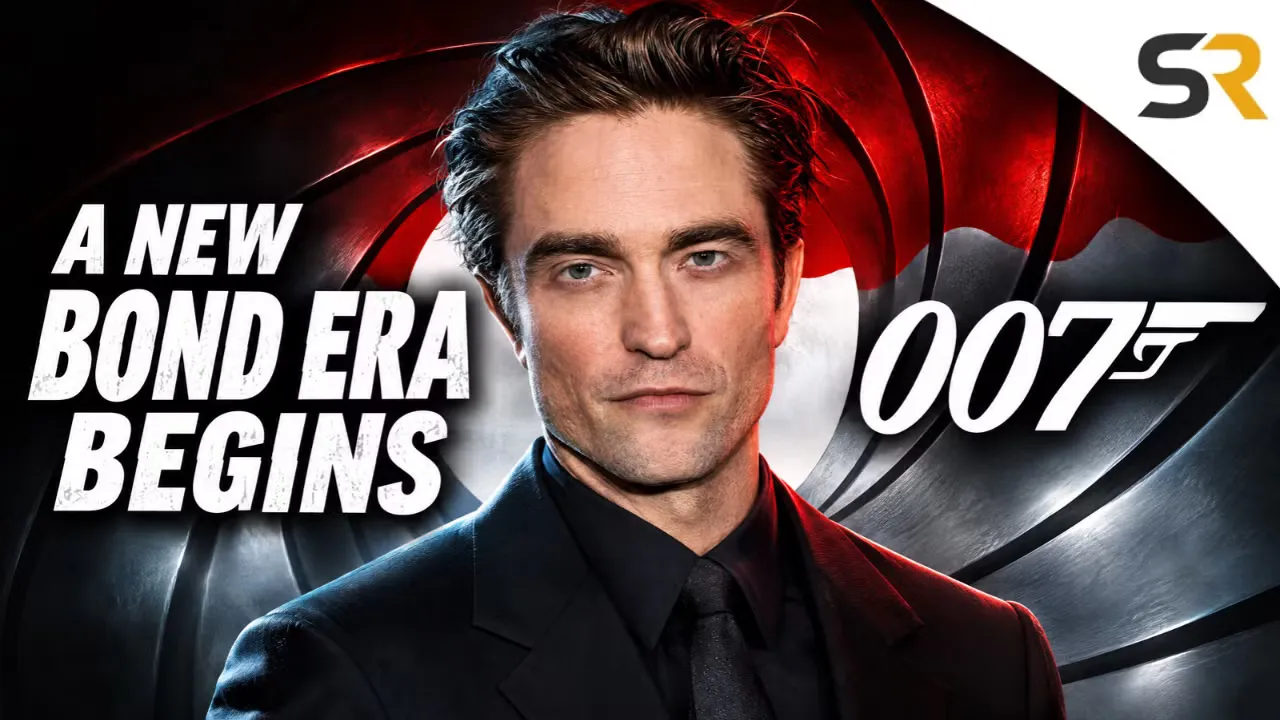
Robert Pattinson is officially taking over as James Bond, per ScreenRant, a casting move that puts the same actor at the head of both the 007 franchise and Matt Reeves' Batman universe. The consequence for decision-makers is a calendar collision: two multi-hundred-million-dollar franchises now compete for one lead actor's availability, and the resolution will shape DC's slate and Amazon MGM's Bond reboot at the same time.
Robert Pattinson is officially taking over as 007, according to ScreenRant, and the most expensive consequence of that sentence is not in MI6. It is in Gotham. The actor who headlined Matt Reeves' The Batman is now the face of the longest-running spy franchise in film, and ScreenRant's reporting flags the collision directly: the new role could have major consequences for The Batman Part 3 and for the future of Reeves' entire Gotham universe. That is the line worth reading twice, because it is the difference between a casting announcement and a slate problem.
Here is the mechanical reason it matters. A Bond film and a Batman film are not projects, they are years. Principal photography on productions of that scale typically runs for months, before reshoots, press and a global marketing campaign that locks the lead's calendar for the better part of twelve months per film. Studios have historically solved this with inter-studio scheduling agreements, and they work right up until they do not: one delayed shoot cascades into the next, and the second franchise eats the overrun. Pattinson is now the single point of failure for two of them.
The appeal is obvious, and the source spells out why the Bond side wanted him. Pattinson brings blockbuster experience, acclaimed performances and a unique screen presence to the role, making him one of the most intriguing picks in the franchise's history. That is the pitch a studio makes internally: a proven draw with art-house credibility and a fanbase that spans the Twilight generation and the cinephile crowd. Bond has always been cast as a statement about what the franchise wants to be next, and this one says younger, stranger and more actor-forward than the Daniel Craig era.
For context on the Bond side, the franchise has been in a genuine interregnum. Craig's five-film run closed with No Time to Die in 2021, and the property spent years without a settled direction. In 2025, Amazon MGM Studios took creative control of the franchise in a joint venture with the Broccoli family's Eon Productions, ending decades of family-led stewardship. A new Bond is the first real product of that regime, which means the decision carries more than casting risk: it is the clearest signal yet of what the new custodians think the character is for.
On the DC side, the picture is a live construction site. The Batman arrived in 2022 as a standalone, grounded take, and Reeves has been building outward from it rather than plugging into a shared cinematic universe. Sequels and television extensions set in that Gotham have been in various stages of development, and the follow-up film has slipped in the schedule more than once. A Pattinson who is also Bond does not kill that universe. It constrains it, and constraints force choices: compress the schedule, hand more of Gotham to television, write around the lead, or plan an exit.
That is where the second-order effects start compounding. If Pattinson's availability narrows, Reeves' Gotham becomes a universe that must justify itself without its anchor on screen every time. Spinoff and series formats absorb that pressure better than features do, which is exactly why franchise owners increasingly treat television as a scheduling shock absorber rather than a side project. The alternative is a recast, which resets audience attachment, or a planned conclusion, which turns a growing asset into a finite one. None of these are catastrophic. All of them are expensive in a way that never shows up in a casting press release.
The strategic read for anyone running a talent-dependent business is that the scarce asset is no longer intellectual property. It is the calendar of a small number of people who can open a film globally. Studios now negotiate for years of a performer's life the way they once negotiated for rights, and the winners are the ones who map availability before they map story. Pattinson sitting at the center of two franchises is not a novelty; it is the emerging normal in a market where recognizable leads are concentrated in fewer and fewer hands.
What to watch is straightforward. First, whether the Batman follow-up gets a firm production window, because a locked date is the clearest evidence that the schedules have been reconciled. Second, whether the Gotham universe expands in television rather than in theaters, which would signal an adaptation to the constraint rather than a fight against it. Third, how quickly the Bond side moves, because the first film under new custodians sets the tempo for everything after. The headline is a casting story. The story underneath it is about who controls the calendar, and right now that answer is Robert Pattinson.
This story's Key Insights and Take-aways are locked.
Create a free account to unlock Executive Actions for one credit.
Register to UnlockAlways free for Executives Club members. Join the Club
More in Entertainment

GTA 6 banks $3.8bn in one day, torching every launch record
One game just out-earned every video game launch and every single-day film box office haul in history, and the fallout lands on every media CEO's forecast.

GTA VI Racked Up $3.79 Billion in a Single Day, Topping Every Film Ever
A 13-year wait produced a $3.79 billion day, more than any movie has made in its entire run, and it resets the launch math for every studio, streamer, and brand chasing the same attention.

GTA 6 sells 32.5M pre-sales and $3.79B day one, torches 13-year record
Rockstar's sequel didn't just beat Grand Theft Auto V's 13-year-old benchmark; it reset what a launch can be, with 32.5 million pre-sale copies and $3.79 billion in a single day.