
Peter Gabriel ships one album twice: 13 tracks, 90 minutes, two mixes
The 13-track o\i arrives in a 'dark' Tchad Blake mix and a 'bright' Spike Stent mix, a live test of whether streaming-era artists can sell the same songs twice.
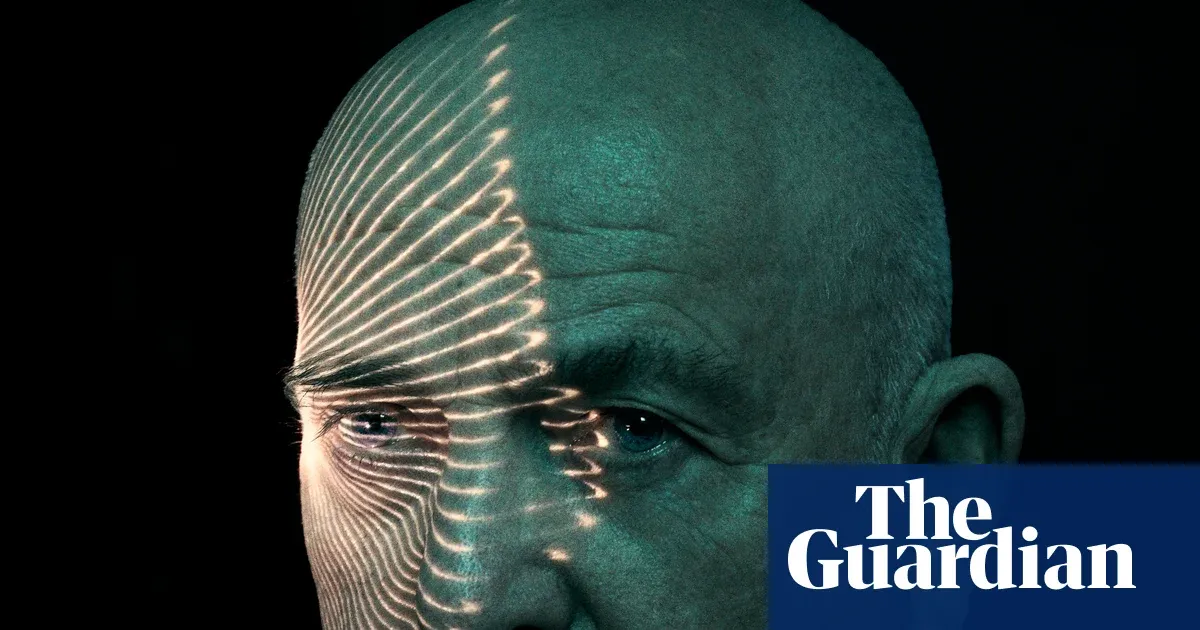
Peter Gabriel has released o\i, a 13-track, nearly 90-minute album issued in two complete versions: a 'dark' mix by US producer Tchad Blake and a 'bright' mix by Mike 'Spike' Stent. The double release is a live experiment in whether streaming-era artists can monetize the same recordings twice, landing as Gabriel publicly bets that AI will make great music.
Peter Gabriel's new album o\i is 13 tracks long, runs nearly 90 minutes, and arrives in two complete versions. There is a "dark" mix handled by US producer Tchad Blake, and a "bright" version from Mike "Spike" Stent, the mixer whose credits run from U2 and Madonna to Frank Ocean and Harry Styles. Same songs. Two different records. For an artist who has spent four decades treating the studio as a laboratory, releasing the album twice is less a gimmick than a thesis statement about what a record even is.
The runtime is deliberate too. Gabriel traces the length to a long-standing interest in African music, "which made me realise that a song could last as long as a song could last," and to a blunter motive: "being old enough to think 'fuck it', really." Translation for anyone who has watched a product team agonize over scope: past a certain point in a career, the binding constraint stops being the market and starts being your own patience.
Then the bonobo. Ten minutes into the interview, Gabriel asks the Guardian's writer to fetch a laptop so he can show footage of himself playing a keyboard duet with Kanzi, a bonobo. Working with primatologist Sue Savage-Rumbaugh, who developed a means of communicating with bonobos involving sign language and a speech-synthesis keyboard, Gabriel plays droning chords on a synthesizer while Kanzi picks out complementary notes on a piano. "Look, she likes that note, which is a ninth, and then she finds the octave," he says as the video plays. "There's a real musicality there."
That clip is the tell. The through-line of the piece, as the Guardian frames it, is a rock legend who has always been in thrall to technology, from sampling to streaming, now asking whether superintelligence is a step too far. Gabriel's answer leans optimistic. He argues AI will make great music, talks about humans becoming cyborgs, and floats building a "Jurassic Park for plants." Whether or not you buy any of it, the framing is the story. He is not treating the machine as a threat to the craft. He is treating it as the next collaborator, the same way a sampler once was.
The record itself shapeshifts. The Guardian describes it as "exquisitely arranged, beautifully produced, occasionally deeply strange art rock," moving from the folk-flecked A Hard Lesson to the glowing pop hues of Till Your Mind Is Shining. Two mixes of that material is not redundancy. It is a controlled experiment in how much of a record is the song and how much is the room.
For operators, the double-mix release is the interesting move. Streaming pays per play, so a second version of the same 13 tracks is, in effect, a second product built from assets already paid for. Labels have historically chased this with deluxe editions, live records, and remaster campaigns. Gabriel is doing it on day one, with two named producers whose reputations each pull a slightly different audience. It also hands playlists and recommendation algorithms two distinct artifacts to sort, and gives superfans a reason to buy twice. The risk is dilution: split the attention and you can split the streams.
The AI thread is where the stakes get bigger. Gabriel's position that AI will produce great music lands in the middle of an industry still arguing over how models are trained on recorded work and who gets paid when they are. An artist of his stature saying the output will be good is a signal, not a ruling. It nudges the conversation from "will this replace us" toward "who owns the inputs and who owns the outputs."
The strategic read for anyone running a creative business: Gabriel, at this stage of his career, is optimizing for range rather than reach. Two mixes, 90 minutes, a bonobo duet, and a public bet on machine intelligence. The album is the product. The posture is the lesson. When you have nothing left to prove to the market, you can afford to test what the market will actually accept.
This story's Key Insights and Take-aways are locked.
Create a free account to unlock Executive Actions for one credit.
Register to UnlockAlways free for Executives Club members. Join the Club
More in Entertainment

GTA 6 banks $3.8bn in one day, torching every launch record
One game just out-earned every video game launch and every single-day film box office haul in history, and the fallout lands on every media CEO's forecast.

GTA VI Racked Up $3.79 Billion in a Single Day, Topping Every Film Ever
A 13-year wait produced a $3.79 billion day, more than any movie has made in its entire run, and it resets the launch math for every studio, streamer, and brand chasing the same attention.

GTA 6 sells 32.5M pre-sales and $3.79B day one, torches 13-year record
Rockstar's sequel didn't just beat Grand Theft Auto V's 13-year-old benchmark; it reset what a launch can be, with 32.5 million pre-sale copies and $3.79 billion in a single day.